Tag Archives: #atozchallenge

Week One Recap


IMG_2106

I may have started the week in Paris in the springtime, but I seem to have gone back in time to the depths of winter here in the Rocky Mountains. Yesterday we headed into Johnston Canyon to do a bit of ice climbing… this is the base of one of the climbs in what must be one of the most stunning places on the planet. 


Well, so far so good. I’ve managed to stick to the schedule and post each day in April so far. The theme, Transitions, Travel, and Transformation has proven to be as flexible as I figured it needed to be to cover all eventualities this month… I knew it was going to be chaotic and, indeed, that has proven to be the case. If you are behind, here are the posts so far:

Day One – A is For Abbesses, Amelie, Artists, and More

Day Two – B is For Bordeaux, Beds, Bourse, Broken, Blue Book and a Brass Band

Day Three – C is For Community 

Day Four – D is For Dying (not as morbid as it sounds…)

Day Five -E is For Eggs

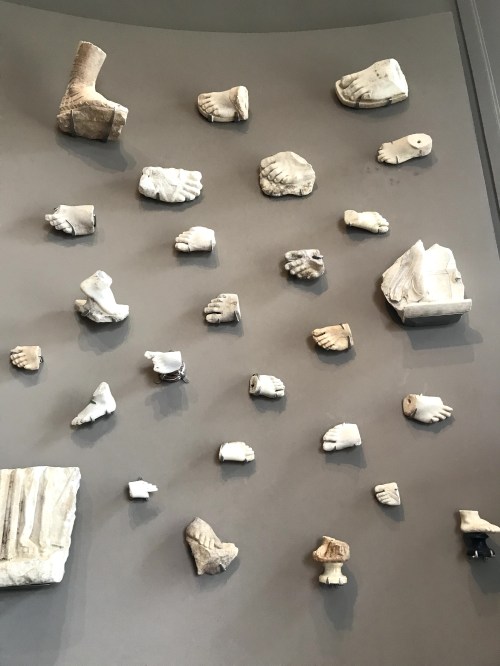
Day Six – F is For Feet- Fine Friends of Wanderers

Day Seven – G is For Goya, Guernica, Gaugin and van Gogh

The weather can change fast here in the mountains. Perhaps when I check in again with the Week 2 summary I’ll be posting photos of spring flowers in alpine meadows… Maybe not quite yet, but by the end of this challenge, perhaps.


G is for Goya, Guernica, Gaugin and van Gogh (AtoZChallenge)


1024px-Vicente_López_Portaña_-_el_pintor_Francisco_de_Goya

This portrait of the Spanish painter, Goya by Vicente Lopez Portaña was completed in 1826. Though it’s in the collection of the Prado Museum in Madrid, I don’t remember seeing it… Hardly surprising considering just how overwhelming that museum is. 

It has been said that Goya was the last of the great masters and the first of the modern painters which makes him a transition, of sorts. (If you haven’t been following along this month, my theme for the AtoZ Blogging Challenge is Travel, Transitions, and Transformations… ).


El_dos_de_mayo_de_1808_en_Madrid.jpg

I’m including this painting by Goya because of its title, The Second of May, 1808 (my birthday is on May 2nd… and isn’t a birthday often a time of transition?) The French invaded Spain and the two nations battled during the Peninsular War (1808-1914). The painting is rather gory, gruesome, and grim…

Goya, like a number of Spanish painters, spent time in France (he hung out in Bordeaux for a number of years). Picasso is another with strong ties to both nations.


PicassoGuernica

Picassos’s Guernica (1937)   Guernica is a Basque town in Spain that was bombed on April 26, 1937 by Germany as a means of lending a hand to the Spanish Nationalists.                                                                     (La exposición del Reina-Prado. Guernica is in the collection of Museo Reina Sofia, Madrid.Source page: http://www.picassotradicionyvanguardia.com/08R.php (archive.org), Fair use, https://en.wikipedia.org/w/index.php?curid=1683114)

While I was in Paris I went to a lecture which I thought was going to be about Picasso’s painting, Guernica. I imagined slides that would focus on specific details and then describe how and why Picasso chose the imagery he did.

The talk (in the basement of the Picasso Museum) was all in French, so I only caught bits and pieces, but it seemed to be more about Picasso’s role in the Spanish ex-pat artist community in Paris and his involvement with bringing what was going on during the Spanish Civil War to a broader audience than it was about deconstructing the painting in great detail. Despite the fact I struggled to follow along, it was a pretty cool experience to attend the lecture and doing so made me all the more determined to PRACTICE MY FRENCH between trips.


Paul_Gauguin_-_Jug_in_the_Form_of_a_Head

Jug in the Form of a Head, Self Portrait by Paul Gaugin

I am including this jug by the French artist Gaugin because of the macabre story behind its creation. Gaugin had been visiting with Vincent van Gogh when Vincent lopped off part of his left ear. I’m not sure why, but Vincent left the ear at a brothel both he and Gaugin liked to visit. What does seem to be clear is that all of this ear-lopping upset Gaugin, who left town shortly after the incident. Back in Paris, Gaugin was unfortunate enough to witness the beheading of a criminal. This jug/self-portrait makes reference to both these traumatic incidents and goes to show that no experience in life is wasted when one is an artist. It’s a great example of transforming trauma into something compelling (I was going to say beautiful, but I don’t find the jug to be beautiful… but yes, compelling).


Vincent_van_Gogh_-_Paul_Gauguin_(Man_in_a_Red_Beret).jpg

Vincent van Gogh painted this portrait of Gaugin in 1888  ( Man in a Red Beret)


I hadn’t planned to include so many works of art in these posts, but art really is transformative in the way it can make us take another look at pretty much anything we experience (or can imagine). From some initial spark or idea or observation, artists create something worthy of our attention. Then we consumers of art respond and dissect and analyze and are moved by the product of their labours, which is a strange kind of alchemy indeed.


F is for Feet, Fine Friends of Wanderers

Plaza_de_Dalí_(Madrid)_01

Detail from the Plaza de Dali in Madrid. 

Walking. It’s a great way to travel, even though we don’t often think of our feet as a legitimate means to cover lots of territory. One of the things I love, love, love about Paris (and, there are plenty of things…) is the fact it is such a walkable city. Every day while I was there over the past couple of weeks I walked – miles and miles and miles.

Snapseed.jpg

I passed this piece of sculpture while cutting through the Tuileries in Paris … I could have stayed underground, I suppose, but it wouldn’t have been nearly so much fun.  

Yes, I generally started out on the Metro, hopping on at the local station and heading somewhere close to my destination. But once turned loose in a neighbourhood, as often as not I would start roaming, knowing that at any point when exhaustion overtook me (and my feet) I wouldn’t be far from a Metro station and could always drop down below the streets and head for home.

IMG_6486.jpg

This piece of sculpture in Santiago de Compostela in Spain honours the work the feet do when it comes to transporting pilgrims across Spain. My feet felt every step of the 120 or so kilometers we walked in October as we travelled from Sarria to Santiago. (Want to see some photos of the journey I took with my father and daughter? Come follow us on Instagram: @thelastlegbook) 

I might not have thought to honour my feet with a whole post if it weren’t for the fact that they are starting to grumble and complain (you know, squeaky wheel gets the grease and all…). I am developing arthritis in various joints, but the one that causes me the most grief is my right big toe. It sounds ridiculous (big toes are somehow unfailingly undignified), but my goodness, I sure appreciate all the years of uncomplaining service I’ve had from my tootsies.

IMG_1770.jpg

Rodin had a thing about feet… well, I guess he had a thing about bodies and getting their various bits to look right… This display is in the Rodin Museum. 


IMG_1734.jpg

Detail from one of the sculptures in the sculpture garden at the Rodin Museum in Paris. 

Next week I have an appointment to see my sports medicine doctor who will be repeating a treatment he did about 18 months ago – injecting a soothing dose of cortisone into the problematic joint space. I was dubious last time, but after feeling the relief that followed the first injection, I am sold. I’d been told that I’d need to repeat as often as every 4-6 months, but I’ve managed to hike a lot of miles over the past 18 months before feeling the need to go back.

IMG_0970.jpg

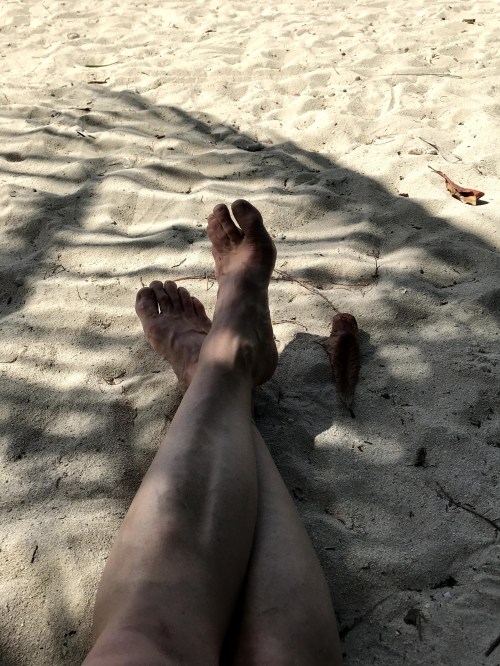
Not that long ago I was lucky enough to find myself on a beach in the Caymen Islands… the first thing I did was to free my feet from the confines of my sandals. There is nothing like the feeling of warm sand beneath bare feet… There is something positively soul (sole?)-rejuvenating in the act of connecting directly with the earth, the ocean, the beach… Cramming my feet into heavy winter boots is just not the same… 

And on that note, I now need to load my computer back into my backpack and walk home. I’ve been out and about running (well, walking) errands here in Canmore, making good use of Shank’s Pony. The sun is blazing out there, reflecting off the snow. It’s cold and crisp but still suggestive of spring and I’m happy to be moving. We had a crazily long trip back from Paris – almost 24 hours of being trapped in too-small airplane seats or trying to get comfortable in airport waiting areas so it feels good to be breathing unfiltered air and able to get up and go when I feel the need.

Until tomorrow when we meet again over the letter G…


E is For Eggs (AtoZChallenge2018)


Beuckelaer_Girl_with_a_basket_of_eggs

Girl with a Basket of Eggs, by Joachim Beuckelaer, early 17th Century

The egg is the perfect physical embodiment of the concept of transformation in one, neat package of potential. Back in my farm days I never tired of tending an incubator full of eggs, monitoring temperature and humidity, tracking every time I turned the eggs (2-4 times per day) on a spreadsheet, counting down the days until the hatch began. The eggs didn’t change in appearance, but inside, miracles were occurring.
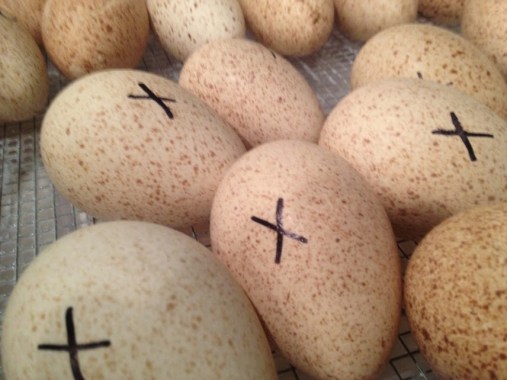
x marks the eggs

By marking one side of each egg (these are turkey eggs) with an X I knew which side was up.

After 3-4 weeks (exactly how long depends on what kind of poultry I was hatching), the eggs began to twitch and vibrate as the inhabitants started plotting their escapes. Soon, muffled peeping began to emanate from the incubator. Using a knobby bit on the tops of their beaks (called an egg tooth), the hatchlings hammered upward, piercing the shells and not stopping until tiny cracks and holes formed a ring around the fatter end of the shell. The following two videos show the final step in this process when the little one would crack off the lid of the egg and splurt out (these are turkey poults).

During the days of rapid growth and change during incubation, the yolk provided all the energy needed to transform the fertilized egg into a fully formed creature capable of escaping from a claustrophobic prison. After a short rest during which they dried off and fluffed up, they were ready to eat, drink, and run about with surprising enthusiasm.


Farm Fresh Eggs

We kept a mixed flock of hens, in part because we enjoyed the range of colours and textures they produced in their egg shells. Depending on what the hens were eating, the yolks ranged in colour from canary yellow to deep, dark orange. 


DCC Love My Chicken!

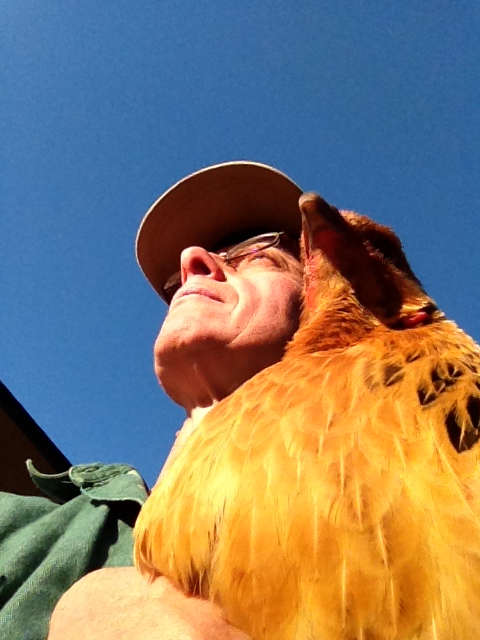
One of the hatchlings, all grown up. And, yes, the fact my beak was beginning to match the chicken’s is not lost on me. It’s a good thing I left farming when I did or I might have started sprouting feathers. 

It’s hardly surprising that eggs, being of a particularly satisfying shape and containing, as they do, the cosmically mysterious beginnings of life have made many appearances in art.


1366px-Roger_Fry_-_Still_life-_jug_and_eggs_-_Google_Art_Project

Still Life: Jug and Eggs by Roger Fry

They are also a familiar sight in most kitchens. Every morning I make gluten free muffin-esque bun thingies, each of which contains an egg. They are substantial enough that having one with cheese or nut butter sustains me through a morning of writing. Here’s the recipe:

Nikki’s Gluten Free Breakfast Bun Thingies

1 egg

1 T olive oil

1/2 mashed banana

1/2 teaspoon baking powder

1 T ground flax seed

1 T almond flour

1/2 T coconut flour

1 T shredded coconut (optional)

1 T finely chopped walnuts (optional)


Mix together the egg, oil and banana. Add the remaining ingredients, mixing well. Spray a 2 c-size ramekin with olive oil-based cooking spray (I’ve also used olive oil to grease the ramekin, but don’t find that works quite as well). 

Pour the mix into the ramekin and microwave for 2 minutes and 30 seconds. 

You can either eat these hot and soft or cut in half (or thirds, if yours rises a lot – this varies a bit) and toast before serving with your choice of butter, cheese, nut butter, honey, or jam. 


Bosch,_Hieronymus_-_The_Garden_of_Earthly_Delights,_central_panel_-_Detail_Egg

There is so much going on in The Garden of Earthly Delights by Hieronymus Bosch it’s hardly surprising I didn’t remember this detail until I went looking for examples of eggs in art… 

What’s your favourite way to prepare eggs? I like them pretty much any way they can be served except, weirdly enough, Eggs Benedict. Keep that in mind should you ever have me over for brunch…


Hendrick_Bloemaert_001

Did you know it takes a hen 24 – 26 hours to make a single egg? Old Woman Selling Eggs, by Hendrick Bloemaert (1632)




C is for Community (#atozchallenge2018)


Snapseed 74

Carmine’s downstairs… the pizza joint in the ‘hood


It wasn’t that long ago that I wrote a post over on my author blog about this year being all about community. It is, after all, the year in which my book Better Together: Creating Community in an Uncertain World came out so the subject has been on my mind. But it struck me, during this past week or so in France, that creating and maintaining connections has never been easier. Yesterday I was lucky enough to share a lovely lunch with writers I met during last year’s visit. The plans were formulated while I was in Canada, the host was in Paris and one of the attendees was in Menorca. Others who couldn’t attend touched bases, someone new to me joined the group – new connections were forged while others were strengthened.

Though this type of thing is passé for young ‘uns it still strikes me as slightly miraculous that a quick bit of typing and the goodwill of friends makes it possible to enjoy a chat over cheese as we swap stories in Paris before scattering again.

What is also interesting in this new, fluid, international world is that it was in an apartment near the Bois de Vincennes (location of said lunch and gathering of friends) that I first heard of the Canadian mezzo soprano Marie-Nicole Lemieux from a choral music enthusiast (and our gracious host) Anne. Granted, Marie-Nicole Lemieux is from Quebec and sometimes I think Canada is really bizarre in the way in which we in the west remain too often are ignorant of the talented musicians, singers, and writers who do amazing work in Quebec… Anyway, for your musical edification, here is Ms Lemieux singing L’amour est un oiseau rebelle from the Opera Carmen…

https://open.spotify.com/embed/track/4bVLlk6iQDafAb3Bbf5aqE

Today was my last day in Paris where it has been a delight to plug in to the local community for a short time. In the morning (way too early) we begin the long journey back to Canmore and my lovely community there. Which, as it turns out, is more accurately described as a series of overlapping communities – the mad band of climbers who help keep me fit, challenged and engaged with endless problems to solve on rock, in the gym, and less often, on ice. I’m just beginning to dive into the theatre community, which has been a fantastic way to engage with a whole new circle of friends and explore another dimension of my creative life.


IMG_9127

Theatre selfie – Ally Lacentra playing a heroin addict, me as a grumpy old woman during Theatre Canmore’s recent 10-minute Play Festivus (can’t wait for next year!!)


Alas, it’s getting late and I have yet to pack, so that’s where I shall leave the letter C (there were actually a bunch of them sprinkled throughout the post… go count if you don’t believe me). More tomorrow as I wend my way back to my home in the mountains!

Ciao!