Day 16 – Search for Land Leads to Maypenny Farm

One of the problems with livestock (at least, livestock not raised intensively in big barns) is they need a fair amount of land for grazing. This is not a problem if you happen to live on a large farm, but my farm is micro mini – not even two acres, all on a hill, part of it covered with big trees. To get around this problem I lease several fields close by and make use of every square inch of space here on the homestead. None of the fields are huge and my flocks and herds are expanding, so as a result, I’ve been tossing and turning at night trying to figure out where I can lease more land that’s not too far away. And, this needs to happen sooner than later so I can move the piglets after I’ve weaned those I haven’t already sold.

I must say the Maypenny hens are a stylish bunch! They look a whole lot better prepared for the soggy weather than my girls...

I must say the Maypenny hens are a stylish bunch! They look a whole lot better prepared for the soggy weather than my girls…

Last year I had chatted with Maypenny Farm (well, not the farm – with Reay, a farmer) about possibly growing out pigs at their place, but there was a wedding planned and a need to keep the fields looking neat and tidy. I had pushed the Maypenny option out of my mind when Reay got in touch the other day and asked if I might still be interested. Faster than you can say ‘hen hats’ I raced over there to scope the place out to see if it might be suitable.

The field up for discussion is an old hayfield being encroached upon by brambles and scrub brush along one edge and bordered on the other side by trees. Not only would the piglets have a blast in there with plenty of forage and room to roam, the plan is to reclaim the field and extend the Maypenny market garden. Hogs are excellent for turning over the soil, enriching it as they go. Add a couple of goats to the equation and the Maypenny farmers can just sit back and watch the livestock prepare that field ready for whatever they may wish to do with it next.

The two big issues are: Water and fencing. The hogs are well trained to two-strand electric and are, therefore, relatively easy to contain. Goats are a different matter, but using the existing sheep fencing as a starting point, some repairs and new stock wire would provide a decent barrier while they are on clean-up duty. We have portable shelters that can be moved to the field without much trouble, which would keep everyone snug and dry in foul weather (unless Maypenny has hats that would fit the hogs…) When it came to discussing the water situation, the conversation proceeded in a very Canadian manner.

“What about water?”

“There’s a stream here – ” Reay said, pointing to one long side of the field. “And the beavers have moved next door so this field isn’t flooding any more.”

“Beavers?”

“They had a dam down there and the water backed up. You can see the half-chewed trees where they chopped them down.”

Beavers? Seriously? On southern Vancouver Island? I had heard rumours that beavers had returned to Beaver Lake, a local landmark I had assumed was so-named because some old fur trader was homesick for a place in the wilderness where actual beavers lived. Maybe the lake actually came by its name honestly. And, perhaps the rumours about the return of the beavers are true after all! Not that Maypenny’s neighbour is happy about the return of the furry, flat-tailed loggers. They are a menace when it comes to clogging up streams and ditches and their industrious plugging up of drainage systems can cause awful problems for farmers’ fields.

I’m not too worried – if the beavers decide to move back to Maypenny we’ll cope with the fallout. Mostly, standing there in the rain calculating how much fencing I’m going to need, I was delirious with joy that a good field is available, not too far away, with readily available water and lots of forage for both goats and hogs. I was so excited, in fact, I totally forgot to take any photos! By my next visit I’m sure I will be calmer and the full realization of how much work it will take to get things secure before we can move animals in will have hit me. Anybody feel like coming over for a fencing party? Maybe you’ll get to see a beaver!

Interested in learning who else is participating in the 30 days agriculture blog-a-thon or the five things Holly Spangler will be talking about this month? Head over to Prairie Farmer to find out!
Day 15 – Gotta’ Love a Tool that Works!

Oh I do love a good tool that works the way it’s supposed to!

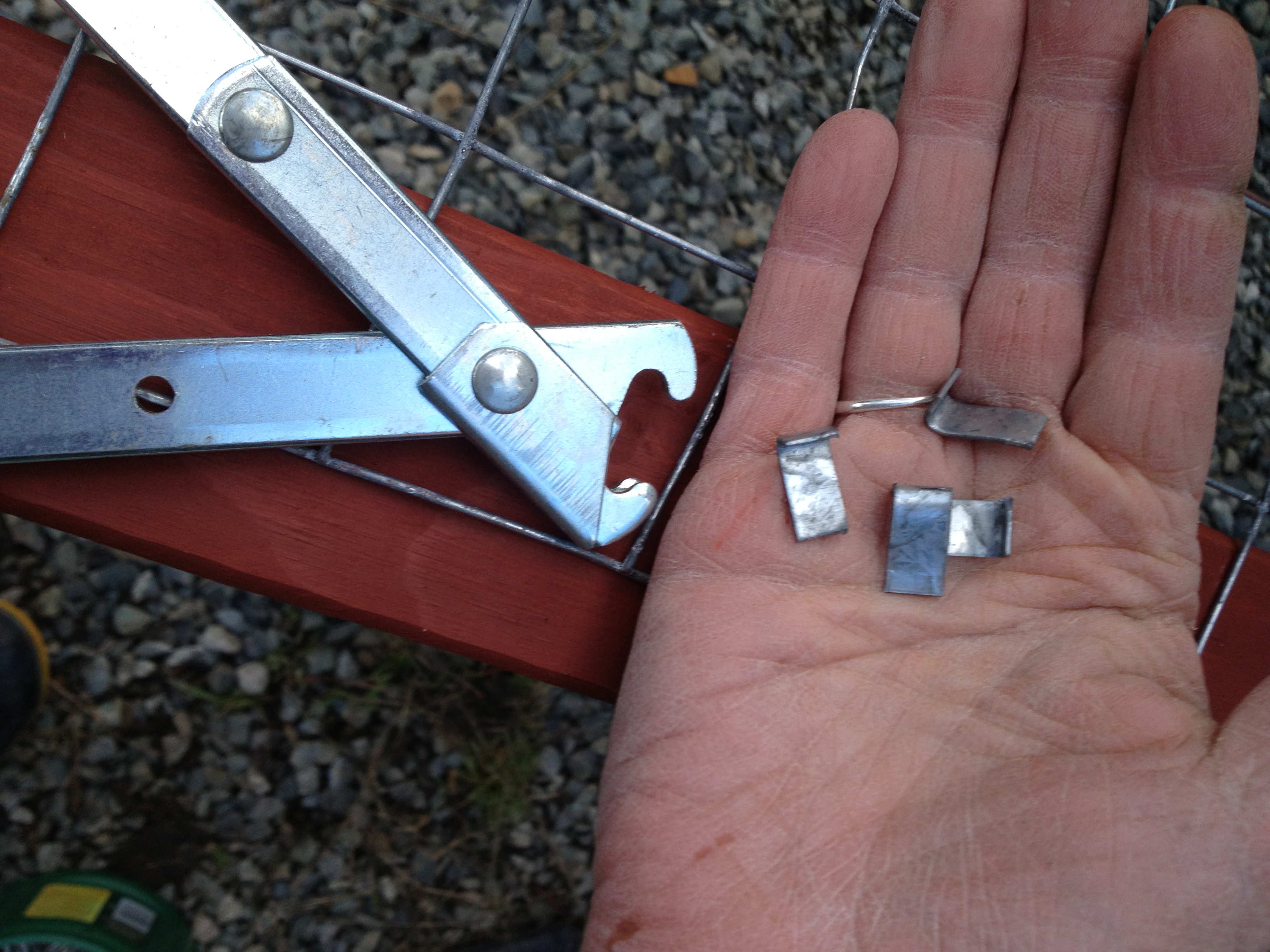
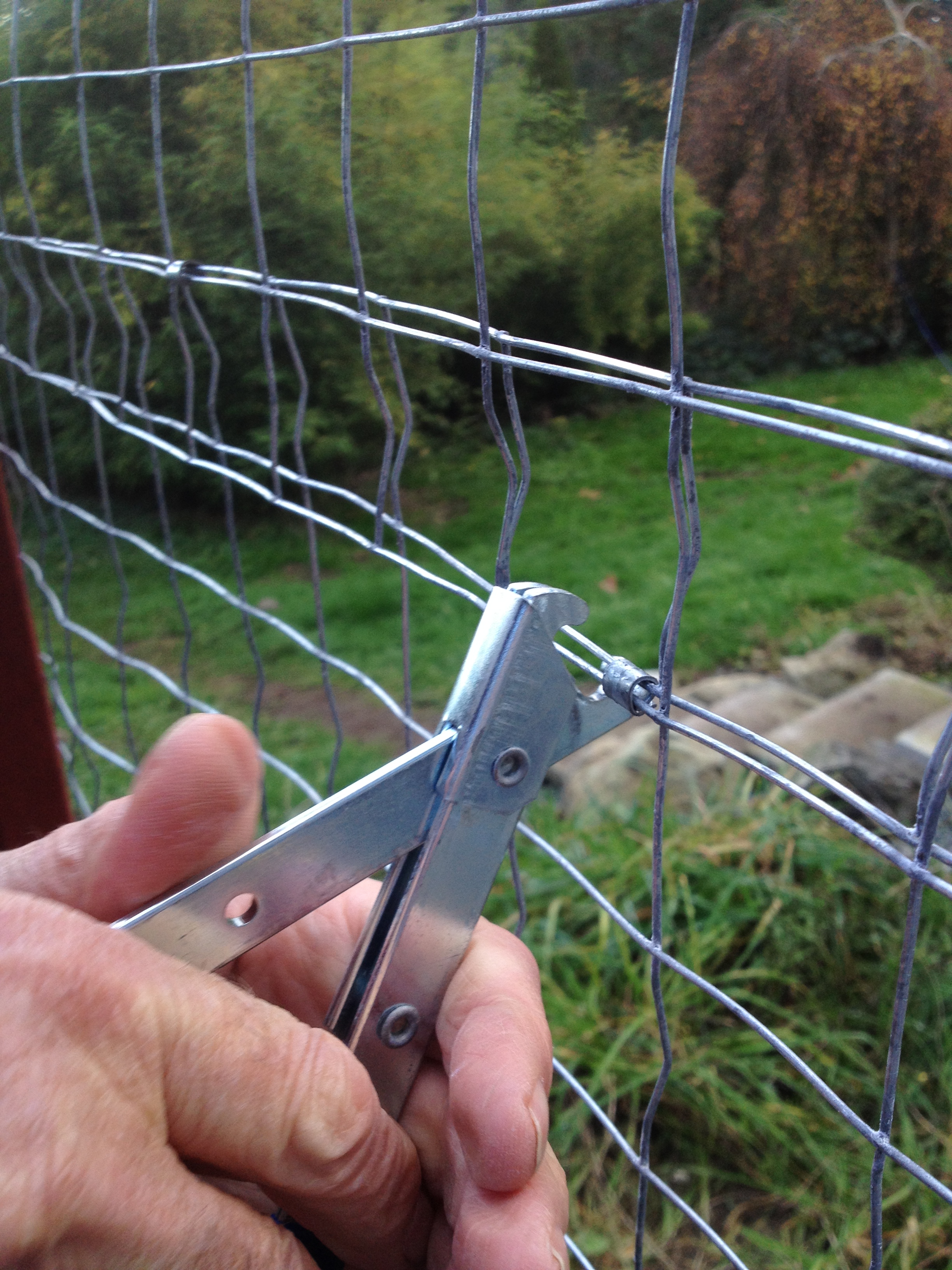
Crimpy tool and crimpy things to, you know, crimp two bits of wire mesh together. How crimpy is that?

Crimpy tool and crimpy things to, you know, crimp two bits of wire mesh together. How crimpy is that?

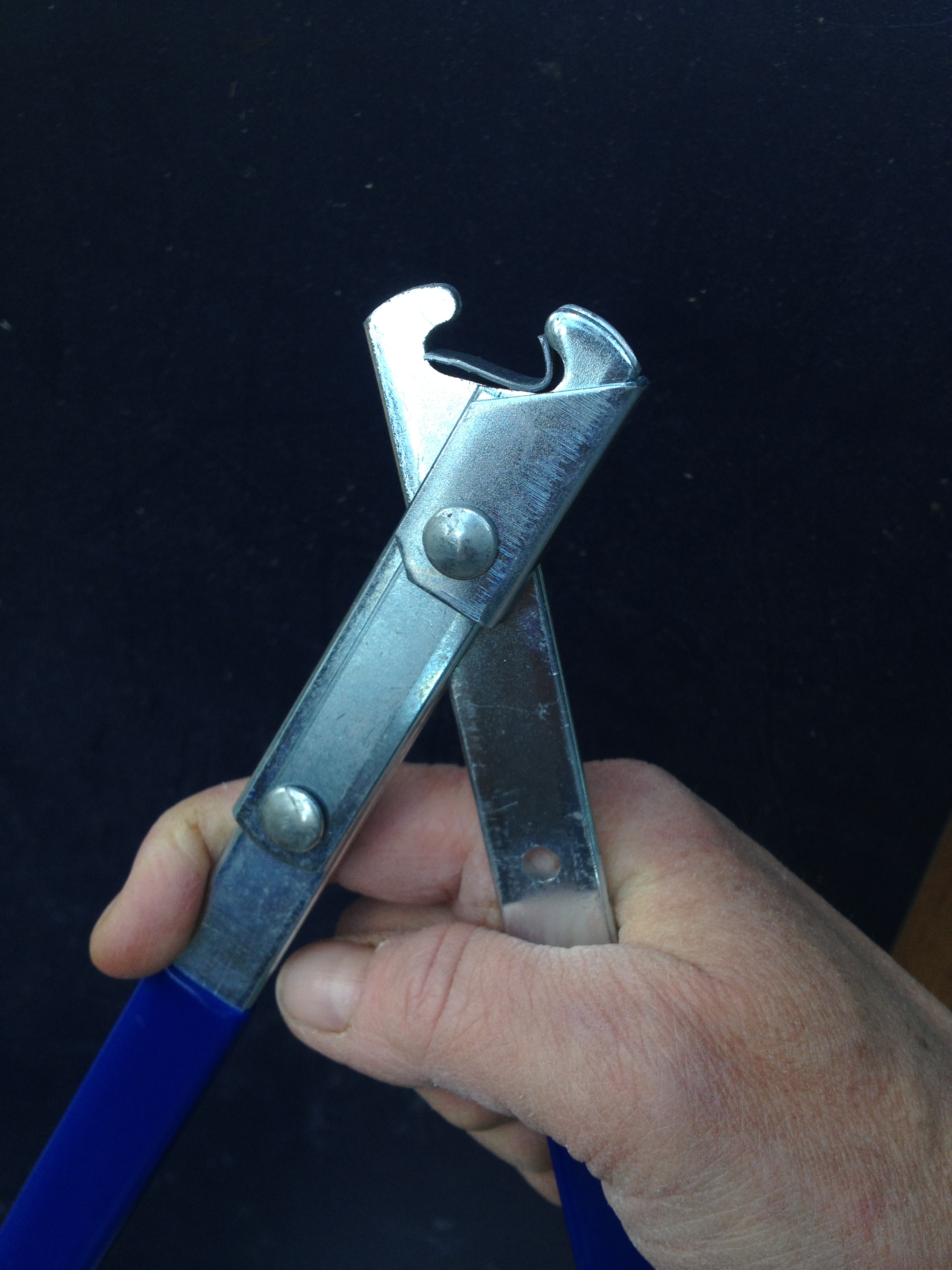
I have no idea what this tool is officially called (help!?), but I do know it works like a charm to fasten two bits of wire mesh together. This has been very handy as we build chicken pens. I do love my zap straps (or zippy ties, or whatever those plastic fastener things are called) – half the farm is held together with them. But, these fasteners are strong, quick to install, and best of all, NOT plastic.

Here, a crimpy thing (purchasable in bulk by weight at the feed store) is loaded into the crimper tool...

Here, a crimpy thing (purchasable in bulk by weight at the feed store) is loaded into the crimper tool…

Crimping tool in action fastening together two strips of mesh. The join makes an amazingly strong seam!

Crimping tool in action fastening together two strips of mesh. The join makes an amazingly strong seam!

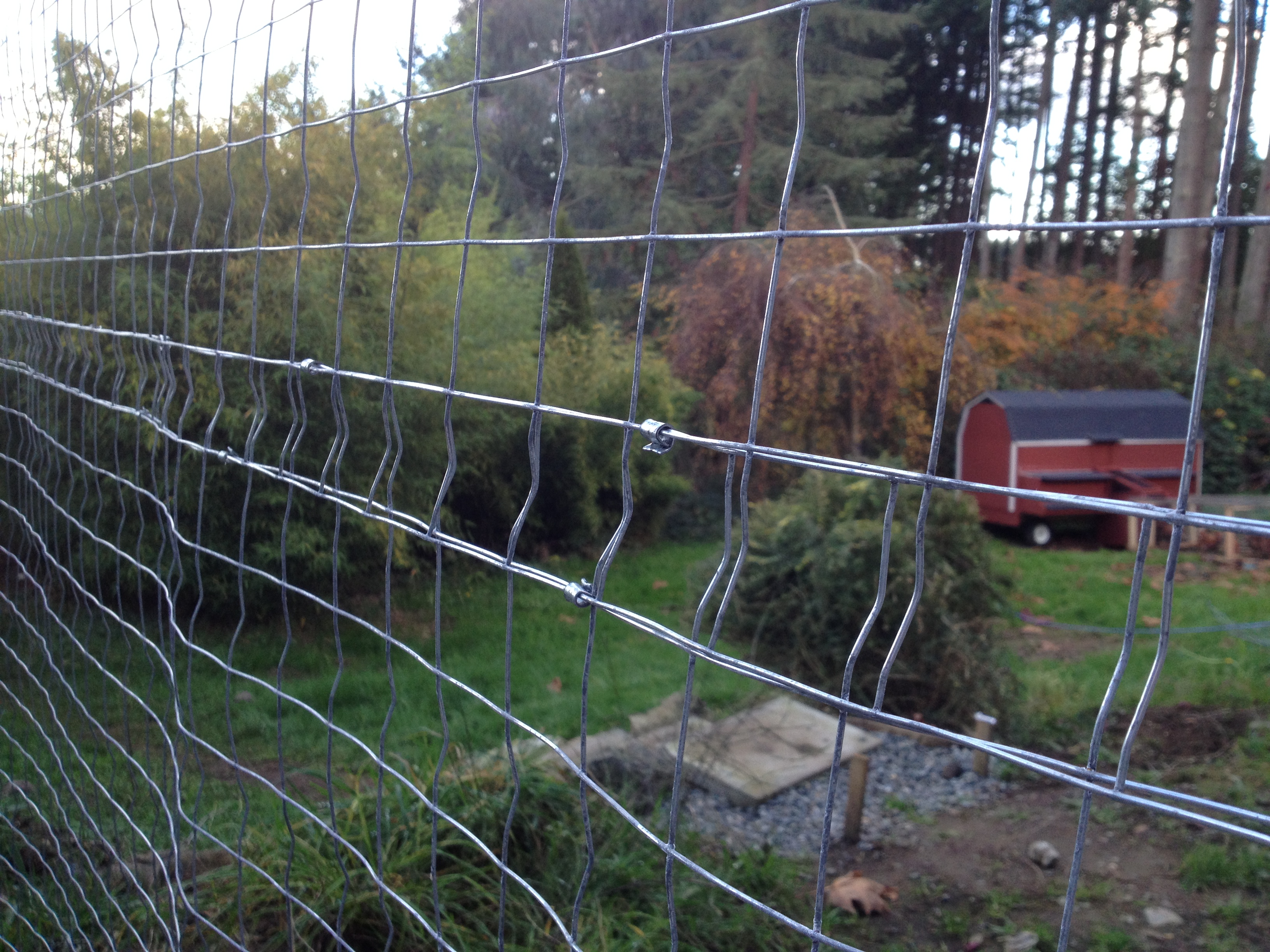
Tah-dah! An 8' width whipped together in no time at all!

Tah-dah! An 8′ width whipped together in no time at all!

Note: This is not a product placement post – if it had been, I would have at least known the name of the tool and would have provided a brand name and a handy-dandy link to the thing on Amazon. Not that I’d be averse to doing that for a product that actually worked like it was supposed to (hint, hint – feel free to send me your cool gadgety tools so I can tell the world how they work – or, don’t work as the case may be… and, hint, hint – a tool I really could use but am having some trouble finding locally is a horse drawn plow… If your Great Uncle Doug has one stashed in his hayloft somewhere, please, please tell him to get in touch!)

Interested in learning who else is participating in the 30 days agriculture blog-a-thon or the five things Holly Spangler will be talking about this month? Head over to Prairie Farmer to find out!
Day 14 – Dawn ’til Dusk – Just Another Day on the Farm

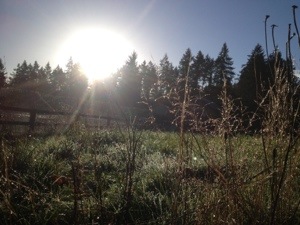
What happens on a sunny morning after a night of rain.

What happens on a sunny morning after a night of rain.

Mid-November around here is generally pretty wet, so what a delight it was yesterday to head out to a dripping landscape being warmed beneath a brilliant winter sun! When I started on the morning rounds the whole world seemed to be either steaming or glistening.

20131113-203249.jpg

By the time I was making my way back up the hill when I was done, the special effects show was over.

At dusk I was treated to a show of a different type.

20131113-203323.jpg

The rising moon kept getting tangled in the tree branches! It was so bright and clear that the moon shadows were black and distinct, so heavy on the ground I wanted to step over them – an odd effect, though not really photographable…

In between the showy dawn and dusk, it was a pretty typical Wednesday with stops at the feed store, farm stand, and coffee shop. During the afternoon worked on the new book (about different types of housing around the world – another in the Orca Footprints series, co-authored with Dani) and then continued with the job of cleaning out the vegetable beds. Wimpy always materializes when I pick up a trowel and he worked alongside me, snatching up grubs and worms as I made my way along the bed where, earlier in the season, squash had filled one end and a gorgeous yellow/orange/gold calendula party had been going on all summer. The turkeys, chickens, ducks, and hogs eagerly consumed all the weeds and bits of leftover veggie plants Wimpy and I dug up, so the whole process felt extremely satisfying and made a whole lot of creatures (including me) quite happy.

After that, made a delicious tomato vegetable and venison soup. Roasted more beets, parsnips, and carrots for good measure because really, is it possible to eat too many roast veggies? Gobbled that up with hunks of tasty olive bread before heading back out one last time to feed the night hay and check on all the creatures.

Ordinary day. Extraordinary day. Sometimes, it’s hard to tell the difference.

Interested in learning who else is participating in the 30 days agriculture blog-a-thon or the five things Holly Spangler will be talking about this month? Head over to Prairie Farmer to find out!
Vinegar Who Knew?

Vinegar Who Knew?.

Which vinegar for the job? And what if you’ve run out?

Here’s a useful post over on Town and Country Gardening about what vinegars are best to substitute for other vinegars in those terrible moments when you are part way through some tricky recipe only to discover that bottle of rice vinegar you thought you had squirreled away somewhere is actually cider vinegar. I’m reblogging here partly so I can keep track of the info the next time I’m reaching for the red wine vinegar for salad dressing only to discover a bottle of red wine in my hand instead. Turns out that’s not a problem (unlike having the opposite issue – reaching for a glass of wine and instead taking a glug of red wine vinegar…)

Day 13 – Chicken House Challenges Part 3

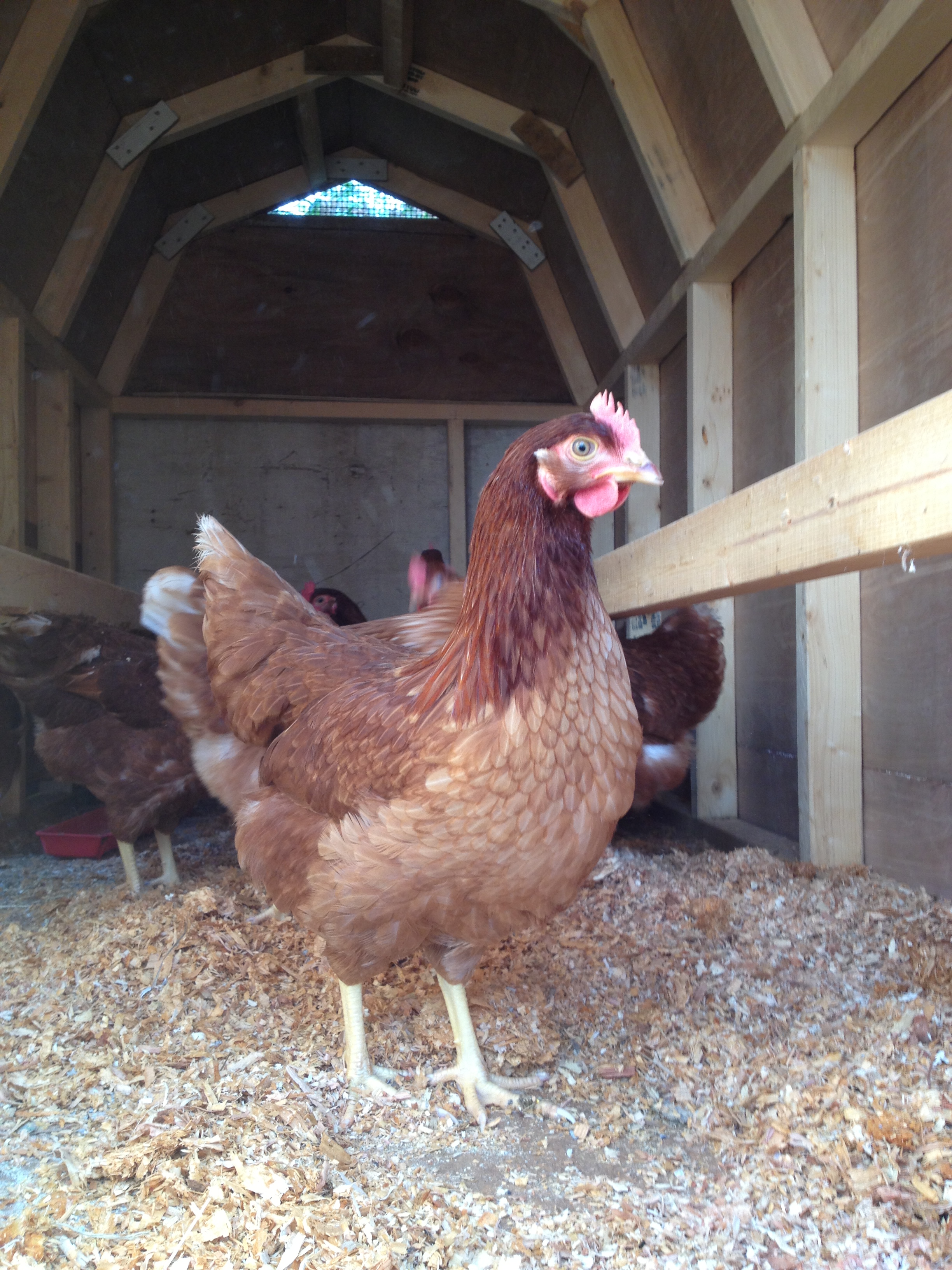
Meanwhile, inside the hen house, the girls were completely confused about where to sleep.

"You mean I'm supposed to jump up there?"

“You mean I’m supposed to jump up there?”

The first night, in fact, the girls couldn’t figure out how to walk back up the ramp, so they all piled up right at the bottom of the ramp, outside. By the second day they had figured that part out, but judging by the amount of hen manure in the nesting boxes and completely lack of bodies on the perches when I peeked in during the night, the girls hadn’t figured out that perches are for perching.

The next day, several of the hens had sorted out the perch situation, but nobody had laid an egg inside the nesting boxes, Instead, they are using the two back corners of the main area of the hen house. The next modification we’ll make is to add a low board across the bottom of the open side of the nest boxes. This will (I hope) accomplish two things: a) they won’t be able to shovel quite so much litter into the nest boxes when they are digging around in the shavings and b) they will feel more secluded, contained, and secure if they are behind more of a barrier.

Stay tuned…Interested in learning who else is participating in the 30 days agriculture blog-a-thon or the five things Holly Spangler will be talking about this month? Head over to Prairie Farmer to find out!
Here's a shot from the stage when we were gluing down the roofing felt on the nest box roof. The plywood is over the top of the roofing to evenly distribute the weight of the heavy objects placed on top.

Here’s a shot from the stage when we were gluing down the roofing felt on the nest box roof. The plywood is over the top of the roofing to evenly distribute the weight of the heavy objects placed on top.