Of Trees and Love

writergrrrl's avatarNikki Tate - Author

Trees and Love

While looking for tree quotes that might be suitable for the CIP page of Deep Roots I came across this one by Khalil Gibran who is a pretty quotable guy. I probably won’t use it in the book (I’m leaning toward something from Big Yellow Taxi by Joni Mitchell). Another possibility is a quote from Antoine de Saint-Exupéry that ends with, The tree is a slow, enduring force straining to win the sky. It turns out plenty of people have lots to say about trees so my challenge is not finding a quote to use but rather sorting through dozens and dozens to find one that works for the image selected for the page (which is not the image above… but of a young woman standing beneath a large tree at the water’s edge. She has one arm extended so it looks  as if she’s holding hands with the tree… a…

View original post 31 more words

My Kingdom for a Caption

writergrrrl's avatarNikki Tate - Author

Deep Roots:How Trees Sustain Our Planet is back on my desk for a few days. This is part of the Orca Footprints series (Orca Book Publishers) and, like the other books in this series, it looks beeee-u-tee-ful! Jenn at Orca is doing a great job with these titles and it’s so exciting to see things coming together! My next task is to add a few more captions (some of the images have changed) and then provide nitty gritty finishing touches like the dedication and acknowledgements… Soon, soon we will have a book on hand!

View original post

Joy – Part Two

joy part two title IMG_4809If you look up an established route in a climbing guidebook you’ll get an idea of how many pitches and the length of each, what permanent bolts or other hardware (fixed gear) might already be there, and what kind of gear you will need to haul up the mountain with you.

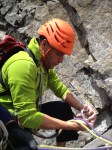
If you don't own your own ropes, cams, XX, slings, and stuff you don't even know the names of and have no clue how to use any of it, it's handy to hang out with people who a) have stuff and b) know how to use it

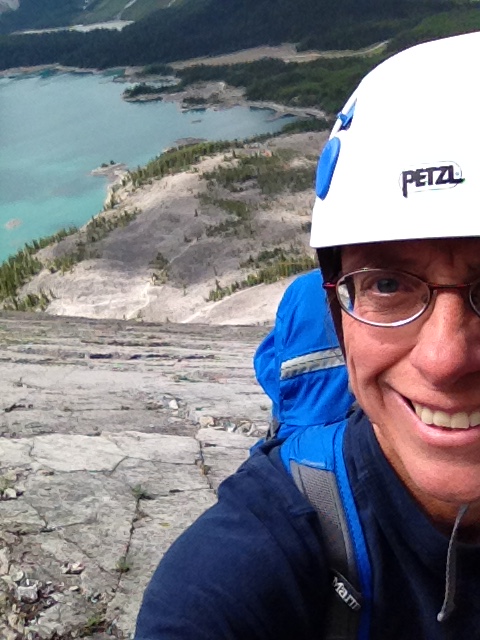
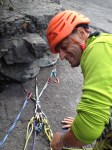
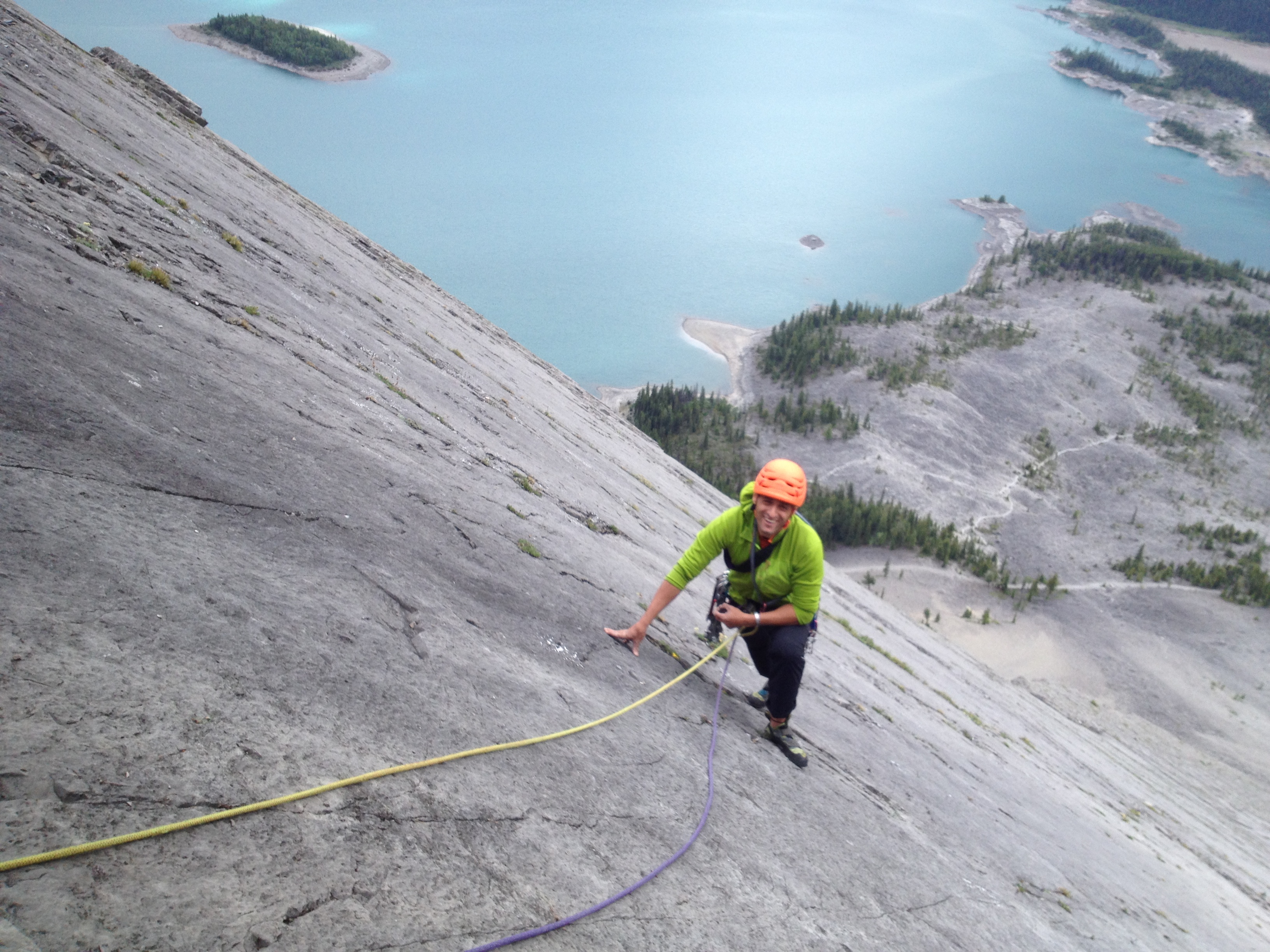
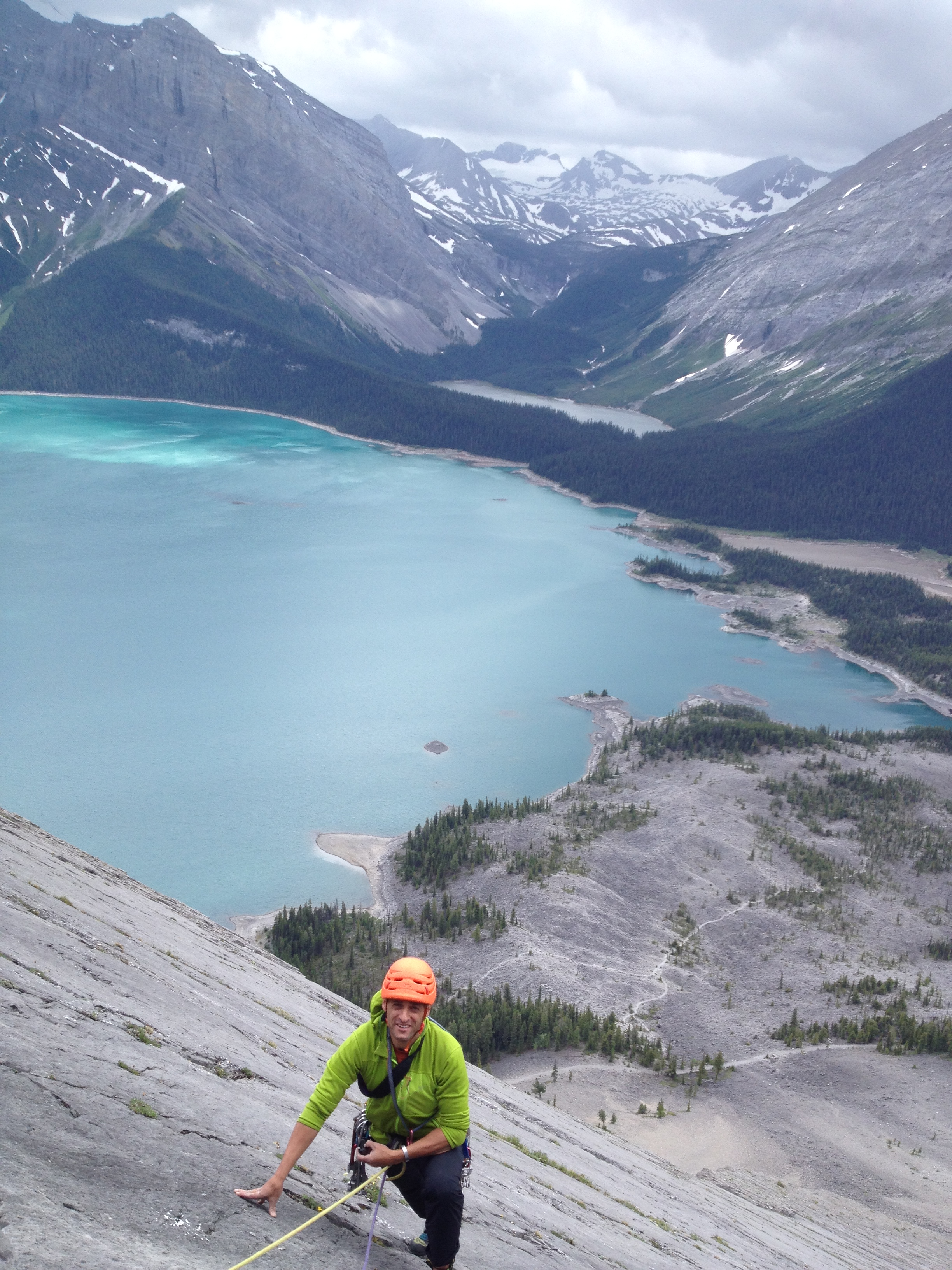
If you don’t own your own ropes, cams, nuts, quickdraws, slings, and stuff you don’t even know the names of and have no clue how to use anyway, it’s handy to hang out with people who a) have stuff and b) know how to use it. Note the cheerful smile. A positive attitude and endless patience are fine attributes in someone leading newbies up mountains. And by newbie I am referring to me and not Anne, the third member of our party on Joy Day. Anne, it turns out, is gazelle-like in her navigation of talus (see previous post) and willing and able to belay pitch after pitch when climbing with injured geriatrics… 

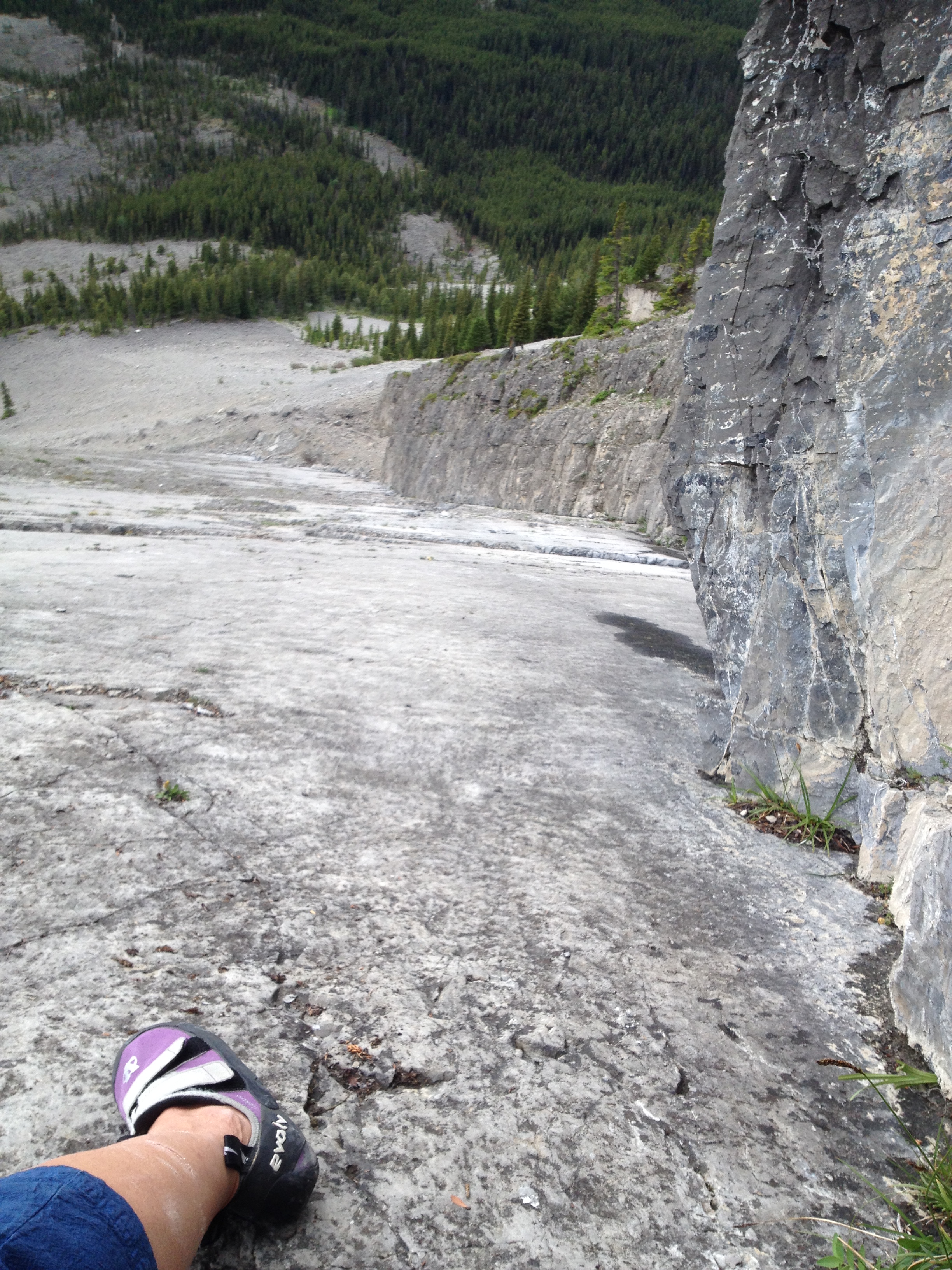
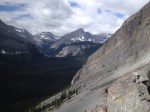
Every time I turned around there was some new vista to photograph. Next time, I'm going to haul my better camera up with me, though the iphone did an admirable job. It constantly amazes me how tiny wildflowers, moss, lichen and, yes trees are able to grow in what appears to be a totally inhospitable environment.

Every time I turned around there was some new vista to photograph. Next time, I’m going to haul my better camera up with me, though the iphone did an admirable job. It constantly amazes me how tiny wildflowers, moss, lichen, clumps of grass and, yes trees are able to grow in what appears to be a totally inhospitable environment.

Once all the mysterious gear was organized and strapped to bodies (mostly to the body of our fearless leader), the work of keeping us all more or less safe began. This was my first multi-pitch climb so I was totally intrigued by the various do-hickeys and how they were used (expert rock climbers, forgive anything completely stupid I may say and, yes – I know they are not called do-hickeys).

Anne Belay ready to play out rope as our fearless leader starts moving up the slab, hauling ropes behind him that will later be used to prevent either of us from sliding backwards off the mountain.

Anne tied in and getting ready to belay (play out rope) as our fearless leader starts moving up the slab, hauling ropes behind him that will later be used to prevent either of us from sliding backwards off the mountain.

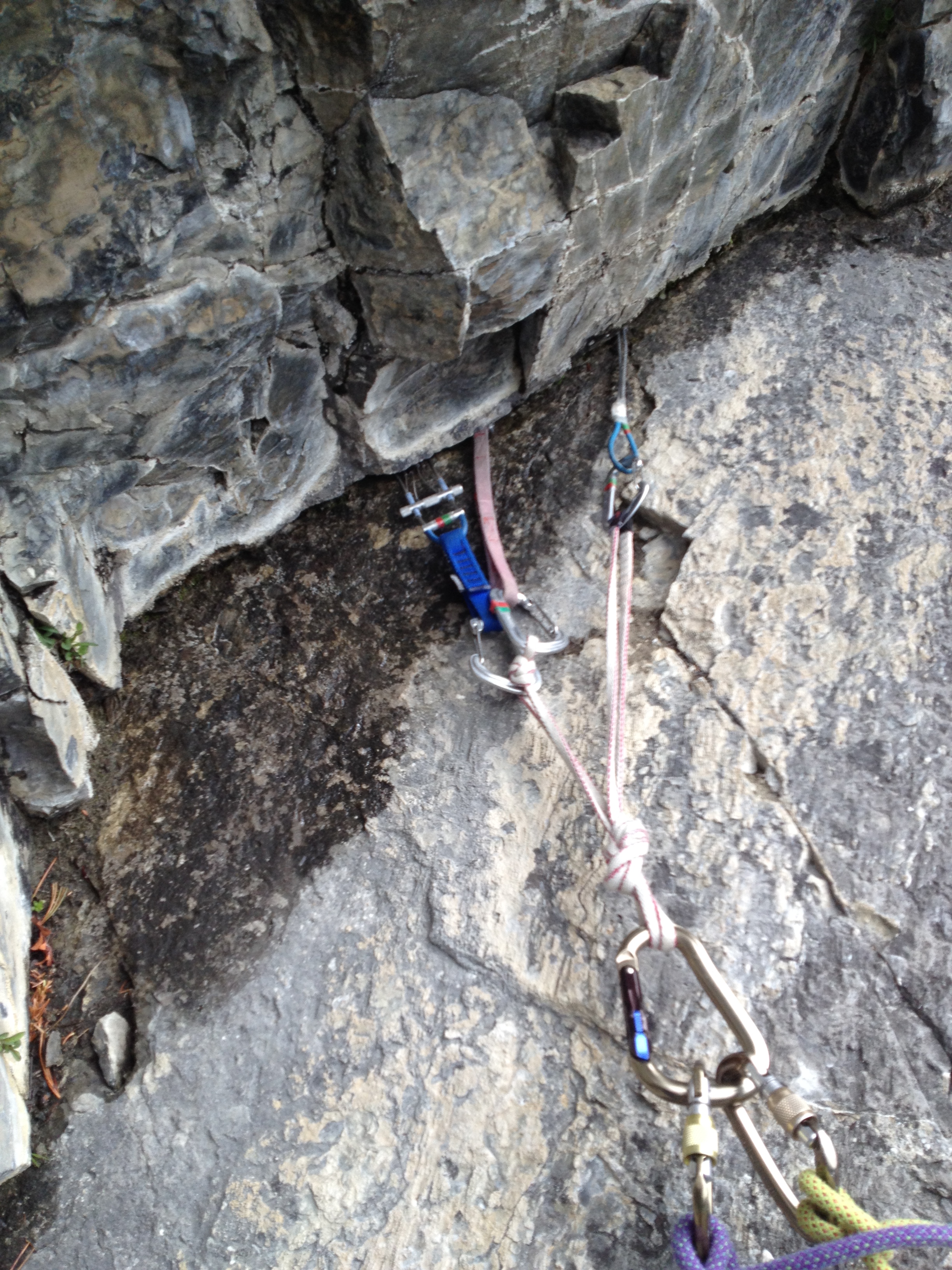
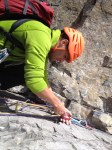
Crouching on the slab, Fabio looks for a good spot to jam some of that gear into handy crack so the ropes will be attached to something reasonably solid...

Crouching on the slab, Fabio looks for a good spot to jam some of that gear into a handy crack so the ropes will be attached to something reasonably solid…

All the way up the slope, Fabio bounded ahead, stopping occasionally to set more rope traps (yes, yes – I know that’s not what they are called either…). As he went, dragging the climbing ropes behind him, he clipped them in as he placed draws and kept going until the ropes stretched between him and us were basically used up. Along the way Anne played out the slack so if Fabio fell he would only crash backwards as far as the last piece of protection he had placed.

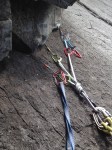
It was amazing how tightly some of those do-hickeys held on to that crack...

It was amazing how tightly some of those do-hickeys held on to that crack…

Anne paying close attention while belaying...

Anne paying close attention while belaying…

Fabio scampering up the rock face dragging the ropes behind him...

Fabio scampering up the rock face dragging the ropes behind him…

IMG_4786 IMG_4788Me, snapping photos while the other two did all the hard work…

Meanwhile, gear continued to be placed up above us. When Fabio reached the end of the rope then he set up an anchor so he could belay us, taking up the slack as we climbed up to join him. Sometimes belay anchors were located on a luxurious ledge so we could all stand with feet more or less level. Just as often, we had no space to maneuver and sort of perched with screaming calves on the rock, hoping the next section would go quickly so we could move on again. (By the way, if you click on one of those smaller images you can enlarge it and click through the gallery…)

And that was the pattern for several hours – Fabio led the way (while Anne belayed, something my injured elbow really didn’t do well), set gear, and established a belay anchor so we could follow him up. We repeated the process about ten times (I was going to keep a very accurate and precise log detailing each pitch but confess I totally lost track after about four or five…).

Eventually, we reached the top (actually, eventually came pretty quickly – we moved fast and made it up in under four hours). Every time I turned around and looked back as we reached a new resting spot the views did, indeed, got better and better as more and more of the lakes below appeared.

At some point Anne and I failed miserably in our attempts to free a nut from the crack (refer to earlier comment about how hard those little suckers hang on) so Fabio had to climb back down to retrieve it and then climb back up to join us.

IMG_4863 IMG_4865

To be continued… I’ll leave the climb at this point and continue in the next post because the worst part of the whole expedition was the bit AFTER we had reached the top and somehow had to get back down again…

In Search of Joy – Part 1

joy title 03 framed

The timing of my elbow injury couldn’t have been much worse, really. It happened right at the beginning of the climbing season and I was so excited about heading outside and climbing actual rocks and not just inside in the gym (which has been a lot of fun, but I was raring to go feel some wind whistling through my helmet ventilation holes!)

I briefly considered cancelling a planned trip to the Rockies (brief=nanosecond) but it turns out that with a brace and a knowledgeable guide it’s entirely possible to find routes up mountains that are stunning and fun and which require very little of one’s elbows.

Joy is the name of a route on Mount Indefatigable which overlooks the Kananaskis Lakes, a name I assume was given to the route by one of the three first ascentionists in 1995 (Peter Gatzsch, Urs Kallen and Geoff Powter).  …photo from the Gripped.com article about four routes along the Bighorn Highway in Alberta. The white line indicates the route known as Joy.

When I first heard the name I wondered if I would find it joyous to climb. From what I could find online, it seemed like the climbing wouldn’t be too hard and would require little if any pulling with my bad arm. It also seemed like it would take a while (it’s about ten pitches long and though none of the sections are difficult, think about marching uphill on a pretty steep grade for several hours after having recently arrived from sea level and you can see why I imagined there could be a bit of huffing and puffing and calf-burning going on toward the top).

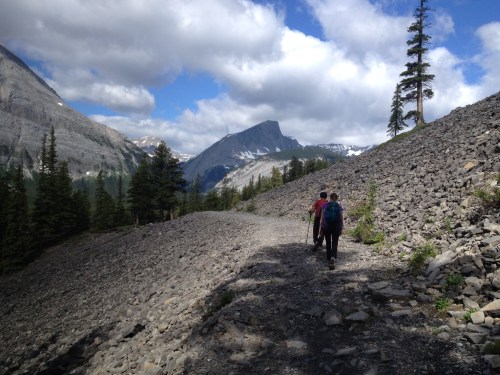
The hike in from the parking lot took maybe 45 minutes to the bottom of a truly dreadful rock pile.
IMG_4751

IMG_4754

Knowledgeable guide: “We are here. We need to go up there.”

IMG_4758

Experienced companion: Halfway up the rubble pile before I could even get started. (See her way up there?) Knowledgeable guide: The trick is to take small steps, find a level place to put your foot, and get into a rhythm. Me: Rock piles suck. I thought we were here to climb a mountain?

Things I learned about the Rocky Mountains:

1. They are falling apart. The quantity of crumbled rock that has fallen from on high is staggering.

2. A huge expanse of fallen rock lying at the base of one’s objective is known as talus.

3. If the resting angle of the talus slope exceeds 33-37 degrees, things will start to slither. I am glad I did not know this and had no way to measure the angle of the slope we had to traverse because I would likely have enjoyed my wobbly trip even less.

4. Marching across a talus slope is an obnoxious exercise. Every step is uncertain. It’s pretty steep: even though it’s not anything like a cliff, losing your balance would suck big time. I could easily imagine slipping and sliding my way toward the bottom, surrounded by a hail of rocks big enough to snap bones. When this sort of thing happens one engages in some sort of self arrest procedure. This basically means using boots, hands, walking stick, teeth – anything to dig in and grab on and stop sliding. This seems all well and good in theory, but how one would self arrest in a landslide when everything around you is slithering and big enough to cause some serious damage I’m not exactly sure. Variations of this maneuver are also carried out on ice and snow using ski poles and pick axes. At this point I remain unconvinced about how much fun ice climbing and glacier whacking could possibly be. At this point, my winter heart sings sailing songs in southern climes.

5. Fortunately, if you do as you are told by the experienced guide (read the micro-terrain, place each foot in as level a spot as possible, stand up, take small steps, use your pole as your third leg, get into a steady rhythm and let momentum carry you) it is possible to pick your way over a sizeable talus slope without dislodging anything too big or toppling over backwards. The end result? A somewhat sweaty arrival at the base of the slab.

joy fab and anne prep IMG_4768

Rope Management 101: try not to get too many knots in the ropes. Try not to drop your rope over the edge. Make sure you have a knot in the end of the rope so it doesn’t slip through a belay device, which could result in you dropping over the edge of a precipice. Try not to think about stuff like dropping off the edge of a precipice or your climbing experience suddenly becomes a lot less fun.

While the two pros were busy sorting out gear, organizing ropes, and making sure essential supplies like sunflower seeds were handy, I gawked around at the view.
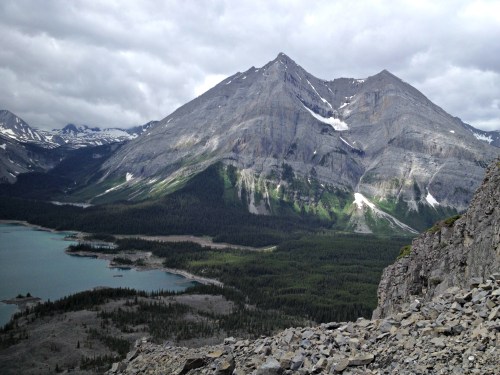
In the foreground to the right the tail end of the rubble heap we scrambled over to get to the start of the climb proper.

In the foreground to the right is the tail end of the rubble heap we scrambled over to get to the start of the climb proper.

I thought the view was pretty great right from the start of the climb, but the others insisted things would just get better the higher we got.

Looking to our right, the slab and, beyond that, Upper Kananaskis Lake.

Looking to our right, the slab and, beyond that, Upper Kananaskis Lake.

As the winds blew clouds over the lake, the patterns of light and water shifted and changed so even when we were standing still (waiting for our fearless leader to set up the next belay anchor, for example) the show was an ever-changing treat. Though I suppose we could have sat and had a picnic and then scrambled back down over the dreaded talus slope, we were all eager to get going.

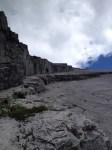
Looking up the slab - though mostly smooth, every now and then a dramatic crack opened in the rock before us

Looking up the slab – though mostly smooth, every now and then a dramatic crack opened in the rock before us. 

The route up Joy is pretty straightforward – basically follow the little crack at the base of the outcropping on the left and head uphill. The crack, it turns out, is perfect for shoving in all manner of knobbly things known collectively as ‘gear.’  More about gear placement and what the lead climber does (and what we followers had to do) to come in the next post, but this is getting rather long and I’m a bit worried about creating a mega post with a gazillion photos that will take forever to load.

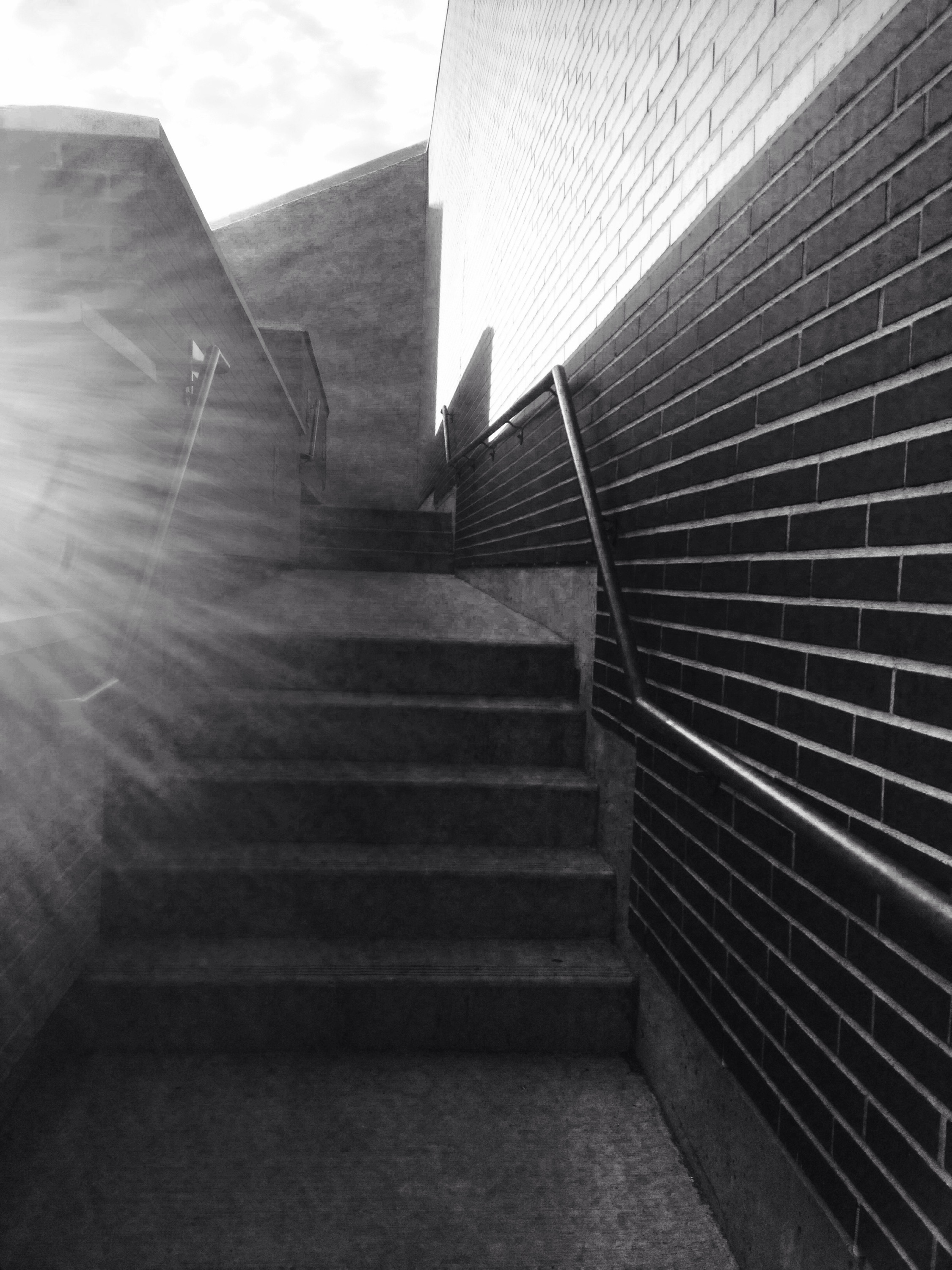
Day 12 – architecture and monochrome (Photo 101)


Snapped this yesterday when walking up the stairs to rooftop parking at a local shopping mall. A very ordinary photo was made more dramatic by converting to black and white and upping the contrast a bit.