Tag Archives: small farm

Welcome, Babar! Go Away, Snow! (NABLOPOMO)

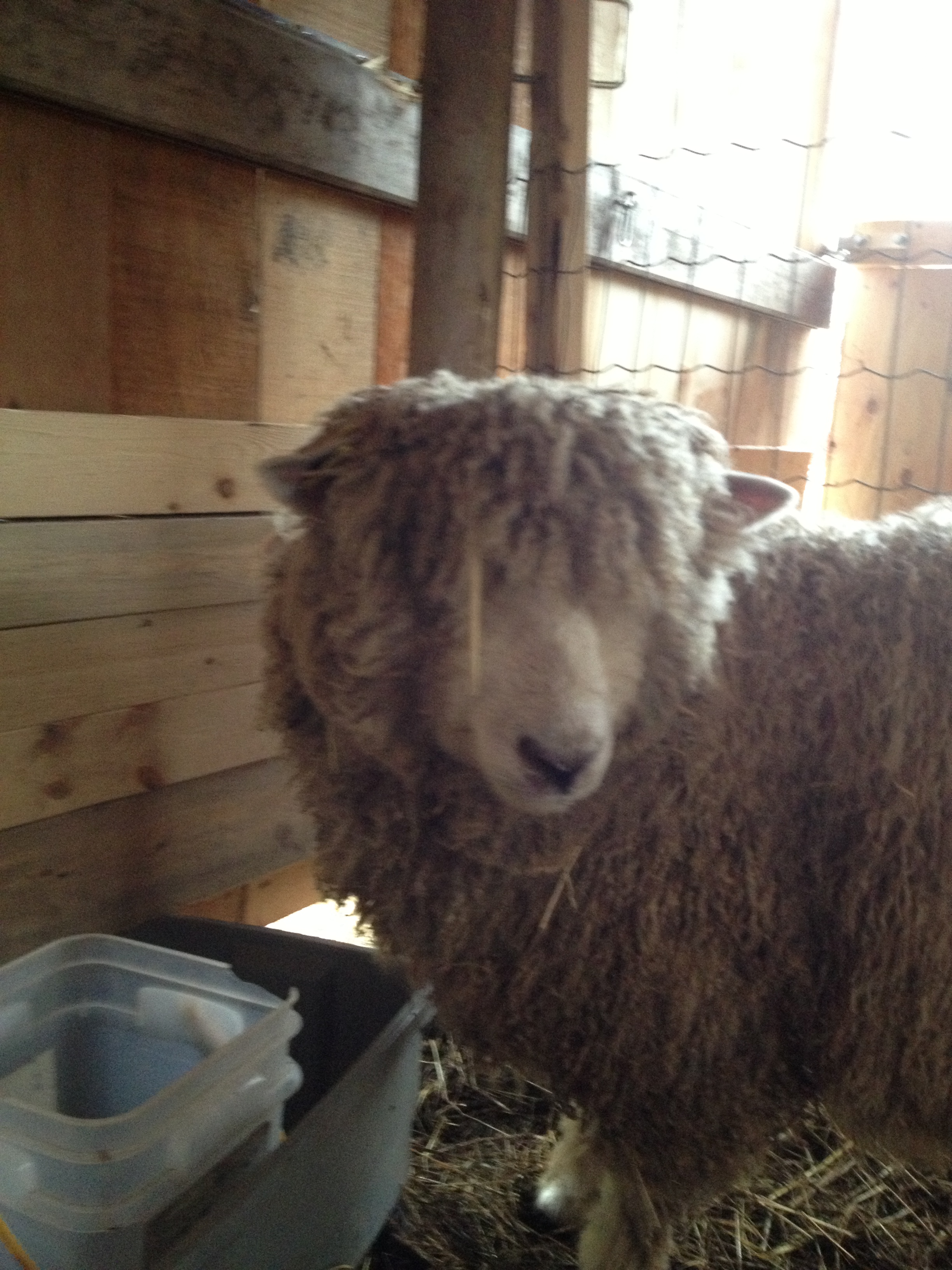
Welcome, good sir...

Welcome, good sir…

Babar the Cotswold ram arrived today and is now in with the ewes to be bred. Given it was a perpetual motion kind of day, it’s actually a minor miracle I managed to get this quick (terrible) shot when our new boy arrived in the sheep shelter. It didn’t help that he had no interest in posing, but immediately dove into the grain bucket…

After polishing off the few morsels of grain left in the tub, he shot out the door and chased the girls around. I'm sure he's thinking he's arrived in a pretty cool place!

After polishing off the few morsels of grain left in the tub, he shot out the door and chased the girls around. I’m sure he’s thinking he’s arrived in a pretty cool place! This did not, however, make for a relaxed photo session.

Rushing around for the humans continued after the ram delivery – had to do a bit of Christmas shopping (it’s never too late to get started…) and then convince all the Christmas turkeys that, yes, they really were going to bunk up together even though they hardly know the rejects from the breeding group. How, exactly, they can tell each other apart, I don’t know – but they certainly keep track of who’s who and today there was an awful lot of restructuring going on in the turkey hierarchy.

Then, the rest of the evening chores by headlamp as the turkey rodeo went on for far too long and darkness overtook me before I was done… A very long sigh when I spotted Olivia’s piglets ambling around nonchalantly with the adult hogs (what!?). Nothing to be done at that point except open up all the gates between the pens to make sure everyone could find room in a proper shelter during the night.

Good thing I did so because when I went down to the barn to do the late hay rounds for the horses and goats, it looked like the farm had been transplanted into the inside of a snow globe.Okay. Thank you. That's enough snow now... Okay. Thank you. That’s enough snow now…

No relief in sight (except, perhaps, for the snow… the temperatures are supposed to stay mild, so I doubt this will stick around for long). Busy, busy for the next few days and right into the holidays. Despite myself, I am feeling most definitely festive!

NABLOPOMO – How to Make a Hog Waterer from a Garbage Can

New hog watering can in place...

New hog watering can in place…

A quick, nearly wordless Wednesday water update…

Wedged securely between two trees and flanked by 2 X 6’s, so far, it hasn’t moved an inch. The piglets caught on right away and have been happily slurping, but Cora remains unconvinced this is worth her time. I’ve been putting small amounts of water in the blue dish in front to give her the idea this is a good place to be looking for water and, as I say, the piglets are happy to drink from the hog nipple, but it looks like Momma is going to take a little longer to catch on.

Meanwhile, there is still water in her old tub, but I’ll continue to encourage her to check out the lovely CLEAN water, unpolluted by duck butts or hog snouts…

(For more info and photos re. how we built this, check out the post from a few days ago…)

NABLOPOMO – Sorting – More of These, Less of Those

The next few days look like they are going to have a similar theme: sorting and reorganizing.

Image

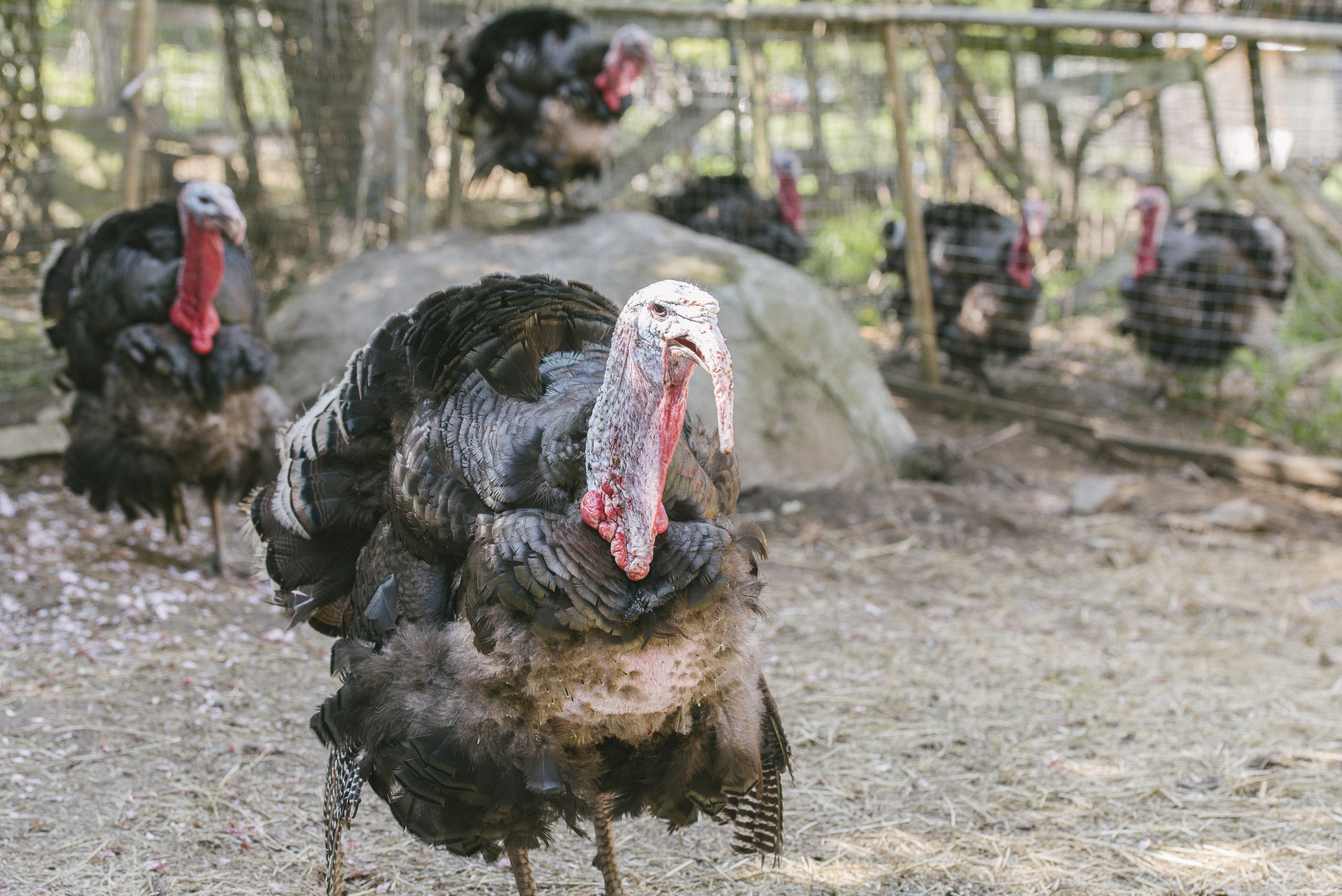
[Image D. Craig, Min of Agriculture] – Some of last year’s Toms in the breeding group.

The Christmas birds are going to be processed on the 21st which means I’ll need to pick the very best birds to hold back for breeding. I’l be looking for decent size and reasonable growth speed (there are two groups – a younger and an older and there are birds from the younger group that are actually much bigger than birds from the older lot), decent temperament, and, finally, more or less correct colouring. I’ll keep 2-4 Toms in the breeding group and 10-12 hens. That way, if someone comes along who would like a breeding trio, we can accommodate them. The birds will be useful through the breeding season, producing a good variety of poults for sale as well as my next year’s Christmas birds. Some of those breeding birds will have reached a good size by summer and when the laying and hatching season is over, some of those can be processed for a few Thanksgiving customers. I will likely also hold back some of the scrawny stragglers for the same purpose.

We are also slowly building a customer list of people who are interested in turkey eggs for eating. We love them, but it is very uncommon to find eating eggs in stores (can you think of a time you saw a carton of turkey eggs at a shop?) and it just doesn’t occur to people that turkey eggs are an option for the frying pan or baking.

Without the competition from the larger flock and some extra time, the smaller birds will have a chance to grow out in time for Easter or Thanksgiving of next year. Carrying more than 15-20 birds year round gets very expensive – commercial organic feed is exorbitant and during the winter months there isn’t much decent pasture for the birds to devour. And devour they do! Hungry turkeys eat an incredible amount each day and though I supplement with hay and veggies and softened alfalfa cubes (plus whatever they manage to find themselves), the feed bill gets out of hand very fast when I’m feeding too many birds.

Of course, the keepers and those destined for fine dining are to be found scattered between my two main groups of turkeys, which are raised in two different locations. This will mean penning, sorting, and transporting birds from A to B and B to A and then, the night before they leave the farm, loading the dining birds into the stock trailer for the short ride to the processor. We will also need to make sure we have more or less the correct number of birds of approximately the right size to fill the turkey orders.

Image

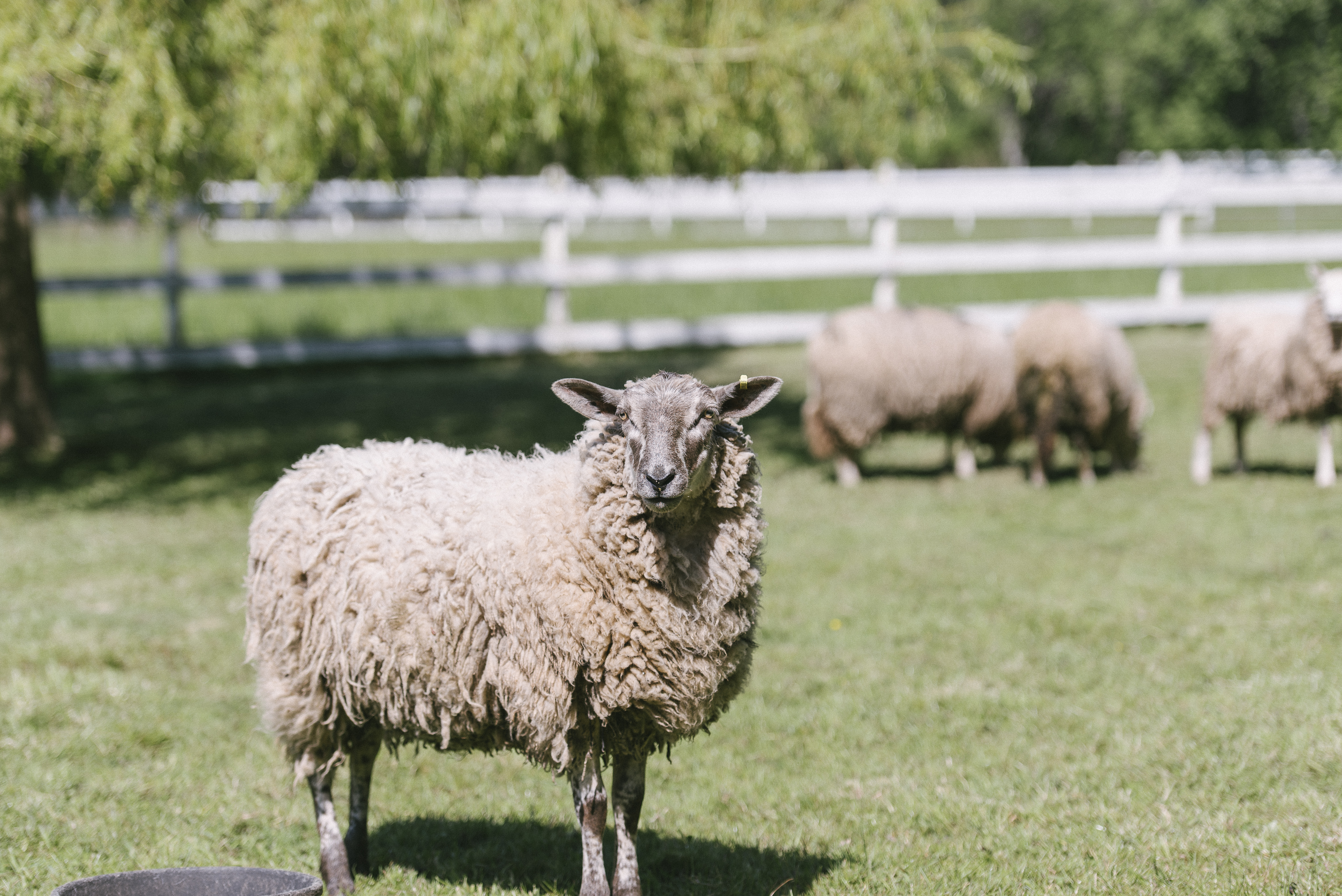
[Image D. Craig, Min of Agriculture] Freckles, one of the ewes soon to be introduced to the ram, Babar.

Meanwhile, our new  Cotswold ram will move from the farm where he has been spending the past number of weeks to the sheep fields. But, before he can get here, we need to move the ram lambs to their own field and separate the small ewe lamb who is too young to breed (she will spend the next couple of months hanging out with the goats). Only then can we introduce the new ram to the ewes to be bred for late spring lambs in 2014.

The ducklings from this summer are now also ready to process, though whether or not I can get coordinated to run them up island before the holidays are full upon us is another question. The ducks will stay with the layers (each year we increase the numbers a bit to try to keep up with demand) and all but two of the drakes will go for processing.

Image

[Image: D. Craig, Ministry of Agriculture] Pompadour, our Large Black Hog boar, ready to do his duty and sire more piglets.

And, finally, the piglets still are not fully sorted and reorganized. Olivia’s piglets are in a separate paddock but after a spectacular bolt down the hill and through an electric mesh fence, Cora is back in with her little ones. We will give that another go, perhaps tomorrow, to see if we can’t get all the weaners in one place and all the sows back together in another. Pompadour will then be called upon to woo the two mothers and we will continue to watch Pearl closely for telltale signs that she is pregnant (she has been in with him for a month or so now, so it won’t be long before she starts to bulge a bit).

The chicken sorting can wait until the new year, but not too long as the heritage birds do take their own sweet time starting to lay, so an early start is definitely an advantage. Wimpy will get to move into his own area with the four gorgeous Black Orpington girls who are now mature and ready to get to work in the spring.

Image

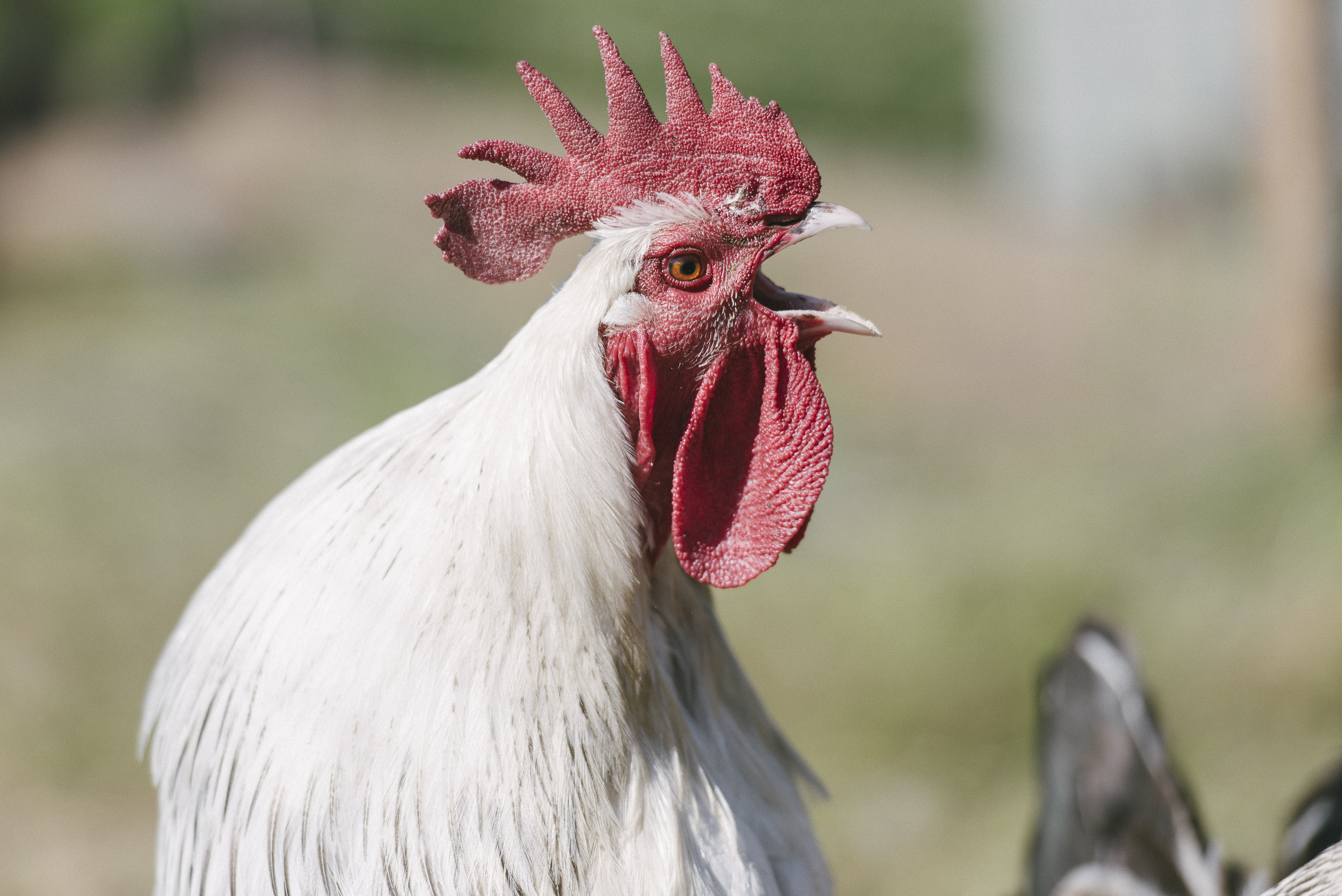
[Image: D. Craig, Ministry of Agriculture] Bill, the light Brahma rooster yelling about something… probably protesting my plan to take away his stunning Black Orpington girls and give them to Wimpy.

So, for the next few days it’s going to be all about counting and patience, because even though it may seem like a simple thing to move some piglets from pen A to pen B and sort out a few dozen turkeys, the critters seem to have a knack for being particularly uncooperative when their routines change. Wish me luck!

NABLOPOMO – Turkey Uprising Down on the Farm

Watch this shocking video warning farmers not to use certain words in front of their ‘holiday’ birds…


NABLOPOMO – We should be doing more of this… mending, that is.

Dad recalls all kinds of slogans from the war and post-war years. "Make Do and Mend" was one of them.

Dad recalls all kinds of slogans from the war and post-war years. “Make Do and Mend” was one of them. [E. colin Williams]

Sometimes I think my life must seem incredibly boring to other people. I don’t actually know anybody else who obsesses quite so much over things like buckets of water! If you are fed up with the subject, move along!

The hog water troughs have long proved to be a challenge – the pigs love to dump them over, climb into them, fill their mouths with dirt and then rinse and spit into them…

The ducks are the only creatures who are perhaps even worse at fouling (fowling?) containers of water. They blow their beaks under water to clear out the mud and sludge they accumulate while sifting through sludge looking for… whatever they are looking for. Anyway, between that delightful habit, their incessant splashing and dunking, and the liberal amounts of poop they deposit while they are busy floating around in places they don’t belong, they make a mess of the hog water quicker than you can say, “[Duck] Bottoms Up!”

With all that in mind, I decided to try a new watering system for the hogs. Inspired by a similar set-up over at my neighbour’s place, I bought a hog nipple and a couple of threaded bits so I could convert a garbage can into a covered watering system.

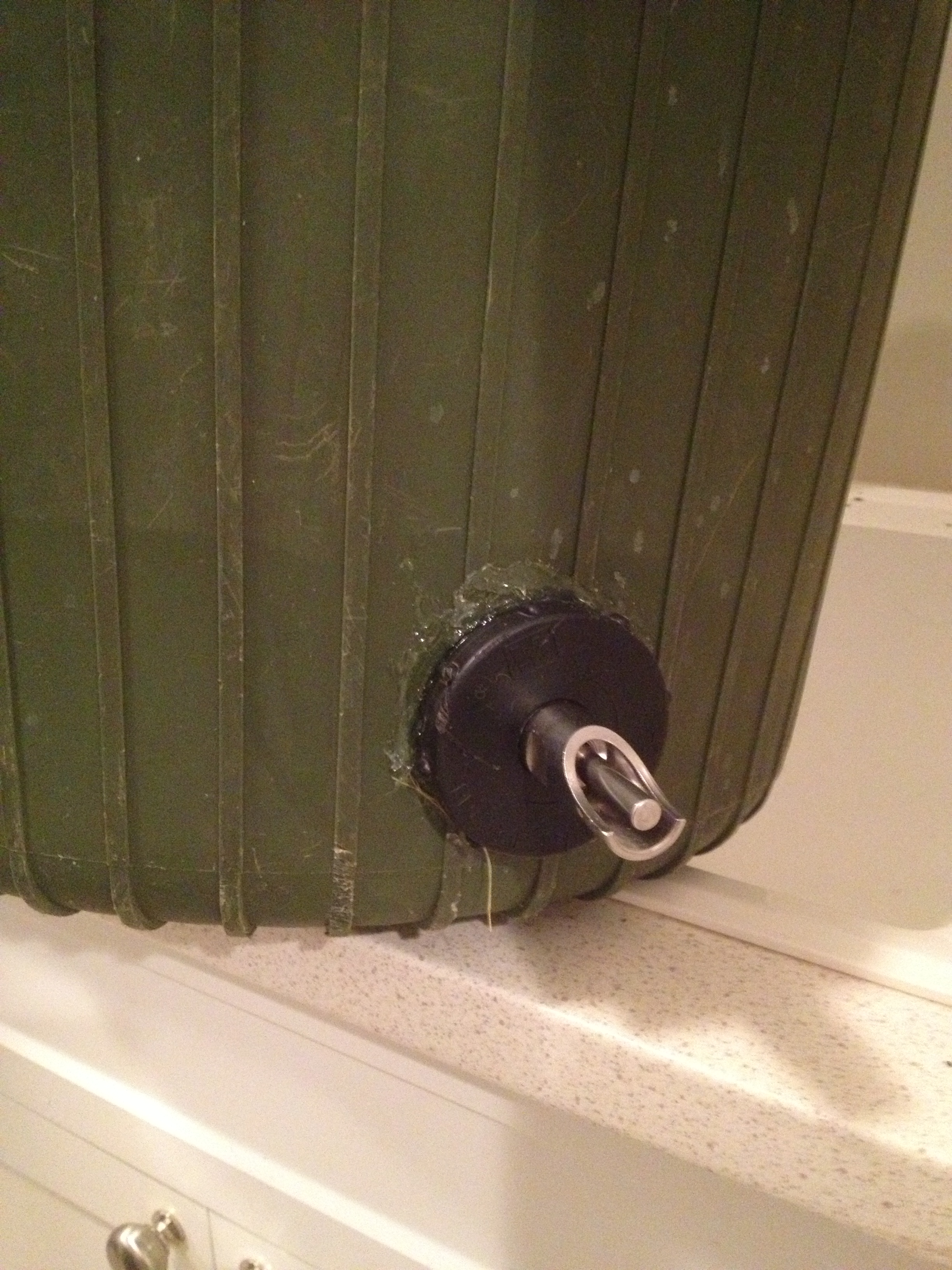
Dad and I set about installing what appeared to be a pretty simple set-up. We wrapped all the relevant threads in plumber’s tape, drilled a big hole in the side of the plastic garbage can, and then proceeded to fasten all the bits together. We screwed the hog nipple into Part A, put Part A a on the outside of the garbage can and then threaded Part B onto Part A, but inside the garbage can, sandwiching the wall of the can between the two parts. Sounds ludicrously complicated but was actually very simple.

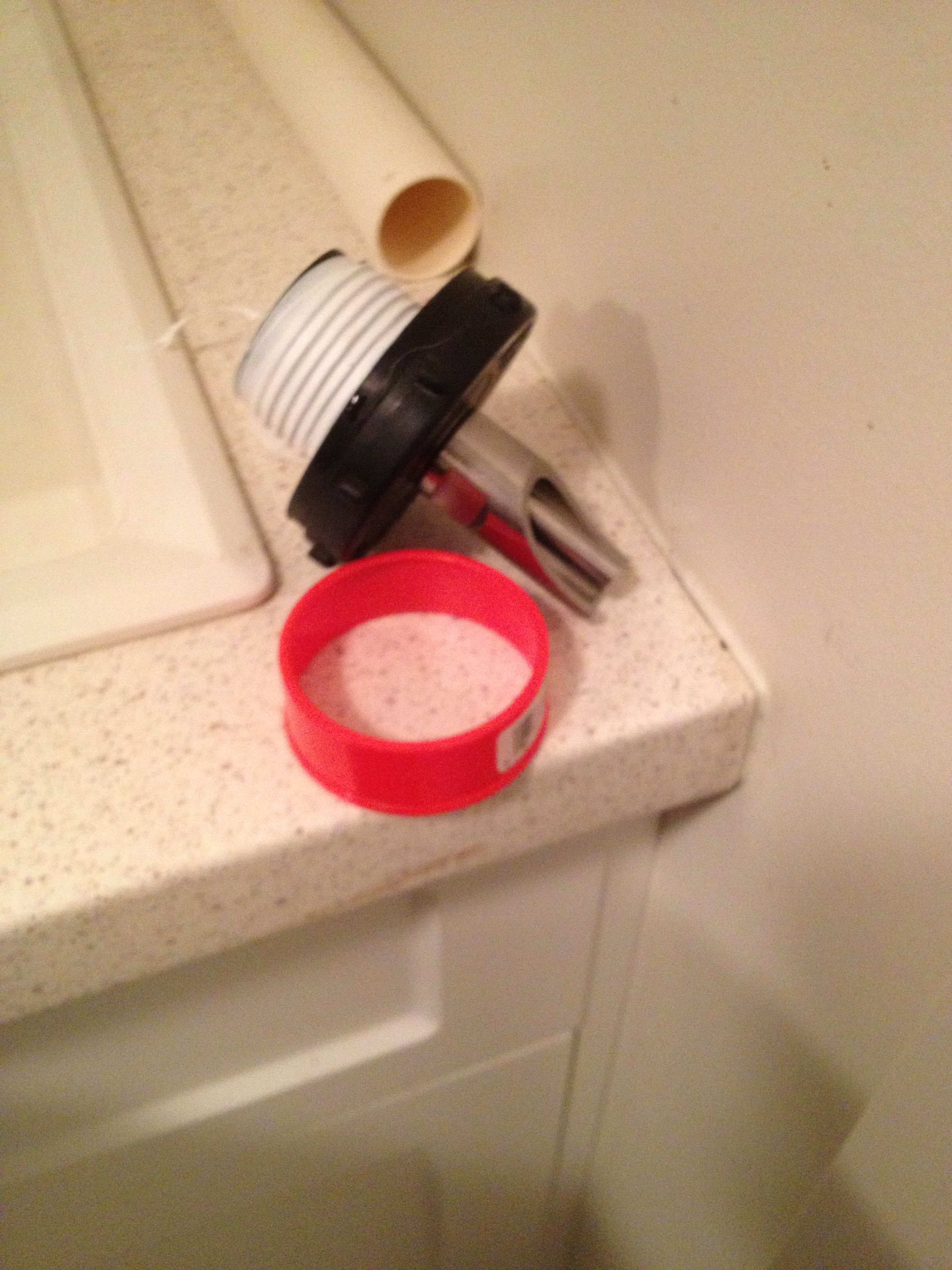
Hog nipple screwed into Part A. If only I'd paid more attention at the farm supply store as to what Part A was actually called... Threaded collar into which a hog nipple is inserted...

Hog nipple screwed into Part A. If only I’d paid more attention at the farm supply store as to what Part A was actually called… Threaded collar into which a hog nipple is inserted… The red ring is the outside cover of the roll of plumber’s tape.

We put some water in the garbage can so it just covered the new hog nipple installation and went and had dinner.

Testing the seal...

Testing the seal…

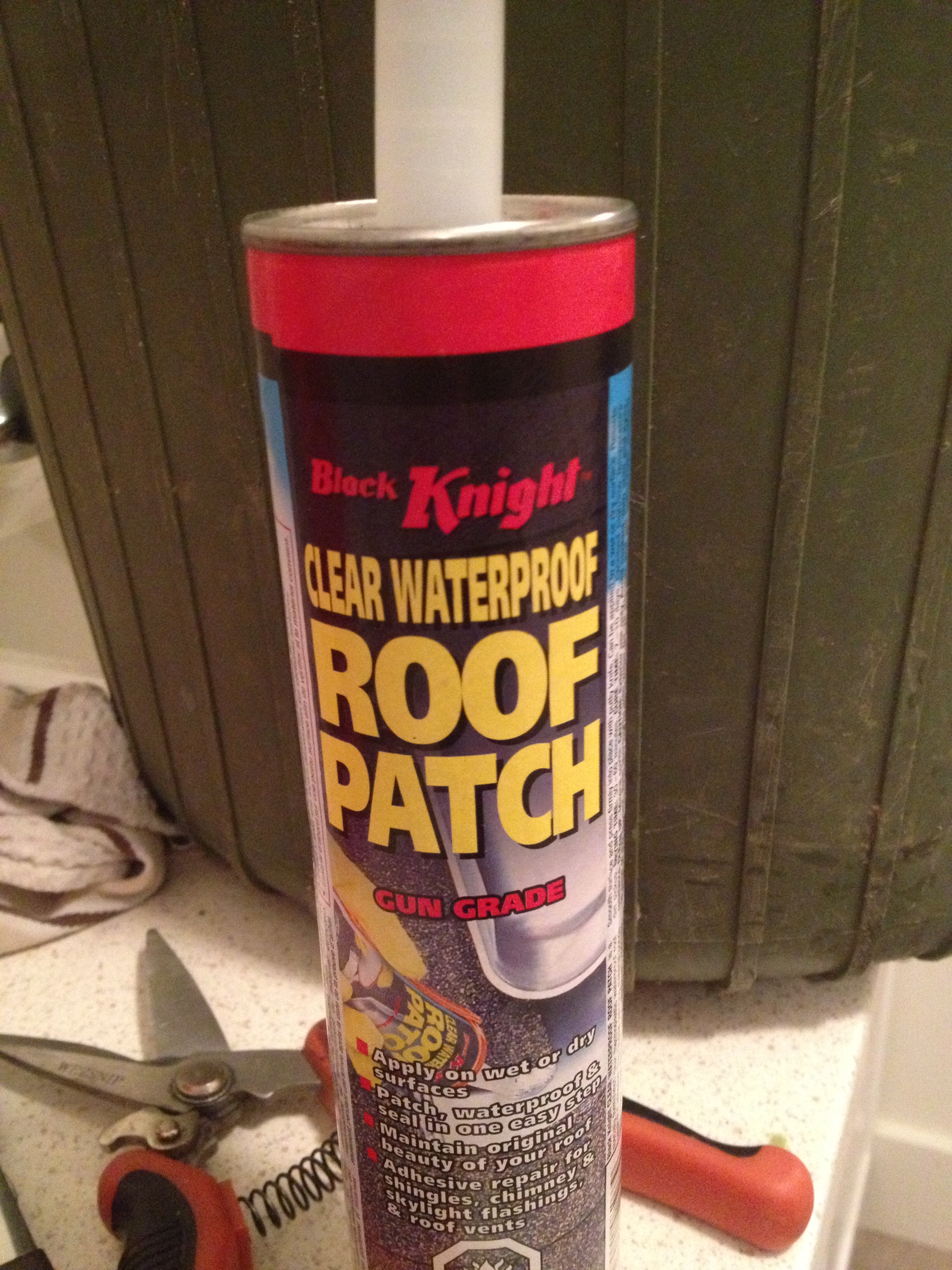
When we returned to check on the water level, it had dropped to just below the ring. We figured we didn’t have a good enough seal, perhaps due to the ridges on the garbage can, so we dug out our our handy dandy Roof Patch stuff and applied it liberally.
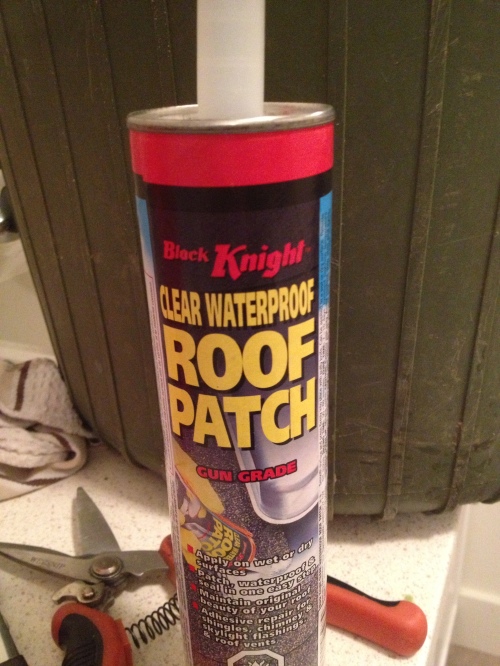
Roof Patch goop - can be applied wet - guaranteed to stop leaks. We also added more plumber's tape for good measure.

Roof Patch goop – can be applied wet – guaranteed to stop leaks. We also added more plumber’s tape for good measure.
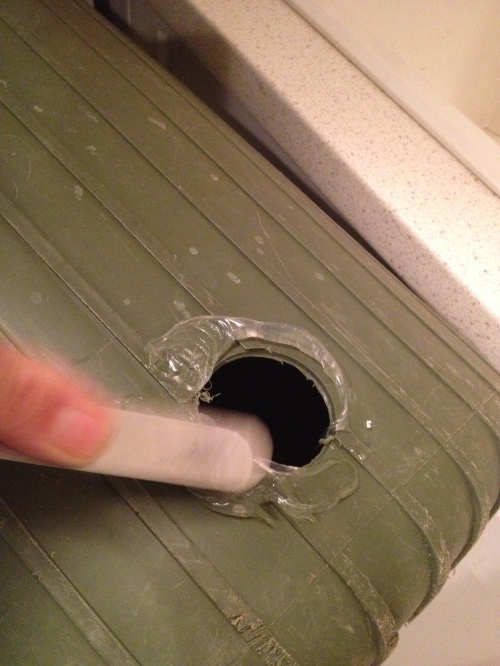
Roof Patch goop

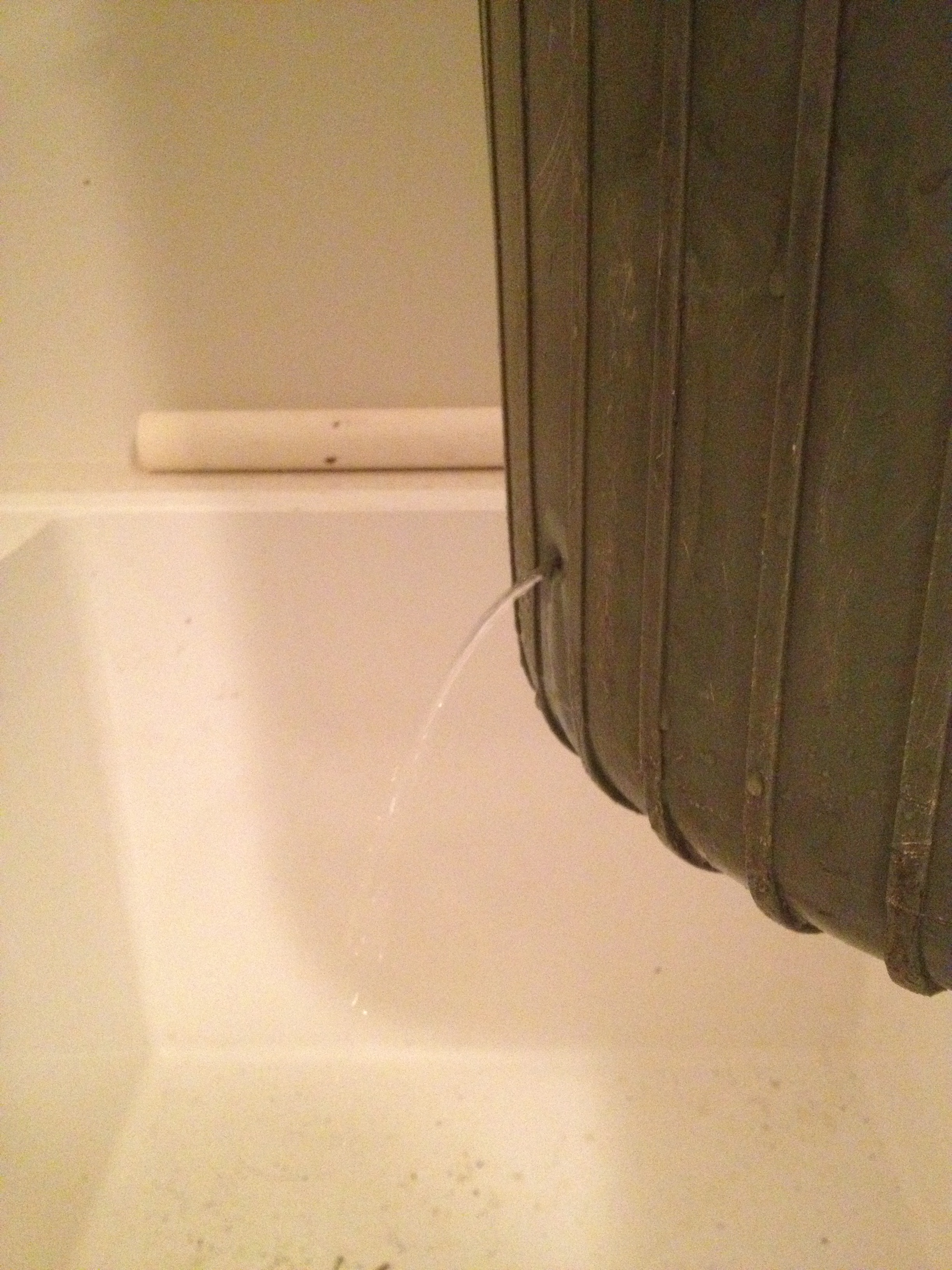
We repeated the water test and… noticed that the water level was dropping even more rapidly. Not only that, there was the distinctive sound of water dribbling… A closer inspection revealed that the problem had nothing to do with the nipple installation but everything to do with a nail-sized puncture wound on the back side of the garbage can!
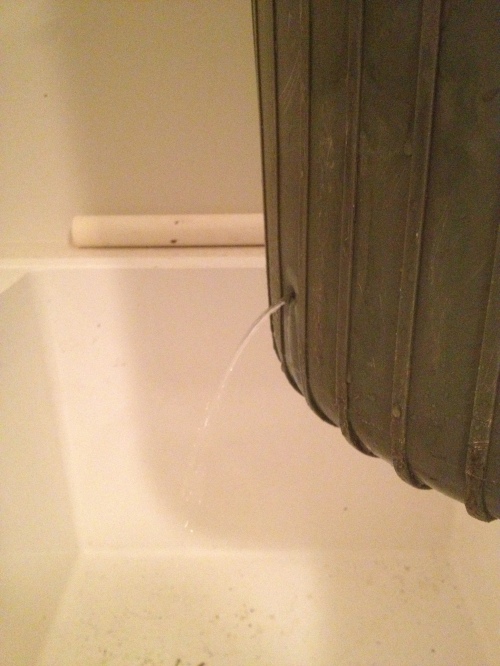
How did we miss this hole the first time around?

How did we miss this hole the first time around?

At this point in the proceedings Dad had a nostalgia attack.

“”What we need here are pot menders.”

This elicited a blank look from me. Pot menders? Who mends pots, anyway? Apparently, during and after WWII, all of England was told to mend their pots by none other than the Queen.This was done using something called pot menders. The following image showed up in my email inbox at 2am that night as Dad thought he was losing his mind and remembering something that never existed.

Photo by ijbison on Flickr

Sure enough, these double washer-type doohickeys were fastened together on either side of the hole in the kettle or pot, fixing the broken item. It occurred to me that these days if my kettle stops working I run out and buy a new one and toss the old one in the trash bin. I don’t think you could buy anything like this any more, except maybe on E-bay and besides, I don’t think plastic would respond well to this treatment.

Needless to say, our supply of pot menders was non existent, so we cast our minds around to see if we could find another solution. Duct tape? Pond liner patches glued to the inside of the can with Roof Patch goop? Some sort of rubbery plug?

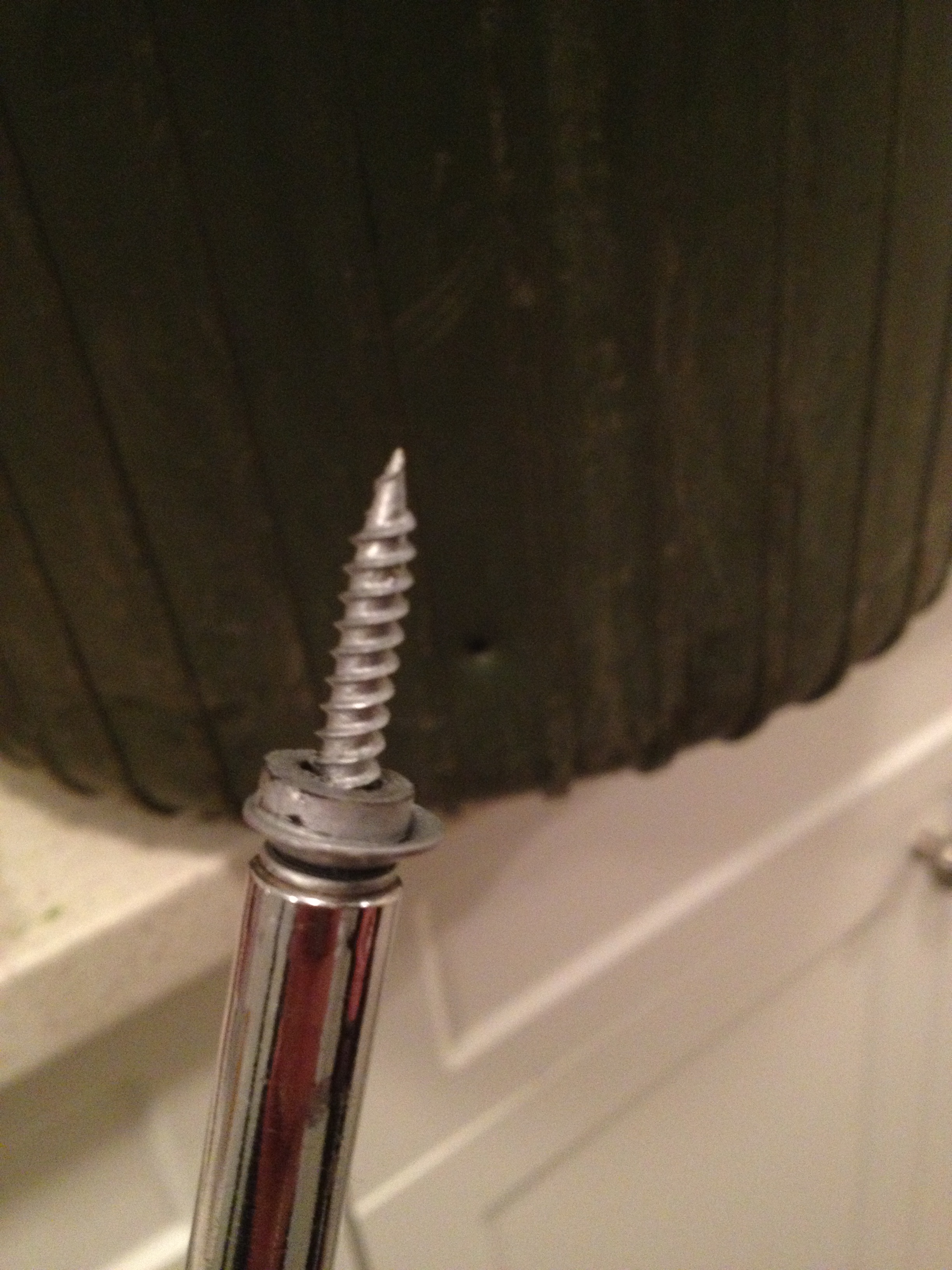
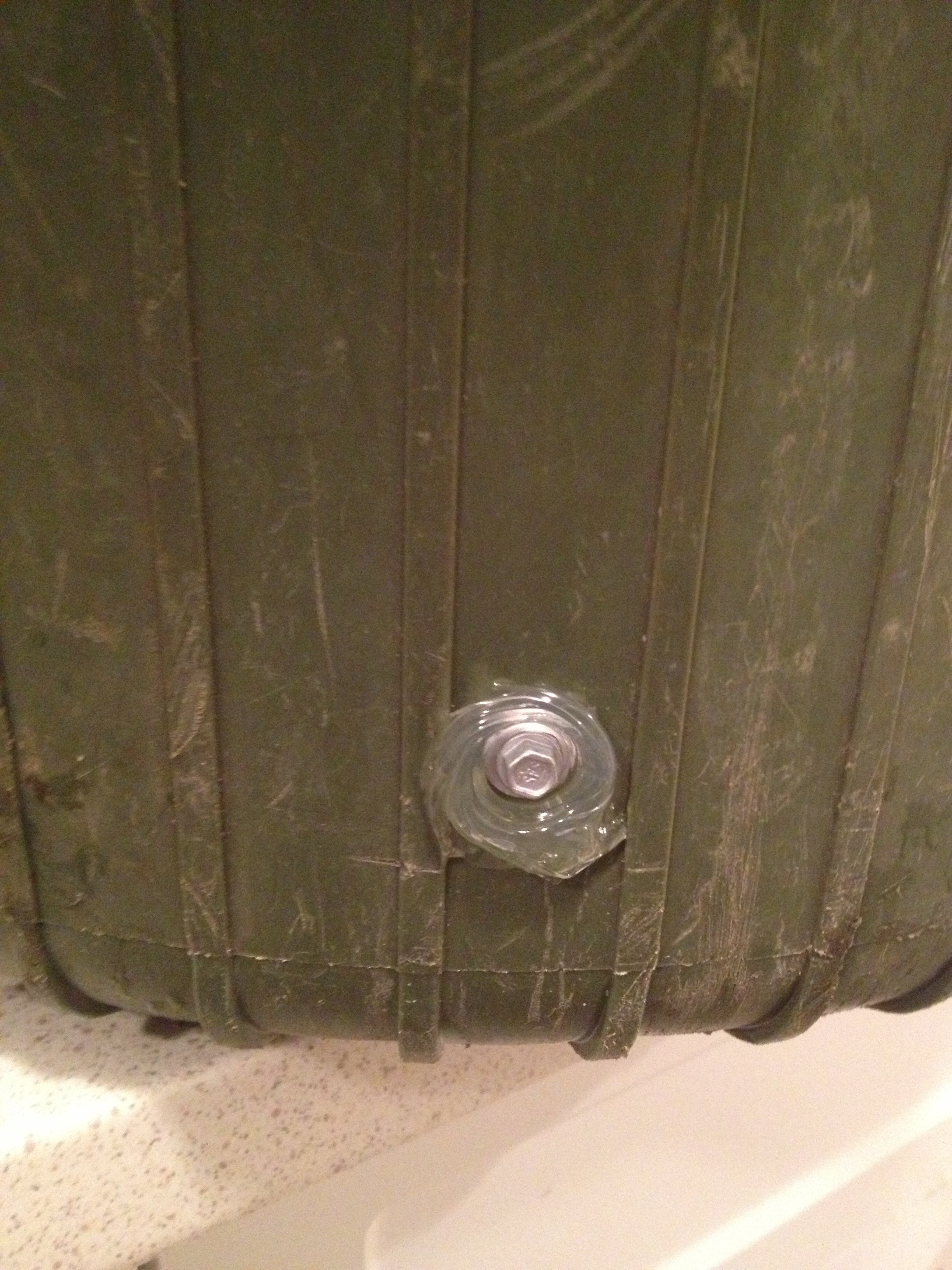
In a flash of inspiration Dad thought of roofing screws which are backed with a built-in rubber washer. We found one, slathered it with Roof Patch goop, and screwed it (gently) into the hole.Roofing screw to the rescue!Roofing screw to the rescue!Our improvised version of a pot mender in position. Our improvised version of a pot mender in position.

Ta da! Hog nipple installed!

Ta da! Hog nipple installed!

The final step was to add water and wait. The can sat overnight and we lost nary a drop of water!

The next big hurdle is installing it in the hog paddock in such a way that the hogs can’t tip it over. Stay tuned… because, yes, there is yet more to come on the subject of water containers…