Tag Archives: NaBloPoMo

Oh, the Mighty Cart!

20131220-192728.jpg

The garden cart continues to out-do itself in the versatility department.

The lamb, Blackberry is a lot heavier than she looks and absolutely not interested in leaving her kinfolk. However, she is too young to breed this year so now that Babar is in with the ewes and the ram lambs are getting frisky, Blackberry has to go on a little vacation with the goats.

Turned out the easiest and least stressful way to move her was in the garden cart!

Soon enough she will be back with her own kind, but meanwhile she is safe and sound with her distant cousins.

NABLOPOMO – How to Make a Hog Waterer from a Garbage Can

New hog watering can in place...

New hog watering can in place…

A quick, nearly wordless Wednesday water update…

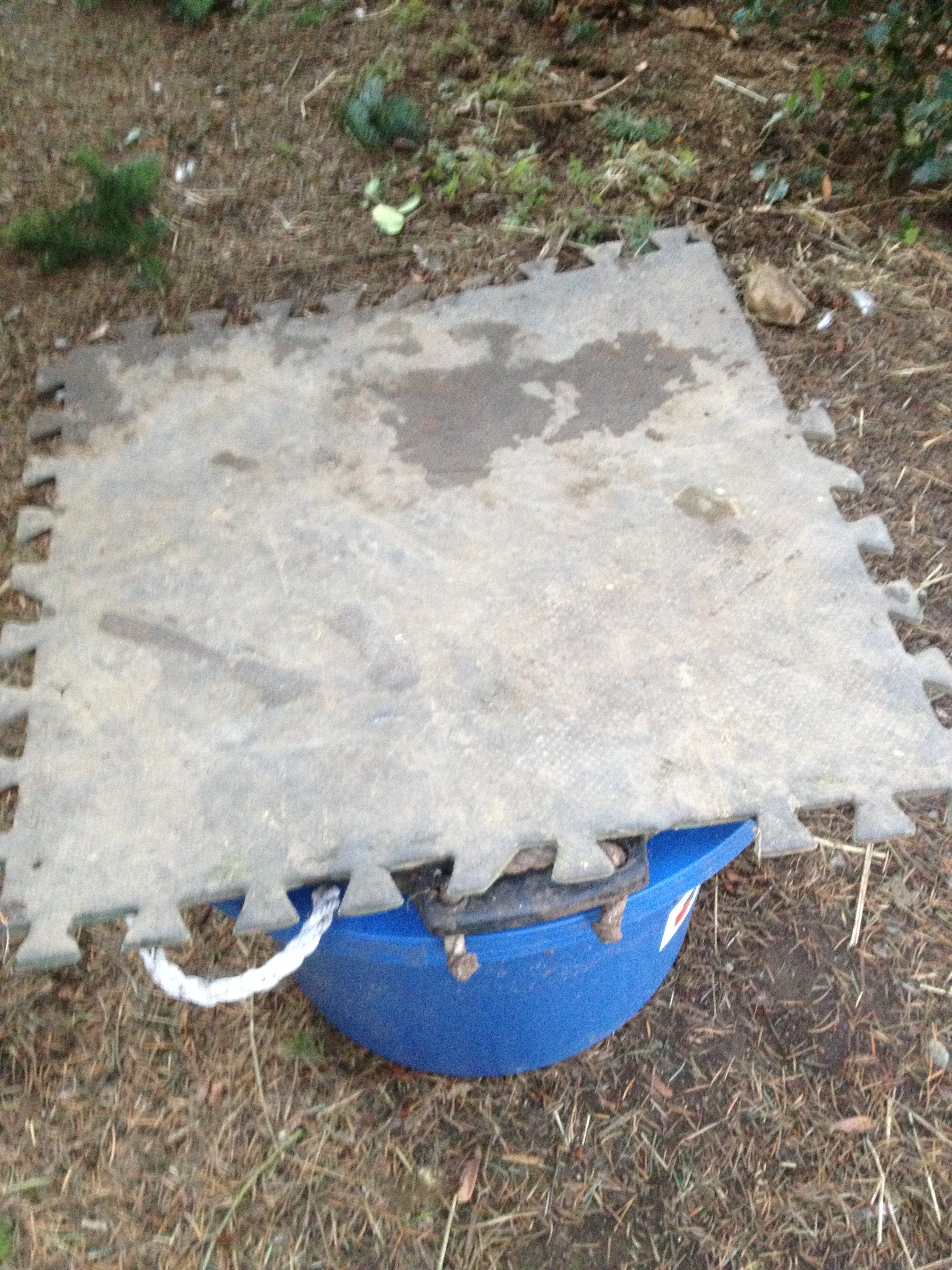
Wedged securely between two trees and flanked by 2 X 6’s, so far, it hasn’t moved an inch. The piglets caught on right away and have been happily slurping, but Cora remains unconvinced this is worth her time. I’ve been putting small amounts of water in the blue dish in front to give her the idea this is a good place to be looking for water and, as I say, the piglets are happy to drink from the hog nipple, but it looks like Momma is going to take a little longer to catch on.

Meanwhile, there is still water in her old tub, but I’ll continue to encourage her to check out the lovely CLEAN water, unpolluted by duck butts or hog snouts…

(For more info and photos re. how we built this, check out the post from a few days ago…)

NABLOPOMO – Sorting – More of These, Less of Those

The next few days look like they are going to have a similar theme: sorting and reorganizing.

Image

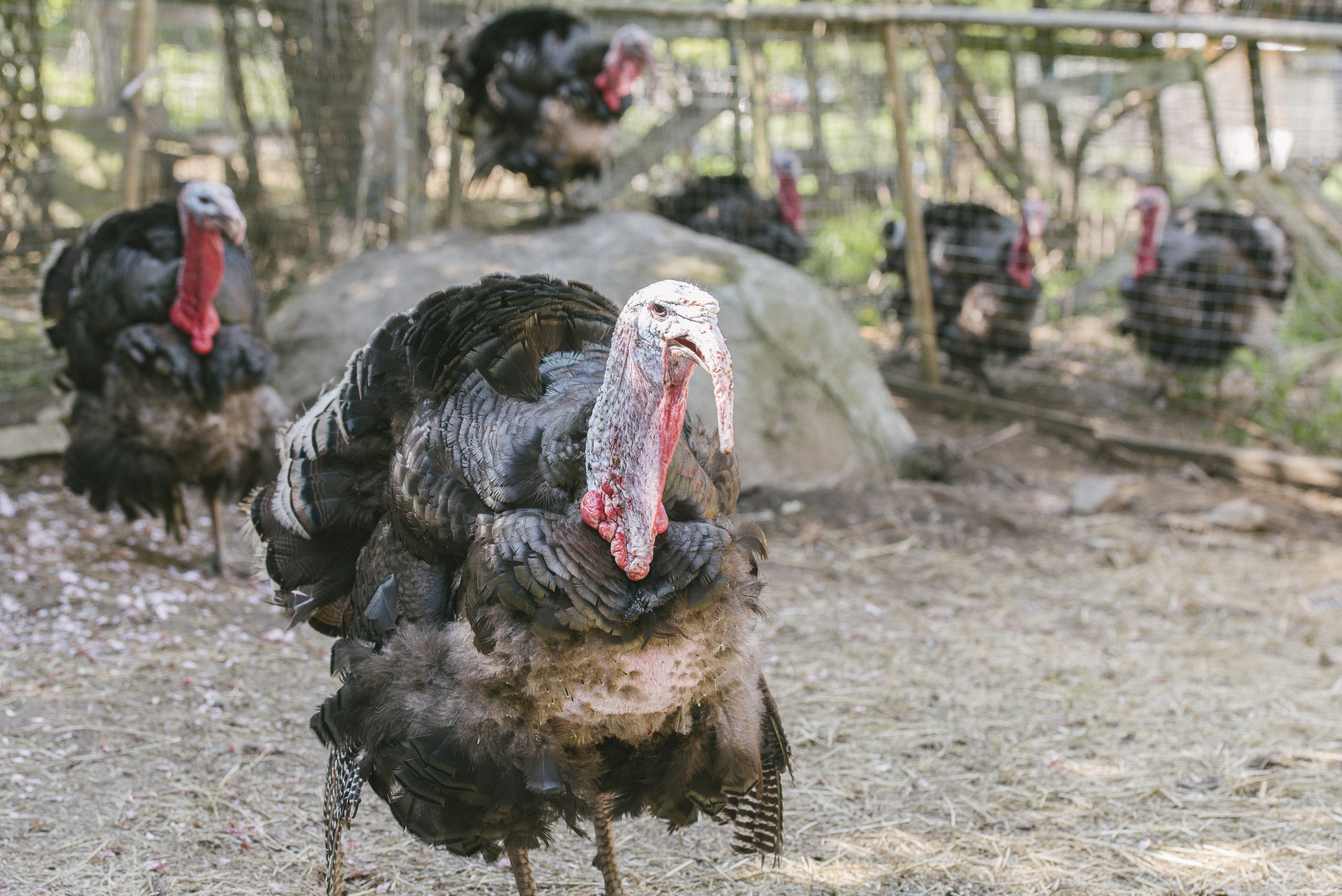
[Image D. Craig, Min of Agriculture] – Some of last year’s Toms in the breeding group.

The Christmas birds are going to be processed on the 21st which means I’ll need to pick the very best birds to hold back for breeding. I’l be looking for decent size and reasonable growth speed (there are two groups – a younger and an older and there are birds from the younger group that are actually much bigger than birds from the older lot), decent temperament, and, finally, more or less correct colouring. I’ll keep 2-4 Toms in the breeding group and 10-12 hens. That way, if someone comes along who would like a breeding trio, we can accommodate them. The birds will be useful through the breeding season, producing a good variety of poults for sale as well as my next year’s Christmas birds. Some of those breeding birds will have reached a good size by summer and when the laying and hatching season is over, some of those can be processed for a few Thanksgiving customers. I will likely also hold back some of the scrawny stragglers for the same purpose.

We are also slowly building a customer list of people who are interested in turkey eggs for eating. We love them, but it is very uncommon to find eating eggs in stores (can you think of a time you saw a carton of turkey eggs at a shop?) and it just doesn’t occur to people that turkey eggs are an option for the frying pan or baking.

Without the competition from the larger flock and some extra time, the smaller birds will have a chance to grow out in time for Easter or Thanksgiving of next year. Carrying more than 15-20 birds year round gets very expensive – commercial organic feed is exorbitant and during the winter months there isn’t much decent pasture for the birds to devour. And devour they do! Hungry turkeys eat an incredible amount each day and though I supplement with hay and veggies and softened alfalfa cubes (plus whatever they manage to find themselves), the feed bill gets out of hand very fast when I’m feeding too many birds.

Of course, the keepers and those destined for fine dining are to be found scattered between my two main groups of turkeys, which are raised in two different locations. This will mean penning, sorting, and transporting birds from A to B and B to A and then, the night before they leave the farm, loading the dining birds into the stock trailer for the short ride to the processor. We will also need to make sure we have more or less the correct number of birds of approximately the right size to fill the turkey orders.

Image

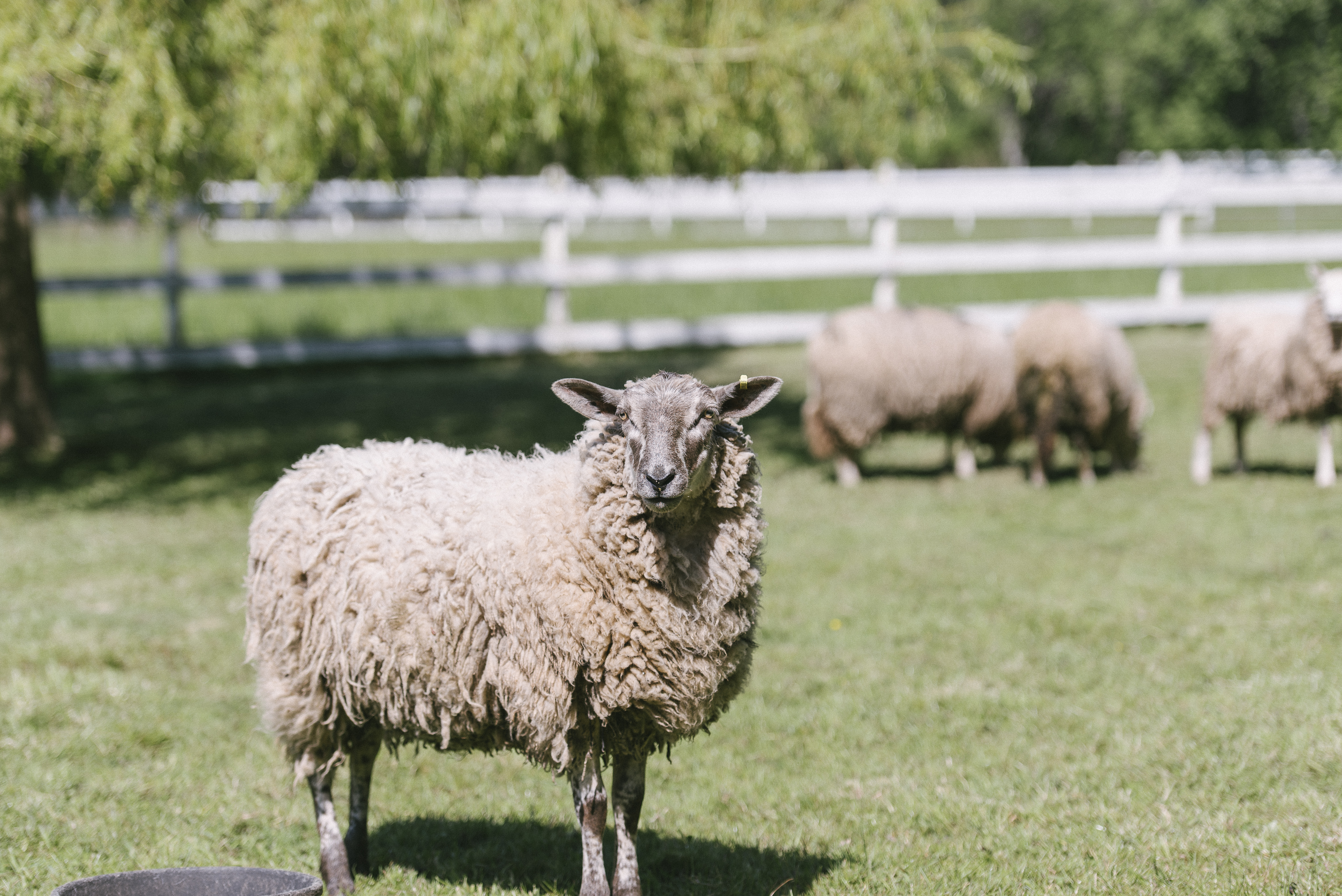
[Image D. Craig, Min of Agriculture] Freckles, one of the ewes soon to be introduced to the ram, Babar.

Meanwhile, our new  Cotswold ram will move from the farm where he has been spending the past number of weeks to the sheep fields. But, before he can get here, we need to move the ram lambs to their own field and separate the small ewe lamb who is too young to breed (she will spend the next couple of months hanging out with the goats). Only then can we introduce the new ram to the ewes to be bred for late spring lambs in 2014.

The ducklings from this summer are now also ready to process, though whether or not I can get coordinated to run them up island before the holidays are full upon us is another question. The ducks will stay with the layers (each year we increase the numbers a bit to try to keep up with demand) and all but two of the drakes will go for processing.
Image

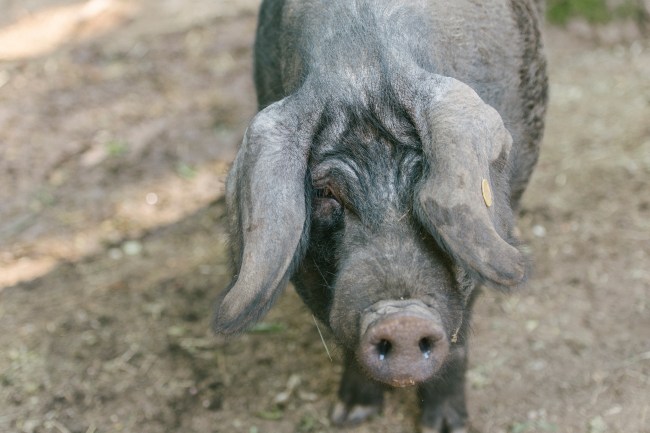
[Image: D. Craig, Ministry of Agriculture] Pompadour, our Large Black Hog boar, ready to do his duty and sire more piglets.

And, finally, the piglets still are not fully sorted and reorganized. Olivia’s piglets are in a separate paddock but after a spectacular bolt down the hill and through an electric mesh fence, Cora is back in with her little ones. We will give that another go, perhaps tomorrow, to see if we can’t get all the weaners in one place and all the sows back together in another. Pompadour will then be called upon to woo the two mothers and we will continue to watch Pearl closely for telltale signs that she is pregnant (she has been in with him for a month or so now, so it won’t be long before she starts to bulge a bit).

The chicken sorting can wait until the new year, but not too long as the heritage birds do take their own sweet time starting to lay, so an early start is definitely an advantage. Wimpy will get to move into his own area with the four gorgeous Black Orpington girls who are now mature and ready to get to work in the spring.
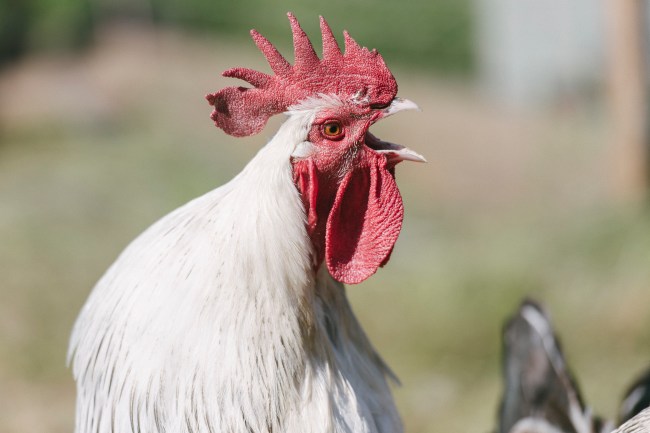
Image

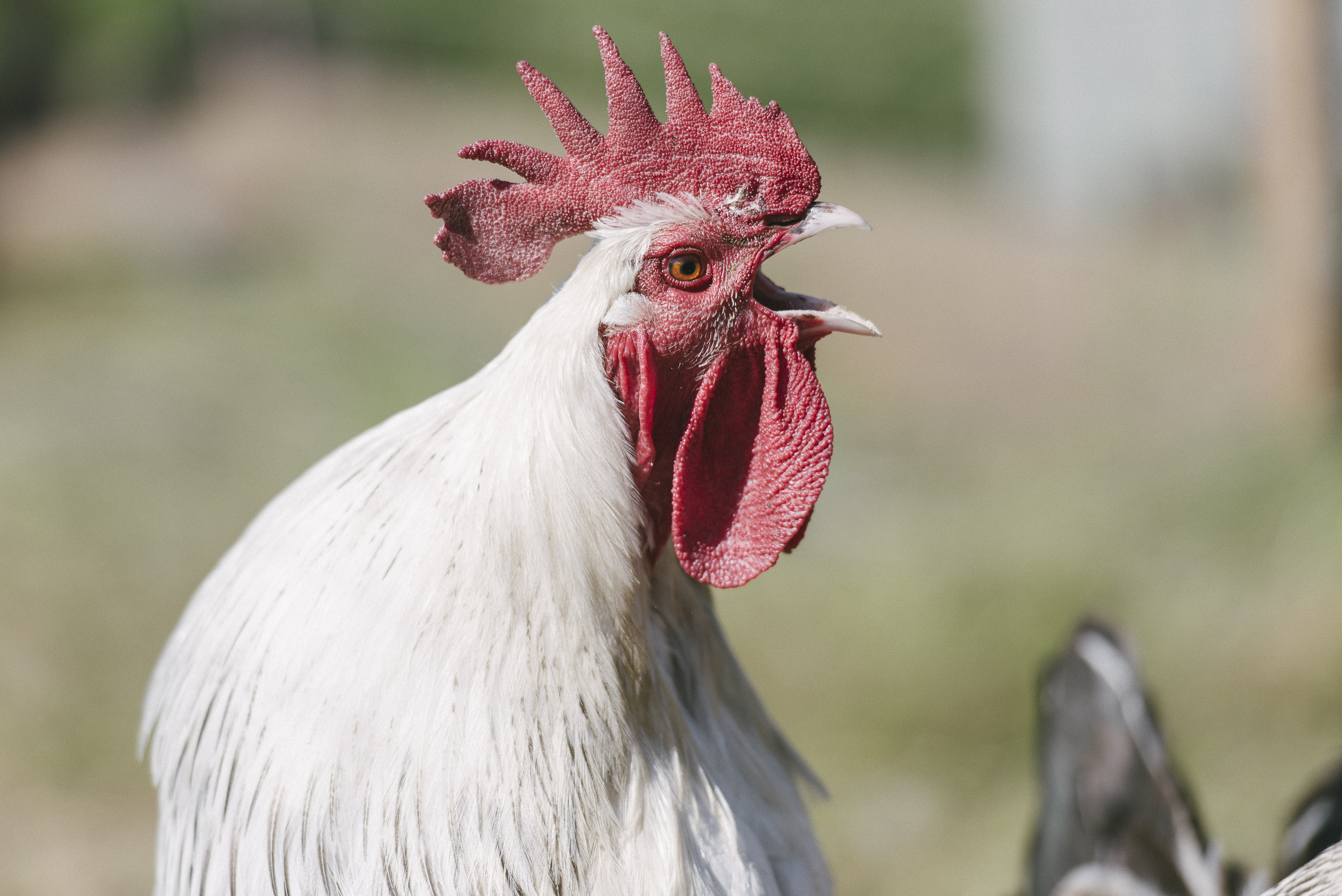
[Image: D. Craig, Ministry of Agriculture] Bill, the light Brahma rooster yelling about something… probably protesting my plan to take away his stunning Black Orpington girls and give them to Wimpy.

So, for the next few days it’s going to be all about counting and patience, because even though it may seem like a simple thing to move some piglets from pen A to pen B and sort out a few dozen turkeys, the critters seem to have a knack for being particularly uncooperative when their routines change. Wish me luck!

NABLOPOMO – Yikes! The Season is Full Upon Us!!

Oh. My. Goodness. As I had feared when I embarked upon a month of daily blog posts in DECEMBER (!!), an avalanche of activities has caught up with me!Feeling festive!Feeling festive!

Last night, a holiday potluck with farmers and Peninsula Agriculture Commission folks, today testing a new (to me) turkey recipe, fighting with writing deadlines (a couple of them!), and all the regular farm stuff… Tomorrow we are hosting a bit of a get together here before heading next door where the neighbours are hosting a bit of a get together there… Sunday we are sorting hogs (weaning both litters together) and I’m hosting a meeting here, My fingers are crossed that the piglet sort goes reasonably smoothly so they are settled in new digs BEFORE my meeting begins! Tomorrow morning I also need to get a load of hay and keep working on the writing projects… With all that going one, ack – the blog is likely to be a bit thin over the weekend!

What I don’t need to do is bake cookies. Not long ago we hosted a cookie swap (which is, by the way, the BEST thing ever for someone who loves cookies as much as I do).

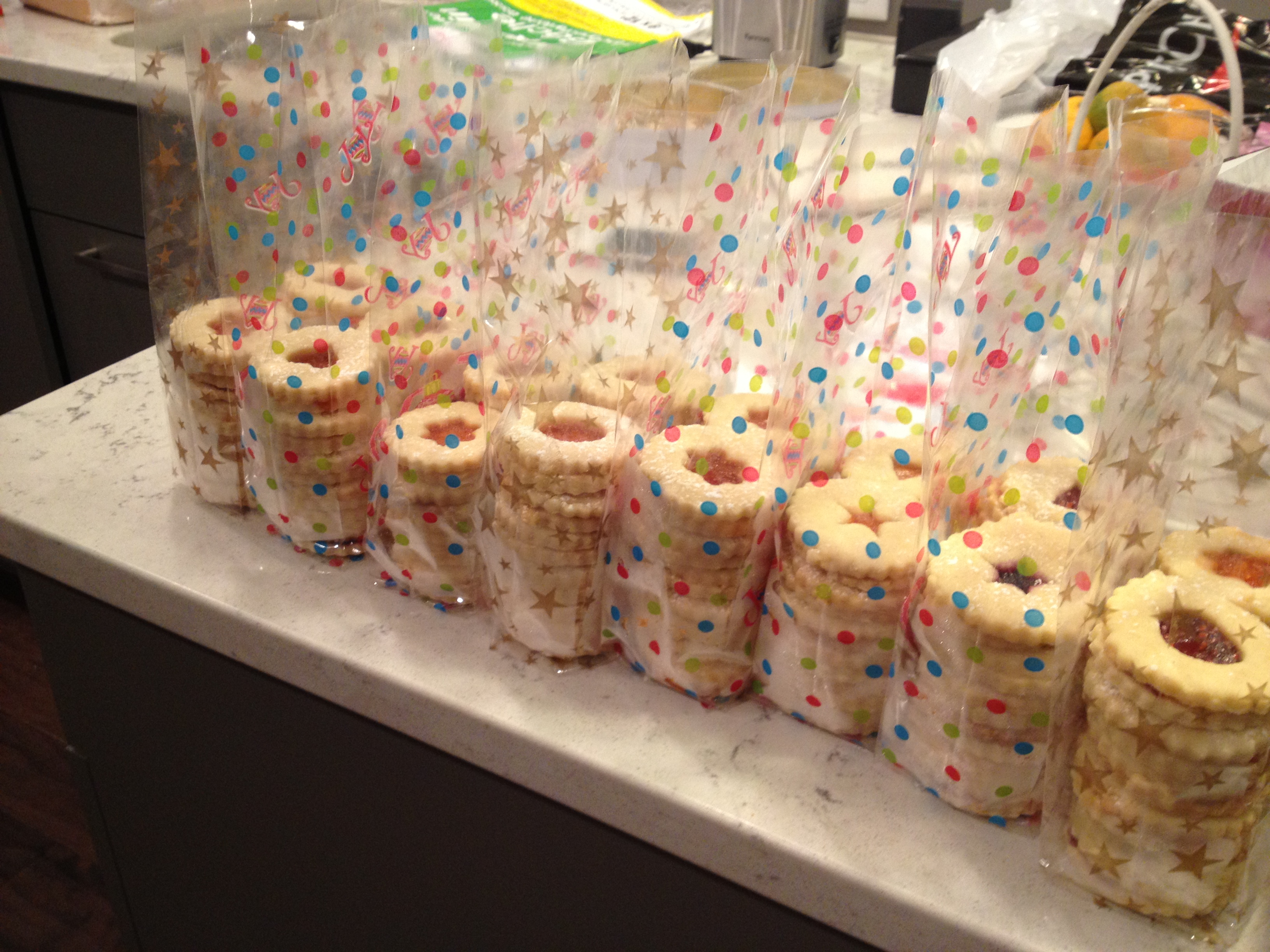
Each person who came to the cookie swap brought a baker's dozen dozen cookies... We then mixed and matched and each left with a dozen each of a dozen different kinds of cookies. Yum!  These were Dani's sugar and jam delights... I made chocolate dipped macaroons.

Each person who came to the cookie swap brought a baker’s dozen dozen cookies… We then mixed and matched and each left with a dozen each of a dozen different kinds of cookies. The extra dozen of each variety was set out for testing… Yum! These were Dani’s sugar and homemade jam delights… I made chocolate dipped macaroons which are guaranteed to transport me back to my childhood when my Omi used to make them as a special treat at this time of year.

Other than macaroons, I am a big fan of plain old sugar cookies with a bit of almond flavour (another Omi special). Omi was also a fan of making a batch of vanilla dough and a batch of chocolate, rolling them out, stacking the rolled out slabs one atop the other, rolling both up together and then slicing the cookie dough logs. The result was very yin and yang and absolutely delicious!

What’s your favourite cookie recipe?


NABLOPOMO – Anti-freezing Water Experiment

A duck's eye view of a pond freezing over...

A duck’s eye view of a pond freezing over…

During the recent cold snap, I was having my usual problems keeping all the animals watered. There are two main issues to deal with. First, all the water on our long, skinny farm-let originates at the top of the hill at the house. Miles of hoses with various junctions and side shoots and connectors and whatnot distribute water from the tap at the top to animal and poultry pens all the way down to the bottom of the hill. It is not practical to coil up all those hoses and drag them inside each night. Leaving them dripping works as long as the temperature doesn’t dip too low, though it does waste water and results in nasty little ice patches all over the place. The other problem is that the hoses zig and zag, go up and over obstacles and around corners and without fail, those bends and kinks are where ice blocks form, shutting down the system downstream from the blockage.

After I win the lottery (or, maybe I should try one of those crowd funding projects) I will install a frost-free in-ground water system with frost free taps all over the place… But until then, when the hoses freeze I am stuck schlepping hot water in containers from the house.

A five gallon jug of water weighs over 40 lbs. I shudder to think how many pounds I lifted during the past week!

A five gallon jug of water weighs over 40 lbs. I shudder to think how many pounds I lifted during the past week!

The water needs to be hot because the second problem that develops is the water in the various buckets and tubs freezes. When it isn’t seriously cold, it isn’t hard to smash through the layer of ice on top to get to open water below. When it stays cold for several days or when the temperatures plunge, the layer of ice is too thick to break.

This problem of the top layer freezing was addressed in the current issue of Small Farm Canada (with thanks to regular reader, blogger, and fellow farmer, Sailors Small Farm for pointing this out…). In a short how-to article it was suggested that a piece of closed cell foam insulation cut to fit inside the bucket would keep the water from freezing. The example shown was for a small pail being used  by chickens. Holes large enough for the chickens to dip their beaks in had been cut in the foam so the birds could get at the un-frozen water.

As it turned out I had some of this stuff around and thought it might work to stop the goat water container from freezing over.

A thin layer of ice just starting to form on the surface of the goat water bucket.

A thin layer of ice just starting to form on the surface of the goat water bucket.

First I roughly measured the foam – and cut it to size.

Roughly measuring the size of 'lid' needed.

Roughly measuring the size of ‘lid’ needed.

I cut a small opening on one side so they could get their muzzles in to drink.

The small opening was just big enough for thirsty goat lips...

The small opening was just big enough for thirsty goat lips…

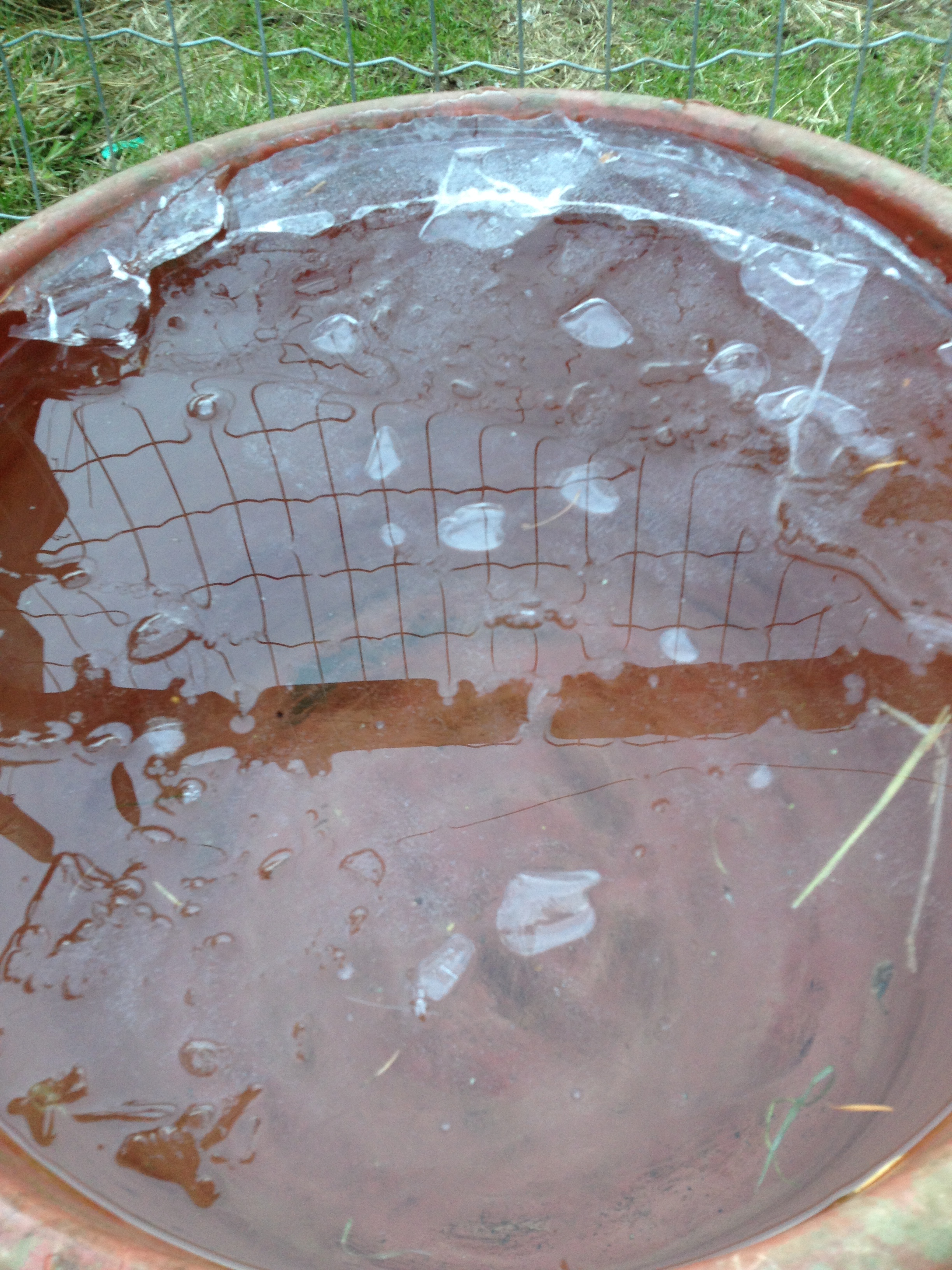
Then, I waited to see what would happen. The goats drank out of the gap just fine and immediately under the foam lid the water did not freeze. But, all around the edges, ice formed the first night. The ice layer grew thicker and it became increasingly difficult to peel off the layer of foam each morning so the goats could get at the ever-smaller water hole in the middle. By the fourth day, the foam was completely frozen into the surface and disintegrated when I tried to peel it back.The opening was the first part to freeze, which wasn't too surprising...The opening was the first part to freeze, which wasn’t too surprising…After a few days of being able to peel back the foam, it froze to the surface and came apart when I tried to lift it...After a few days of being able to peel back the foam, it froze to the surface and came apart when I tried to lift it…It was impossible to remove the last shred of insulation... I went back to the old system of pouring piping hot water into the bucket to thaw a hole and warm up the rest of the water enough that the goats would have a good, long drink. It was impossible to remove the last shred of insulation… I went back to the old system of pouring piping hot water into the bucket to thaw a hole and warm up the rest of the water enough that the goats would have a good, long drink.

The article suggests that the system is most useful inside a hen house where the temperature is right around freezing but not seriously cold. I’d have to say that when this is the case it really isn’t that big a deal to chip a hole in the skim of ice anyway. Alas, much as I had hoped this would be a great solution to my bucket-freezing problems, it seems I will have to keep looking for other methods and keep experimenting.