Tag Archives: farm life

Day 25 – Look Who Came Calling!

Who could the culprit be?

Who could the culprit be?

About a month or so ago the ferret food started to disappear. Adding bungee cords to hold down the lid on the food dispenser didn’t help – the cords would be removed and the food gone each morning. At first we thought it might be the cats, but they aren’t strong or dexterous enough to break into our tied down ferret food hopper.

We got one of those live traps, thinking we might be dealing with a raccoon. We put the trap beside the ferret cage and… nothing. The food stopped disappearing and the trap remained untouched.

A couple of weeks later, we caught the neighbour’s cat. The cat was rather miffed that it had been busted stealing the cat food we had used as bait, but the ferret food remained untouched. We speculated that maybe the raccoon had met with an untidy end up on the highway or had seen traps before and knew it was best to avoid our place.

Then, last night, this fellow paid us a visit:
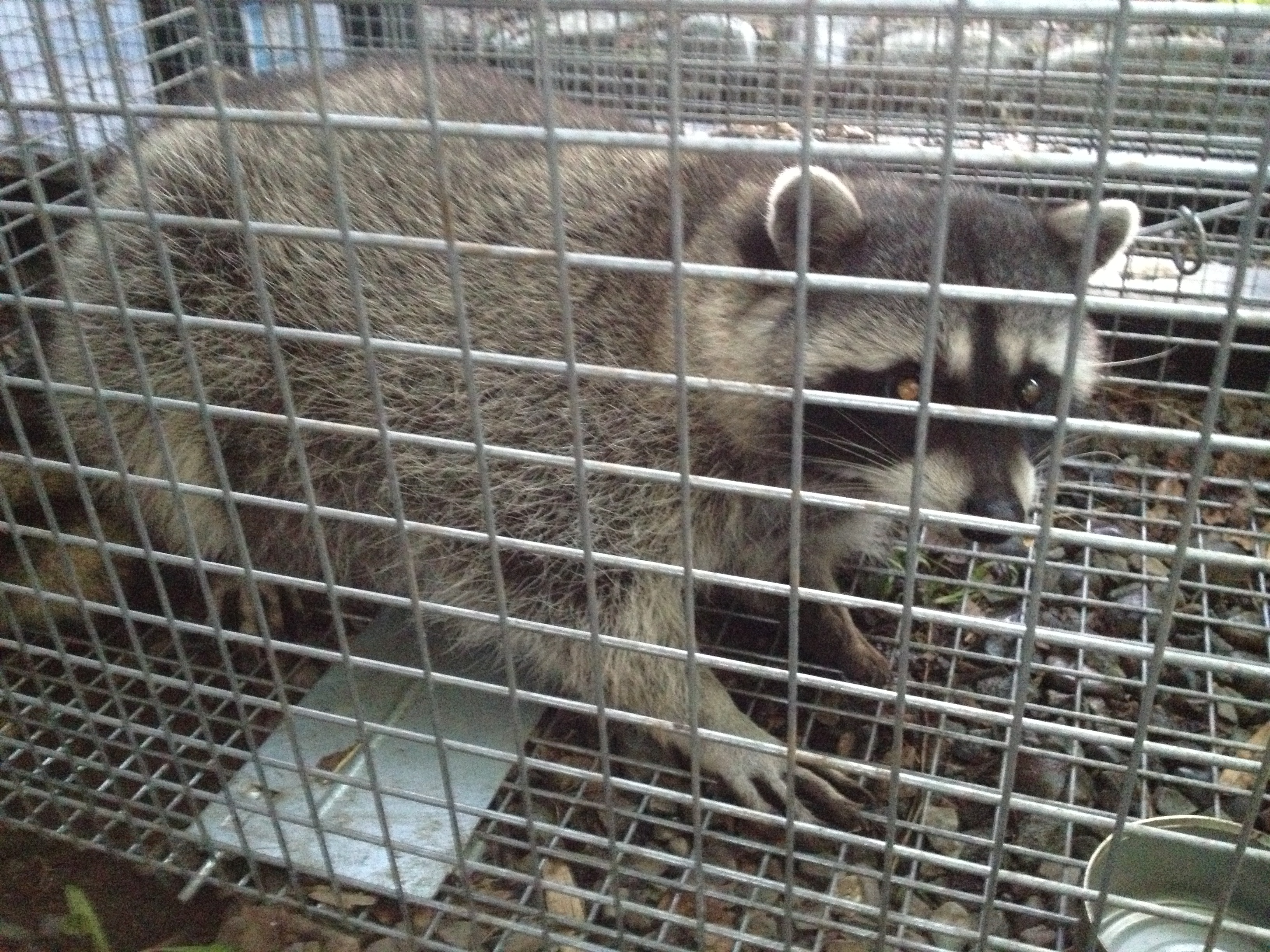
I know these devils eat chickens, kill turkeys and ducks, and generally have no respect for other people's property, but my, oh my, they are adorable!

I know these devils eat chickens, kill turkeys and ducks, and generally have no respect for other people’s property, but my, oh my, they are adorable!

This dude was FAT!! Totally rolly polly and surprisingly relaxed, given his circumstances.

We loaded him into the back of the truck and drove him waaaaaay out of town to an undisclosed wilderness location…
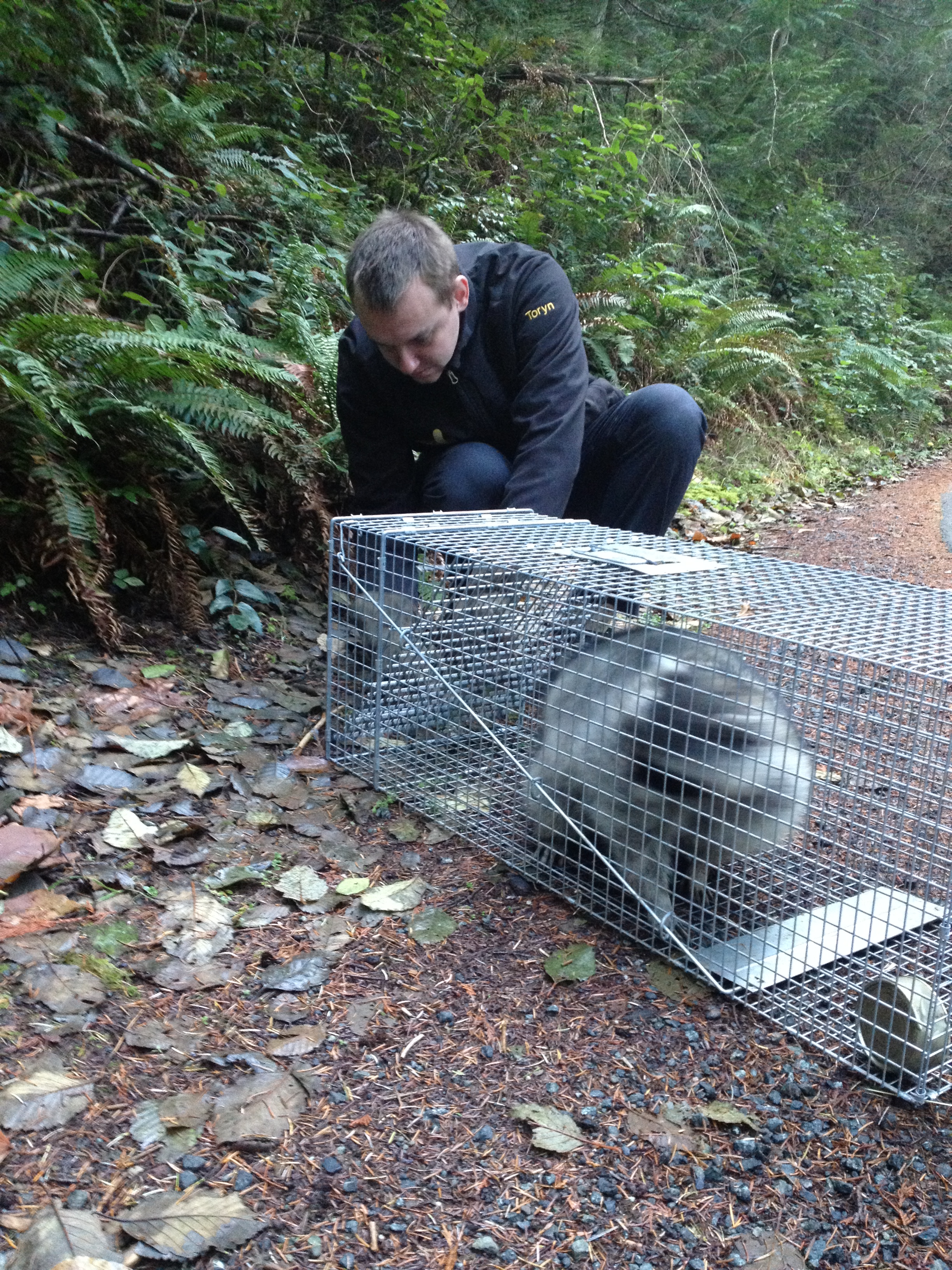
We released him far, far away from any farms or houses where he might be tempted to make trouble...

We released him far, far away from any farms or houses where he might be tempted to make trouble…

He shot out of the trap and headed for the hills...

He shot out of the trap and headed for the hills…

He was moving fast when he exited the trap, but we had released him at the bottom of a huge, forested hill and he didn’t get very far before he was huffing and puffing and had to stop for rest. He turned to look down at us and we wondered how he would fare out in the wild without easy access to a steady supply of ferret food. Then we decided he was carrying so much flab he probably wouldn’t have to eat all winter and he’d still be fine by the time spring rolled around. By which time he had caught his breath and continued on his way, disappearing into the trees, no doubt in search of a good place to have a nap.

Interested in learning who else is participating in the 30 days agriculture blog-a-thon or the five things Holly Spangler will be talking about this month? Head over to Prairie Farmer to find out!

Day 24 – Frost!

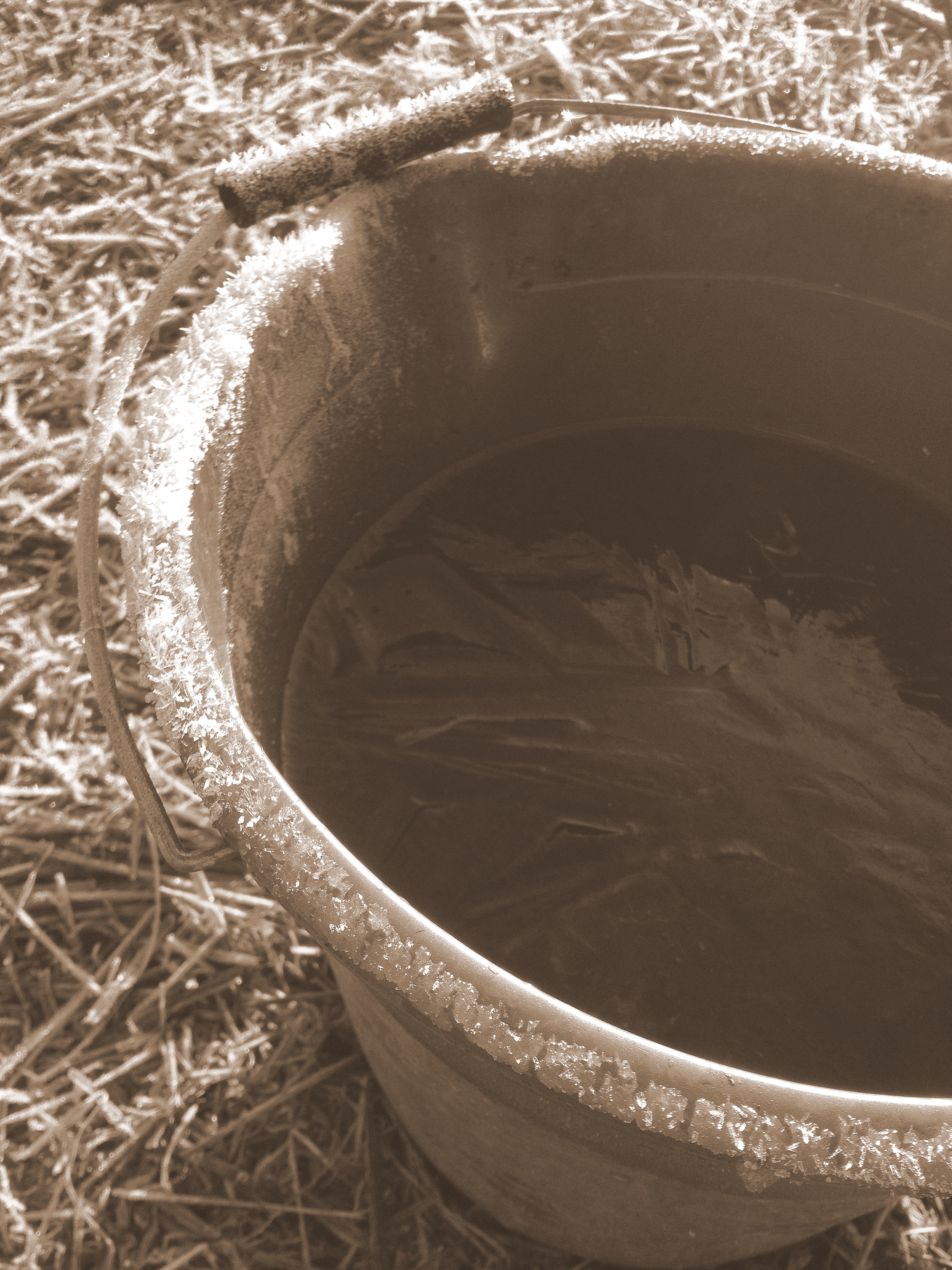
I try to keep this quote in mind when my fingers are not functioning properly and the garden beds are crispy, solid, and completely unworkable.

I try to keep this quote in mind when my fingers are not functioning properly and the garden beds are crispy, solid, and completely unworkable.

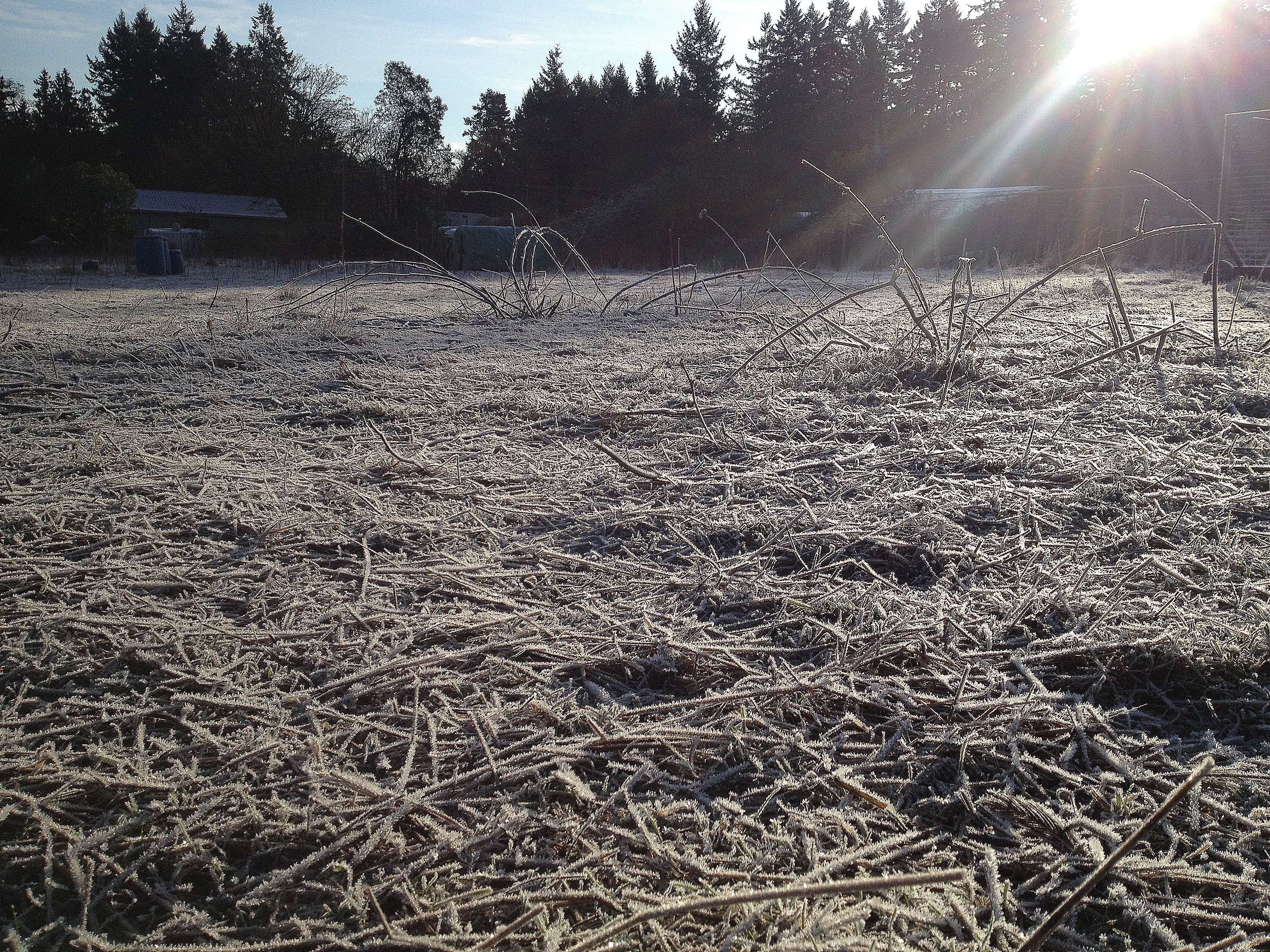
The one good thing about frost or a light dusting of snow is that everything looks so darned sparkly! The whole world is clean!

The turkey field looks quite different when it's frozen solid.

The turkey field looks quite different when it’s frozen solid. Fortunately, the birds don’t seem to mind.

Frozen water is a pain in the backside to deal with.

Frozen water is a pain in the backside to deal with.

All that glittery frost might look magical, but man, when frozen water pipes mean you have to haul buckets and Jerry cans of water from the house to distant water containers all over the neighbourhood, the thrill of a glorious morning wears off pretty quickly. A couple of chickens wouldn’t be so terribly difficult to deal with, but horses? Lactating sows? A whole herd of thirsty turkeys? I was more than a little pleased when the temperature began to rise again and the water started to flow. That gurgle of water splashing into an old bathtub in the horse paddock is a special kind of music!

LOVE that sun after a few gloomy rain days... Though, it always astonishes me just how low it stays all day long through these shortest days of winter.

LOVE that sun after a few gloomy rain days… Though, it always astonishes me just how low above the horizon it stays through these shortest days of winter.

Interested in learning who else is participating in the 30 days agriculture blog-a-thon or the five things Holly Spangler will be talking about this month? Head over to Prairie Farmer to find out!
Day 18 – The Moon Coffined in Clouds

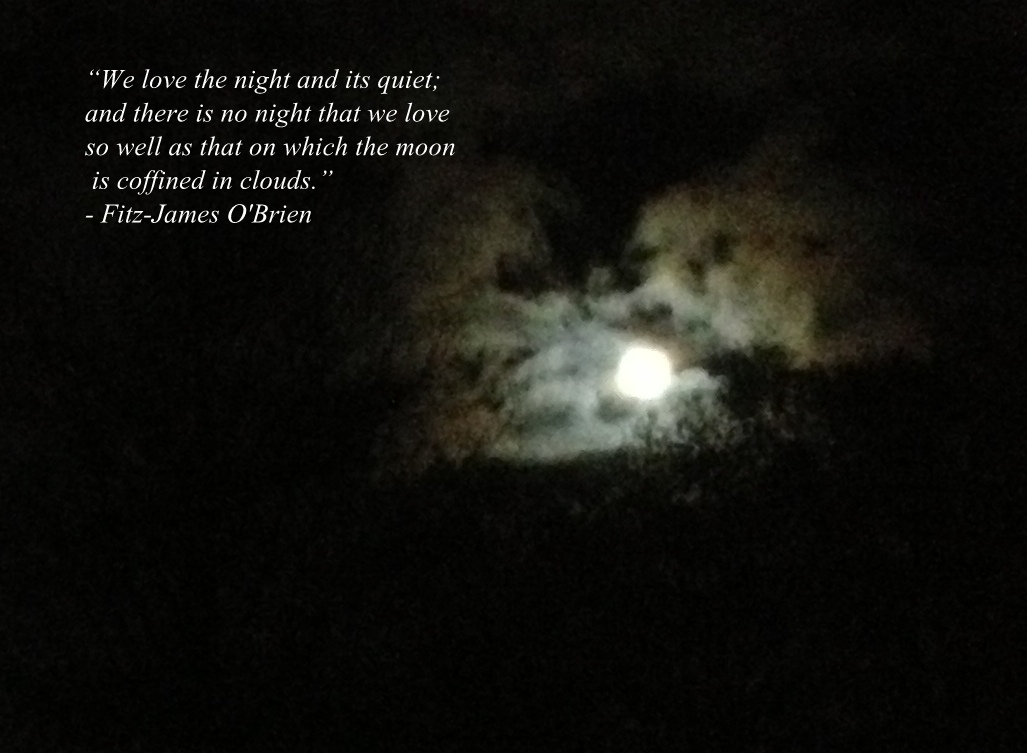
“We love the night and its quiet; and there is no night that we love so well as that on which the moon is coffined in clouds.”  ― Fitz-James O'Brien

“We love the night and its quiet; and there is no night that we love so well as that on which the moon is coffined in clouds.”
― Fitz-James O’Brien

When we first moved the horses here a dozen or so years ago it was a very strange sensation to make my way down to the barn in the pitch darkness. There were dips in the land I had never noticed in daylight and the short trip seemed to take three times as long after the lights were out. Strange crackles and sighs came from the trees and, particularlywhen the weather was awful, I thought of farmers in prairie blizzards who had to tie a rope from the house to the barn so they wouldn’t get blown off course and disappear forever.

Deer, who had not yet figured out that their regular highway was about to be interrupted by fences and horses and outbuildings and dogs and strange activities at all hours of the day and night would occasionally crash away through the brush, panicked by the sudden appearance of a human. I rushed, nervous at being out there in the dark all alone. I remembered childhood stories of wolves and bears and shapeless creatures who sucked souls and left young girls for dead and thought more than once of the statistic that Vancouver Island boasts the greatest number of cougar attacks in the world.

I always carried a flashlight, which morphed into a headlamp (much better to have one’s hands free while dealing with hay and gates and feeding the cat) and was happy to reach the barn where I could turn on the light.

These days, the tree spirits feel more like they are protecting me, rather than trying to eat me.

These days, the tree spirits feel more like they are protecting me, rather than trying to eat me.

Gradually, things changed. Over time the batteries in the headlamp faded and I forgot to replace them. I found myself in the dark, strolling down the hill as if I could see. Which, it turned out I could do perfectly well when the moon was high and the skies clear. I found I knew where we were in the moon phase without referring to a calendar. And somewhere along the way the nervousness completely disappeared.

Instead, the nightly walk down the hill became one of highlights of my daily routine. One night I reached up to stroke the cat on the gatepost only to discover it was a cat-sized barn owl. His heart-shaped face looked into mine as if to ask, “Were you seriously just about to touch me?” We stood like that for several long seconds before he lifted off and floated up to the roof of the goat barn, where he resumed his silent observation of my comings and goings.

I have sat in the orchard at midnight and sunk my teeth into a ripe pear sending a sticky sweet dribble of juice down my chin. With my back against a hay bale, I have listened to the patter of rain on the roof while the cat hopped into my lap for a snuggle. To my amazement, I discovered I could identify which of my three bay horses was which, even on a moonless night when I could barely make out my hand as it reached for the chain on the gate. I have paused to listen to the owls calling back and forth, the first frogs in spring, the goats munching their hay. The night is a different place for me now, one of calm and quiet where I don’t see all the many jobs that need to be done but instead savour a few moments of simple satisfaction as I find myself still here at the end of another day.

Interested in learning who else is participating in the 30 days agriculture blog-a-thon or the five things Holly Spangler will be talking about this month? Head over to Prairie Farmer to find out!
Day 16 – Search for Land Leads to Maypenny Farm

One of the problems with livestock (at least, livestock not raised intensively in big barns) is they need a fair amount of land for grazing. This is not a problem if you happen to live on a large farm, but my farm is micro mini – not even two acres, all on a hill, part of it covered with big trees. To get around this problem I lease several fields close by and make use of every square inch of space here on the homestead. None of the fields are huge and my flocks and herds are expanding, so as a result, I’ve been tossing and turning at night trying to figure out where I can lease more land that’s not too far away. And, this needs to happen sooner than later so I can move the piglets after I’ve weaned those I haven’t already sold.

I must say the Maypenny hens are a stylish bunch! They look a whole lot better prepared for the soggy weather than my girls...

I must say the Maypenny hens are a stylish bunch! They look a whole lot better prepared for the soggy weather than my girls…

Last year I had chatted with Maypenny Farm (well, not the farm – with Reay, a farmer) about possibly growing out pigs at their place, but there was a wedding planned and a need to keep the fields looking neat and tidy. I had pushed the Maypenny option out of my mind when Reay got in touch the other day and asked if I might still be interested. Faster than you can say ‘hen hats’ I raced over there to scope the place out to see if it might be suitable.

The field up for discussion is an old hayfield being encroached upon by brambles and scrub brush along one edge and bordered on the other side by trees. Not only would the piglets have a blast in there with plenty of forage and room to roam, the plan is to reclaim the field and extend the Maypenny market garden. Hogs are excellent for turning over the soil, enriching it as they go. Add a couple of goats to the equation and the Maypenny farmers can just sit back and watch the livestock prepare that field ready for whatever they may wish to do with it next.

The two big issues are: Water and fencing. The hogs are well trained to two-strand electric and are, therefore, relatively easy to contain. Goats are a different matter, but using the existing sheep fencing as a starting point, some repairs and new stock wire would provide a decent barrier while they are on clean-up duty. We have portable shelters that can be moved to the field without much trouble, which would keep everyone snug and dry in foul weather (unless Maypenny has hats that would fit the hogs…) When it came to discussing the water situation, the conversation proceeded in a very Canadian manner.

“What about water?”

“There’s a stream here – ” Reay said, pointing to one long side of the field. “And the beavers have moved next door so this field isn’t flooding any more.”

“Beavers?”

“They had a dam down there and the water backed up. You can see the half-chewed trees where they chopped them down.”

Beavers? Seriously? On southern Vancouver Island? I had heard rumours that beavers had returned to Beaver Lake, a local landmark I had assumed was so-named because some old fur trader was homesick for a place in the wilderness where actual beavers lived. Maybe the lake actually came by its name honestly. And, perhaps the rumours about the return of the beavers are true after all! Not that Maypenny’s neighbour is happy about the return of the furry, flat-tailed loggers. They are a menace when it comes to clogging up streams and ditches and their industrious plugging up of drainage systems can cause awful problems for farmers’ fields.

I’m not too worried – if the beavers decide to move back to Maypenny we’ll cope with the fallout. Mostly, standing there in the rain calculating how much fencing I’m going to need, I was delirious with joy that a good field is available, not too far away, with readily available water and lots of forage for both goats and hogs. I was so excited, in fact, I totally forgot to take any photos! By my next visit I’m sure I will be calmer and the full realization of how much work it will take to get things secure before we can move animals in will have hit me. Anybody feel like coming over for a fencing party? Maybe you’ll get to see a beaver!

Interested in learning who else is participating in the 30 days agriculture blog-a-thon or the five things Holly Spangler will be talking about this month? Head over to Prairie Farmer to find out!

Day 13 – Chicken House Challenges Part 3

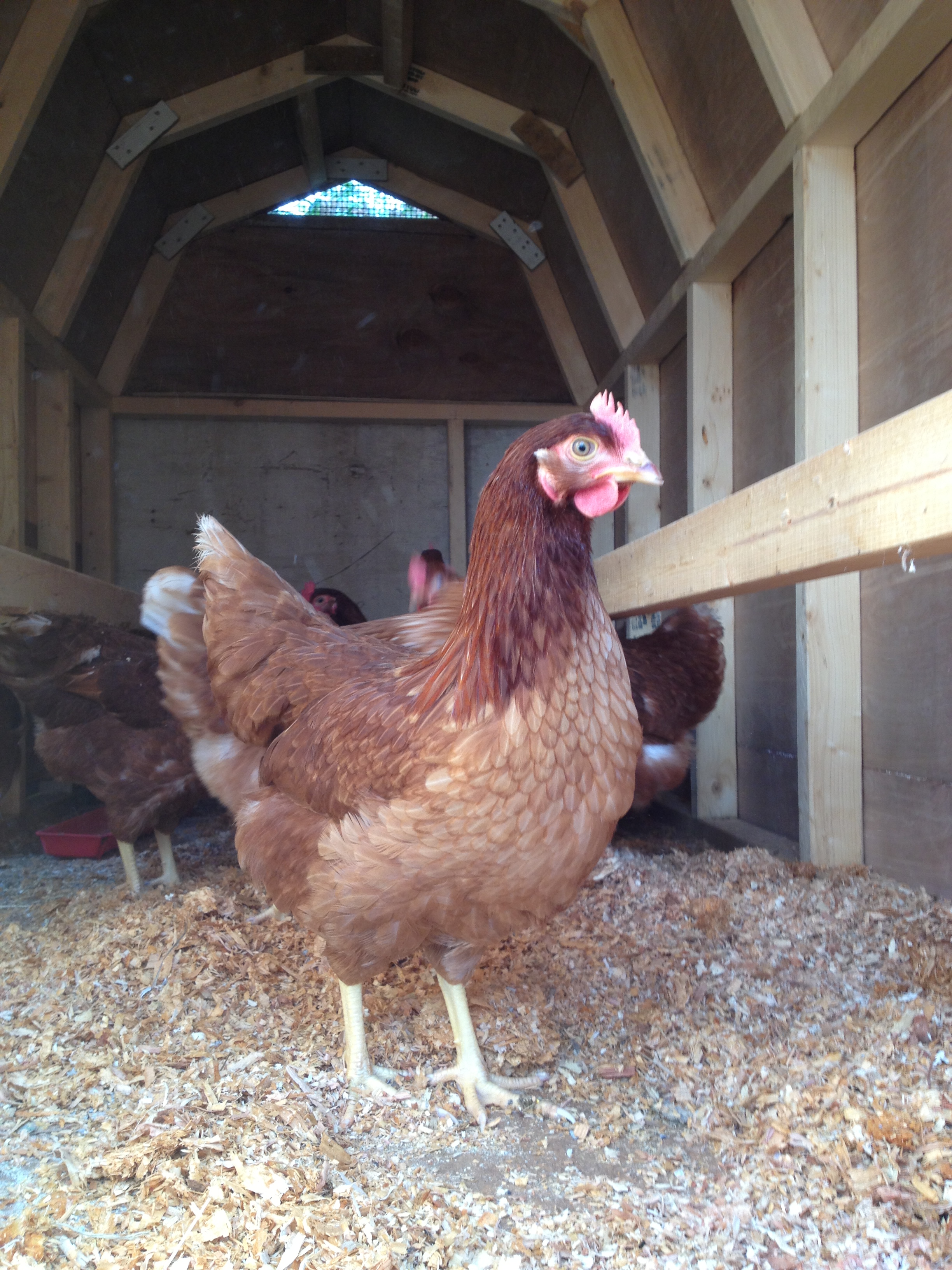
Meanwhile, inside the hen house, the girls were completely confused about where to sleep.

"You mean I'm supposed to jump up there?"

“You mean I’m supposed to jump up there?”

The first night, in fact, the girls couldn’t figure out how to walk back up the ramp, so they all piled up right at the bottom of the ramp, outside. By the second day they had figured that part out, but judging by the amount of hen manure in the nesting boxes and completely lack of bodies on the perches when I peeked in during the night, the girls hadn’t figured out that perches are for perching.

The next day, several of the hens had sorted out the perch situation, but nobody had laid an egg inside the nesting boxes, Instead, they are using the two back corners of the main area of the hen house. The next modification we’ll make is to add a low board across the bottom of the open side of the nest boxes. This will (I hope) accomplish two things: a) they won’t be able to shovel quite so much litter into the nest boxes when they are digging around in the shavings and b) they will feel more secluded, contained, and secure if they are behind more of a barrier.

Stay tuned…Interested in learning who else is participating in the 30 days agriculture blog-a-thon or the five things Holly Spangler will be talking about this month? Head over to Prairie Farmer to find out!
Here's a shot from the stage when we were gluing down the roofing felt on the nest box roof. The plywood is over the top of the roofing to evenly distribute the weight of the heavy objects placed on top.

Here’s a shot from the stage when we were gluing down the roofing felt on the nest box roof. The plywood is over the top of the roofing to evenly distribute the weight of the heavy objects placed on top.