Tag Archives: Dark Creek Farm

Day 12 – Where there is a Plus, there is a Minus

Morning follows night, spring follows winter, things are born, they die - then it's lunch time. It all makes some kind of cosmic sense, down on the farm.

Morning follows night, spring follows winter, things are born, they die. It all makes some kind of cosmic sense, down on the farm.

There are a lot of things to love about life on a small farm. The list (and, because I am a list-maker, it could be a very long one, but I’ll restrain myself) includes:

-being outside a lot
-knowing where my food comes from, esp. meat and eggs
-being part of the farming community – total bonus and a conversation worthy of an entire post all its own
-being surrounded by animals – living, growing, just being
-having a flexible work day – if I need to grab a tea before putting together the new wheelbarrow, that’s fine
-making customers happy – there’s nothing quite so satisfying as hearing that the turkey someone enjoyed over the holidays was the best they have ever tasted
-every day is different – seasons change, animals are bred, incubated, hatched, delivered, nurtured – it’s never boring!
-I love the food! I know I sort of already mentioned the food, but wow, we really do eat well around here and for that I am very grateful. 
A basic white cheddar made with our goat milk. Oh. So. Good.

A basic white cheddar made with our goat milk. Oh. So. Good.

For every good point, though, there’s a corresponding down side.

It sucks to have to be outside in the pouring rain just this side of freezing, slopping around the hog pen trying to figure out where the electric fence is shorting out before the boar takes off and starts terrorizing the neighbor’s kids.

While it’s great to know exactly where my food comes from, I take no pleasure whatsoever in loading pigs I’ve watched grow from day one into the back of the truck for their one-way trip to freezer camp. Contrary to popular belief, I think it’s a good thing to name the animals, even those destined to be dinner guests. If hog pen 53B is low on water, maybe it wouldn’t get topped up quite so quickly as when Olivia stands and stares into her water tub after Gizmo and Oreo (two big Muscovy drakes) have had such violent baths in there they have basically emptied the water out and made what remains undrinkable.

Can't beat ducklings when it comes to cuteness...

Can’t beat ducklings when it comes to cuteness…

Being part of the farming community is a challenge on days when I feel like I know nothing and am and always will be a ‘newcomer’ (there are farm families around here who have been around for multiple generations and I can tell you that a five minute conversation with one of the seasoned elders is a fast reminder that nothing takes the place of decades of having your hands deep in the same bit of dirt…)

Being surrounded by animals certainly lends itself to many ‘awww, how cute’ moments, but it is also a sure fire way to have your heart broken and your bank account emptied on a regular basis. Raise enough livestock and it doesn’t take long before you are dealing with deadstock, one way or another. Turkey poults trip and drown in their shallow water dispensers (seriously, 1/4″ of water is enough to do in a poult who is clumsy enough), sows sit on their piglets or, during the stress of labour, pick the closest one up by the scruff of the neck and slam it against the wall of the farrowing hut, turkeys within days of a major holiday go on a mushroom-eating binge and keel over, ducks become fancy dinners for raccoons, old horses must be put down (double-whammy there – the cost of dispatching a horse is insane…), old goats get ovarian cancer, and any chick or poult foolish enough to somehow escape the safety of the nursery pen may fall victim to raven, eagle, hawk, cat, or even dog attack. Gads. There are days when I long for the simple predictability of a cat and a basement suite.

Oops... horse sat on the fence! A quick 'for now' repair job in sad need of repair!

Oops… horse sat on the fence! A quick ‘for now’ patch job in sad need of repair!

Being flexible during the work day only applies when it doesn’t involve being ten minutes late to feed everyone (ever heard a chorus of squealing pigs who believe they have been forgotten?). Broken gates and fences can’t wait to be repaired until the gale force winds subside because by then the horses will be charging across the highway causing who knows how many horrible accidents. The feed store trip can’t wait until you have a bit more time or a little extra cash – all those mouths need to get fed every day, regardless of whether there’s some health scare that has put people off pork and the bottom suddenly drops out of the bacon market. Electric fence walks are not a ‘I’ll get to that soon’ kind of job. All the animals are experts at testing the fence and know exactly the moment when something shorts out. See ya!

Making customers happy is great – and a good reason to go to Farmers’ Markets so you can chat to all kinds of people interested in food. Except, as anyone who has ever worked in retail can tell you, sometimes customers are… well, a pain in the donkey. Except, no matter how wrong they are or how misinformed or how obnoxious, they are also always right. Sigh.

Every day is certainly different, sometimes for logical reasons (seasons change, something is born, something dies), and this perpetual state of flux makes planning tricky. You don’t always know what lies ahead and all the best laid plans can go right off the rails when the day was meant to be spent hauling the new boar to the farm but the truck breaks down on the way to the ferry. When help fails to show up when planned (and, when it’s bucketing down some creepy mixture of sleet and slush and mud, it’s amazing how many headaches and backaches and visiting inlaws suddenly prevent farm help from materializing) that can really mess up a day that was meant to be spent in town running errands that really can’t wait another day but will have to wait another day because you know what will happen if those hogs don’t get fed on time… The day you have planned rarely matches the day that actually shows up because that is the nature of the business. Farming is always a bit of crap shoot. What happens when your seeds don’t germinate? Or, after germination and planting out get devoured by cut worms? Or slugs? Or rabbits? Or deer? What if the sow you thought was pregnant eats her way through almost four months of expensive organic feed, shows all the signs of impending labour right down to producing milk but not a single piglet ever shows up? False pregnancies don’t happen often, but when they do… that can really mess up the planning process. Ditto for lower than expected fertility rates on poultry eggs, higher than expected mortality rates for young birds, feed prices that shoot through the roof due to drought on the other side of the world, or feed orders that don’t make it onto the truck coming to the island meaning your whole week of feeding livestock turns into a crazy juggling act of scrounging, begging, borrowing, and substituting.
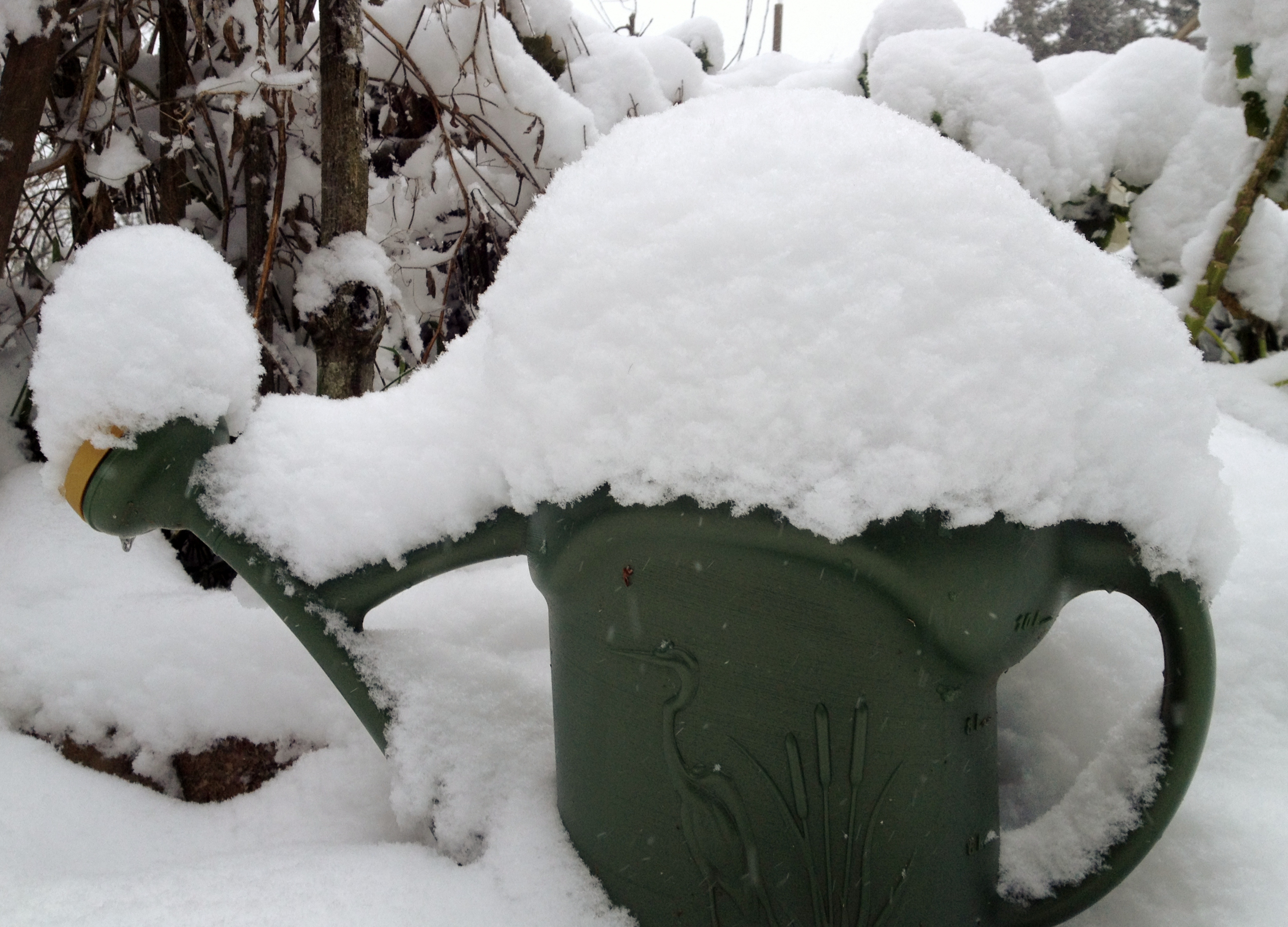
What else to do when it all freezes over except think of all the stuff that's going on underground in preparation for spring?

What else to do when it all freezes over except think of all the stuff that’s going on underground in preparation for spring?

There are certainly moments when I am ready to throw in the towel and give up. But I am, at heart, an optimist. In the depths of winter when everything (including me) freezes solid I imagine garlic sending down deep roots in beds prepared in the fall, roots that will fuel the plants’ amazing growth in the spring. Because there is always another spring coming, more seeds to start, another litter to farrow, another crop of apples to pick. And with each cycle, I learn a little more and feel just a tiny bit more confident that maybe I am doing exactly what I am meant to be doing. Which would explain why, even on the very worst days when everything seems to be going wrong, I can’t imagine being anywhere else. And besides, the food really is pretty good.

Day 11 -Chicken House Challenges – Part Two

Well, that was frustrating yesterday! Just as I was getting on a roll, the blogging interface ceased to function properly and I couldn’t add images or text below the bottom picture! Not that a description of chicken house building is so compelling that stopping where I did counts as a cliff hanger, but if you are someone who likes to complete one thought before moving on to the next, sorry about that.

Sticky black goop to glue down the roof and seal everything... Roofing was also nailed down.

Sticky black goop to glue down the roof and seal everything… Roofing was also nailed down.

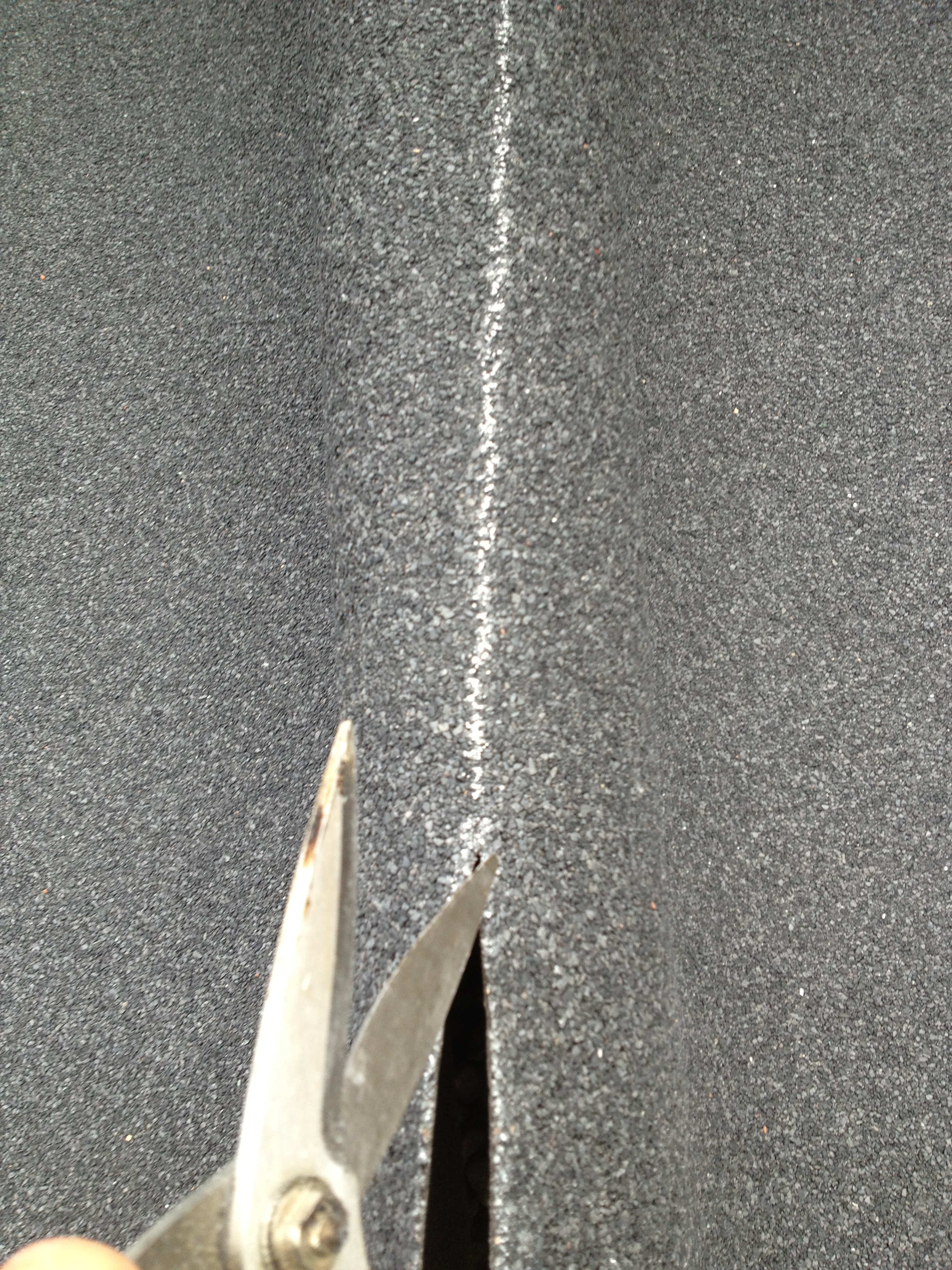
We were really, really careful to use lots of sticky black roofing goop (for some reason, as I did this, I kept thinking of Brer Rabbit and his tar and feathering incident) but even so, after everything was assembled and sealed (so we thought) we had a couple of leaks.

IMG_6764[1]In the next photo, you can see how we should have made the main/upper roof overhang a bit wider on the nesting box side of the building. Though we had also ‘roofed’ the nest boxes, the water dripped off the upper roof and enough collected in the seam between the exterior wall and the nest box top that a bit seeped inside. It wasn’t exactly a flood, but even a bit of water soaking into bedding would lead to mould and other nastiness down the road. At first we tried to caulk the crack with a silicone bead, but in the heavy rains, it just washed right out. We had to scrape out the ineffective goop and use a super-sealant that works to seal cracks even when wet. This did the trick and the interior is now staying bone dry.

Here's a view of the nesting box side with the ramp up.

Here’s a view of the nesting box side with the ramp up.

We thought we were being very clever to have the hens exit through a different door to the humans. This would mean they could carry on with their business while the human carried on with hers (human door is large and at the end of the building). The only problem was, by situating the hen ramp between the two nesting boxes, we created a bit of a design nightmare when it came to figuring out how to make a sort of chute for them to use when the ramp was down so they could get in and out of their protected run. Keep in mind we needed everything to be lightweight and movable.

Ramp down but no chute in place

Ramp down but no chute in place

Ramp down with chute - solid sides but no top on yet

Ramp down with chute – solid sides but no top on yet

After we had built a solid-sided chute, we realized we couldn’t fasten on a top of any kind because then one wouldn’t be able to lift the ramp up and down when the chute was in place. So the next step was to come up with a cap of some sort for this whole fancy system.

For this part, we built a very light frame and covered it with heavy mesh.

Mesh lid in place over the ramp

Mesh lid in place over the ramp

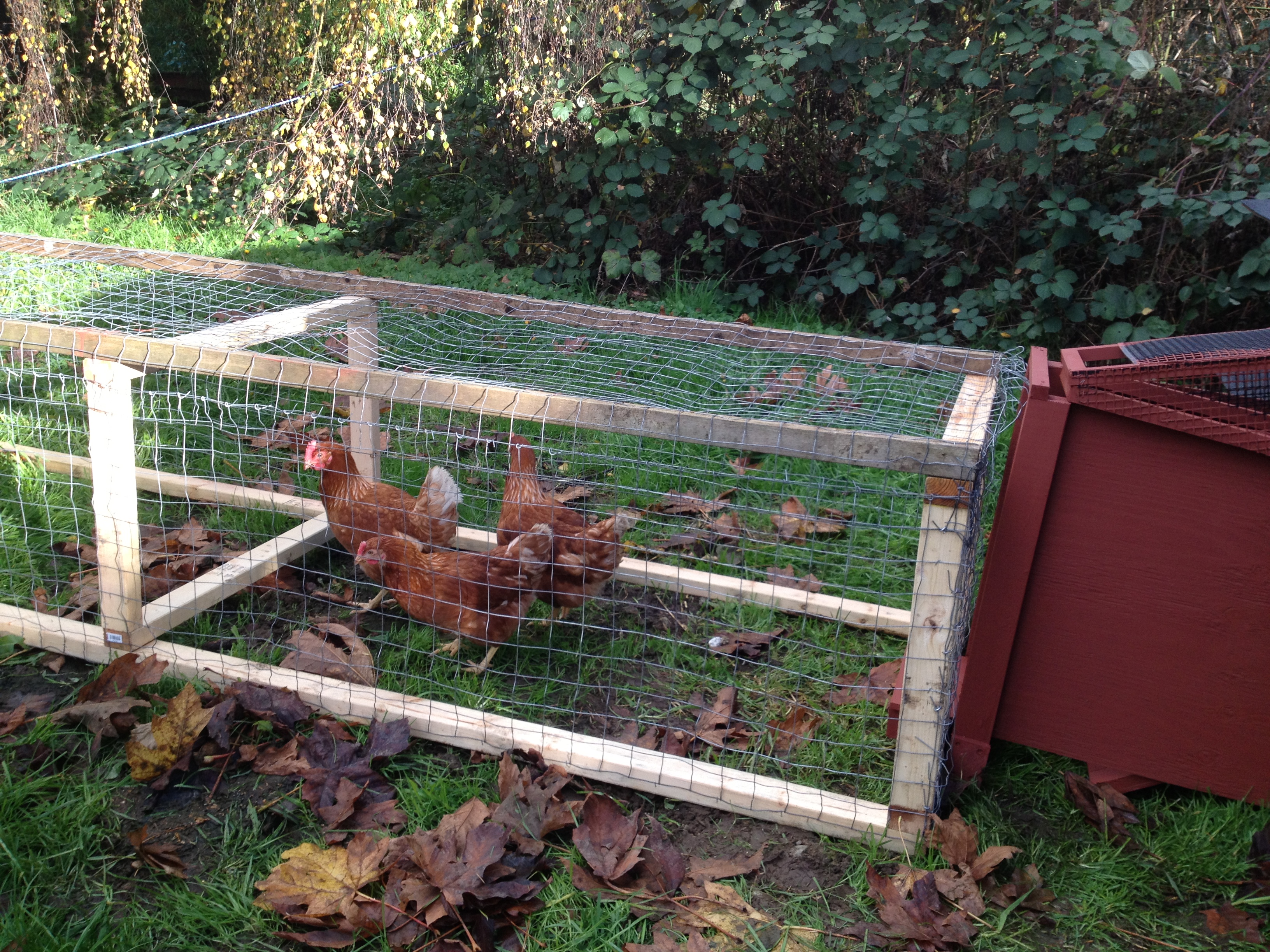
Perhaps predictably, the chickens were a bit confused when we first put them into the house. Eventually, though, they got it figured out and were running up and down the ramp with impunity.

The ramp leads to a portable pen (only part of it seen in these photos – the long, narrow run was initially meant to lead to a larger, more square area, but we are going to repurpose the long, skinny run as a vegetable bed chicken cleanout run- as in, we’ll place it over a bed to be cleaned out in the garden, put a few chickens in there for a few hours and let them do some cultivating). The system of attaching the more square run will be similar to what you can see in the photos here.

In my next post I’ll talk about some issues we’ve had with the interior design and modifications we need to make to the nesting boxes… I’m thinking that by the time we have built our twenty-seventh chicken house we might just have all the bugs worked out!

IMG_6782[1]

Here are a couple of brave girls standing at the top of the ramp considering their options.

Long, narrow run that was meant to lead into a larger turnout area... plans have changed once again.

Long, narrow run that was meant to lead into a larger turnout area… plans have changed once again.

The girls quickly got pretty good at running in and out

The girls quickly got pretty good at running in and out

Chicken house and run set up for testing on the back lawn (so it was handy for modifications). The whole set-up will be moved to a larger poultry-raising field down the road.

Chicken house and run set up for testing on the back lawn (so it was handy for modifications). The whole set-up will be moved to a larger poultry-raising field down the road.

Interested in learning who else is participating in the 30 days agriculture blog-a-thon or the five things Holly Spangler will be talking about this month? Head over to Prairie Farmer to find out!

Day 10 – Chicken House Challenges – Part One

It never ceases to amaze me how impossible it is to think of every eventuality when you are trying to plan a project. Like, say, a chicken house. How hard could it be to come up with the perfect design to meet the needs of our hens? We need the house to be movable and, for this version, we wanted the girls’s eggs to be collected away from the girls (we’ve had some recent problems with egg-eating) and, because we’ve found this to be incredibly handy in another chicken coop, collectible from outside the house. We also need the house itself to be attached to a portable pen so they have access to a fresh patch of grass every day. And all of this moving and rearranging needs to be doable by me working on my own. Oh, and the house needs to be a decent size so I can fit 36 birds or so inside without anyone feeling crowded. Because of our climate, the structure needs to be waterproof and, because of our location, it has to be raccoon-proof by night and the run has to be birds of prey proof by day.

chicken house - chassis with floor

Ease of moving was a major consideration. Our previous design (watch for a future post) is really tough for me to move on my own. I’m no spring chicken, you know…

With this list of requirements plus a few more (needed to be able to hang the feed hoppers inside, interior needed to be big enough for me to move around in and clean the place out, perches – two long ones, both the same height needed to be set higher than the openings to the nest boxes, floor of a material that can withstand some moisture and be swept clean) we did a series of sketches and make some lists and then, after a whole lot of discussion, Dad (with a bit of help from T. and me when we had a few minutes to pitch in) started to build.

Because we have had so many issues moving our current chicken house around (that one built with smaller wheels and axles we mounted ourselves to a sturdy frame) we invested in a great pre-made, adjustable chassis. What a difference! With turning wheels, a long tongue, larger wheels and a sturdy basic chassis to which we could bolt a 2 X 4 frame to support the floor, we were off to a great start.

Interested in learning who else is participating in the 30 days agriculture blog-a-thon or the five things Holly Spangler will be talking about this month? Head over to Prairie Farmer to find out!

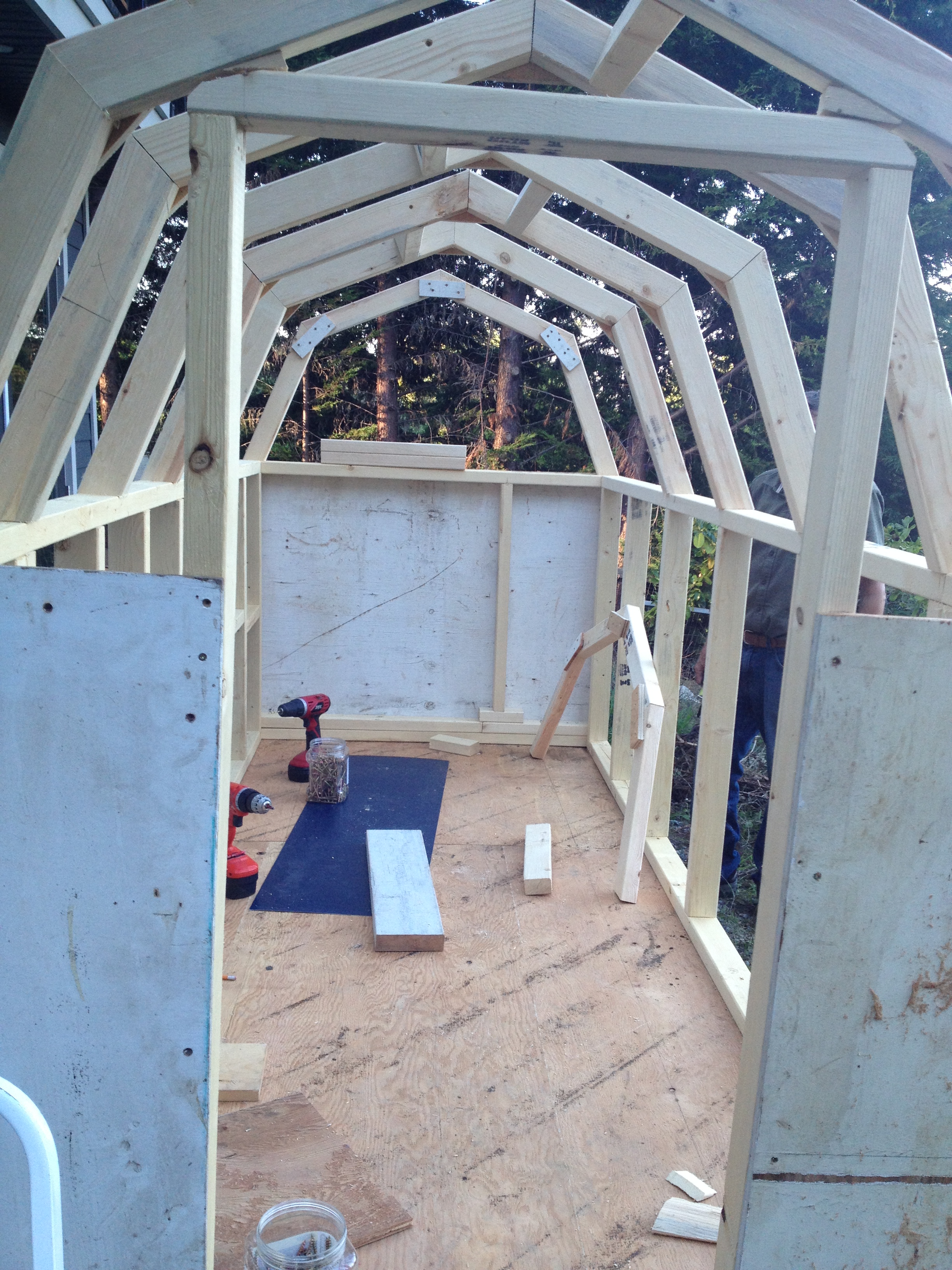
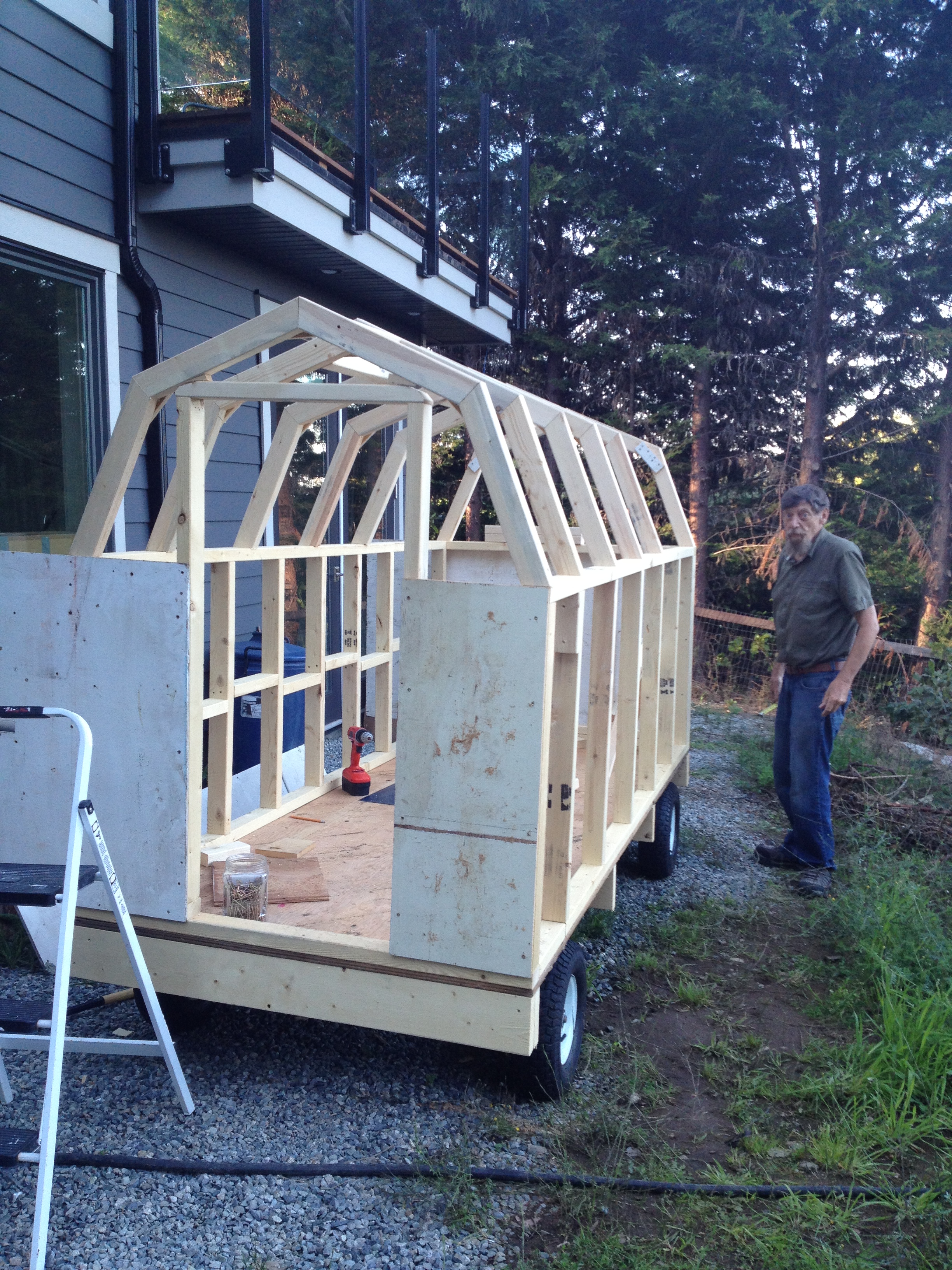
Basic framing of walls and roof  in progress.

Basic framing of walls and roof in progress.

Another shot of the walls being framed - starting to fill in with plywood.

Another shot of the walls being framed – starting to fill in with plywood.

Plywood basically on and salmon-pink undercoat mostly done. No particular reason for the salmon colour - it was a mis-tint, good quality, and perfect for an undercoat.

Plywood basically on and salmon-pink undercoat mostly done. No particular reason for the salmon colour – it was a mis-tint, good quality, and perfect for an undercoat. And cheap… because who would actually want to paint something that colour?

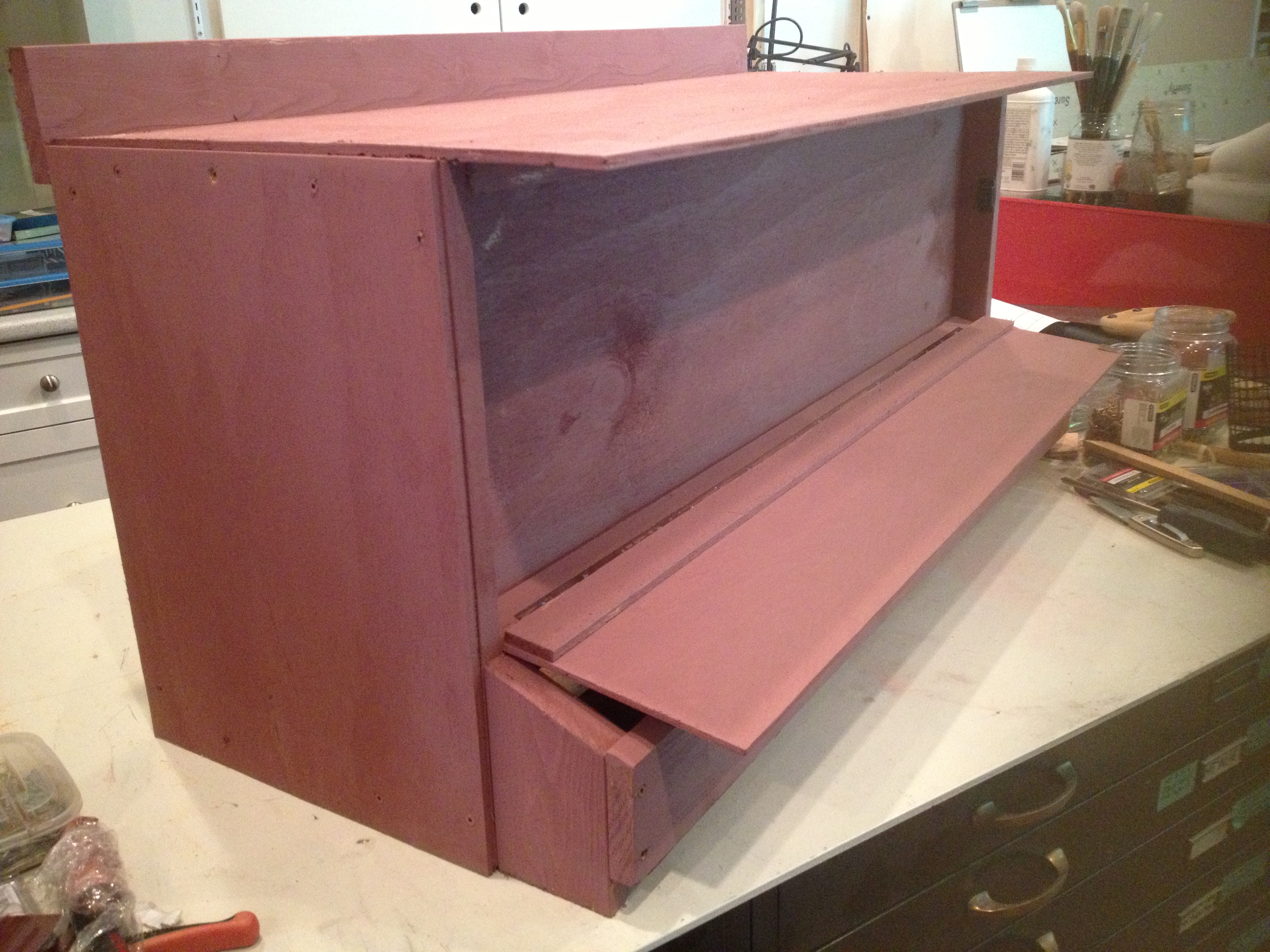
Nesting boxes were built separately inside - then mounted at an angle on the outside of the hen house.

Nesting boxes were built separately inside – then mounted at an angle on the outside of the hen house.

Weather being wet here, a good roof is essential - here, cutting the roofing felt off the bit roll.
Weather being wet here, a good roof is essential – here, cutting the roofing felt off the big roll. [At this point in my blog-post writing, I can’t seem to add more photos down here at the bottom … I will do another post tomorrow with another set of images of the rest of the building.]


Day 9 – Progress on the Orangerie

We raised the basic framework about four feet off the ground.

We raised the basic framework about four feet off the ground.

Around here Bob and Vera Duncan are famous – at least in certain circles. On their small farm near Sidney they grow a spectacular array of fruit trees. [I’ve taken the liberty of cutting and pasting the list of goodies they offer – if you are curious about what they are growing, scroll down].

Like many local farmers and gardeners, we were totally intrigued when we heard it was possible to grow oranges, lemons, figs, grapefruit, olives, and more right here on the Saanich Peninsula. I had always assumed such a project would require a heated greenhouse, but in fact, climate change has nudged our already balmy (for Canada) climate up a notch making it possible to grow quite a few citrus varieties with minimal protection during our infrequent chilly spells.

Poly being pulled into place over the frame.

Poly being pulled into place over the frame.

Encouraged (and, loving fresh oranges and lemons and feeling very guilty about how many miles our citrus must travel to get here), we decided to build an orangerie. Unheated and extra-high, this very simple structure was made using the framework from one of those shelters under which people store their fancy cars.

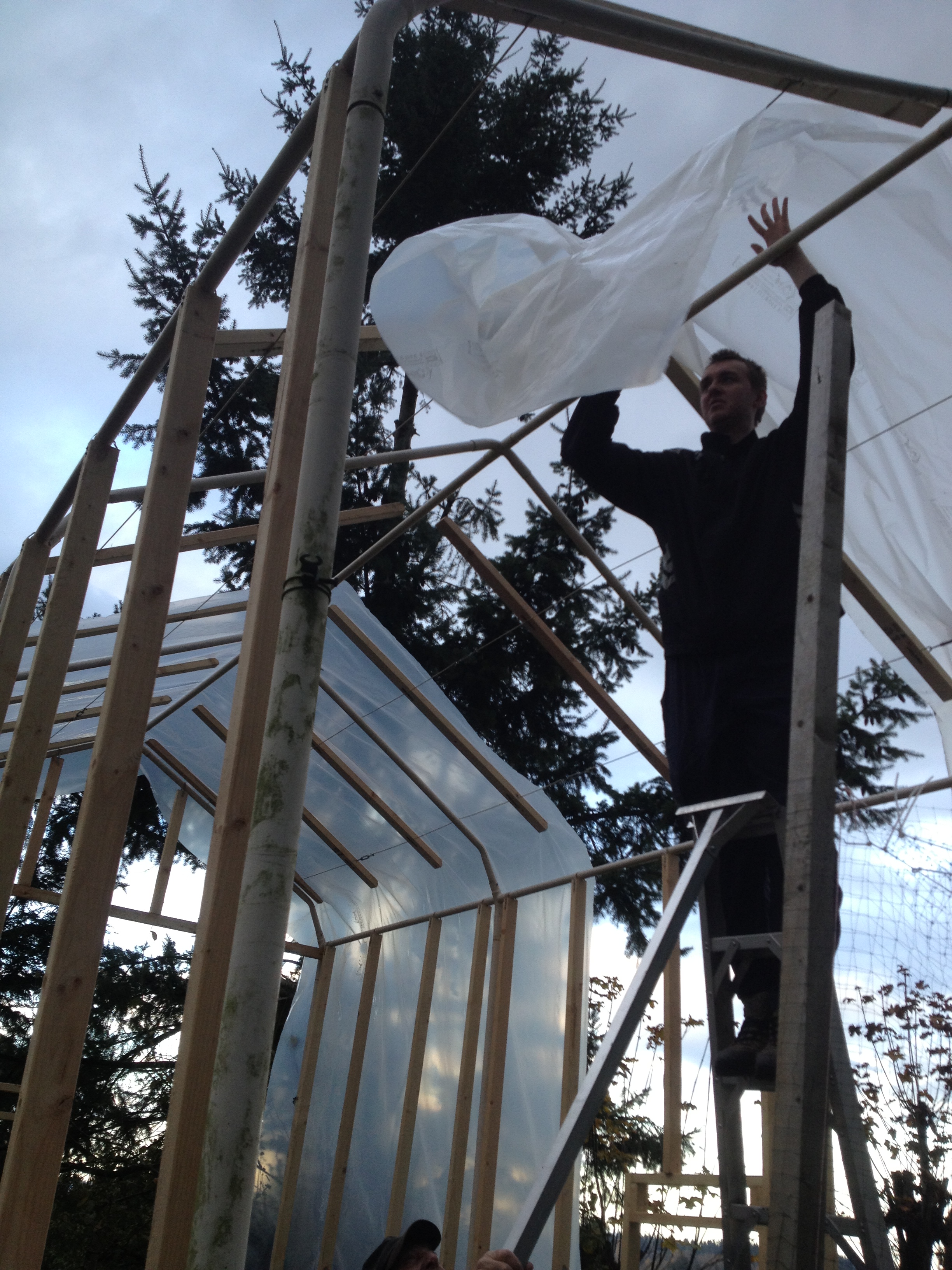
Tall guy, T. on an orchard ladder still finding it a stretch to get the poly over the top.

Tall guy, T. on an orchard ladder still finding it a stretch to get the poly over the top.

To gain a bit of extra height Dad and T. built a low wall about four feet high on the downhill side on top of which they anchored the car shelter framework. Then T. in-filled with some 2 X 3 wood framing. The whole structure is remarkably stable and, with the extra framing, there was something solid to which to fasten the plastic cover.

Today we pulled the strong poly sheeting over the top and fastened that to the framing using those cool roofing screws with built-in washers.

Those trees can grow nice and tall inside their new home!

Those trees can grow nice and tall inside their new home!

As per Bob’s instructions, we’ll wrap our trees in remay for the winter and deck them out in Christmas lights to help keep the chill off the fruit when the temperature threatens to dip below freezing. Which brings me to a problem – a few years ago we pitched all our old-fashioned outdoor Christmas lights – you know, the kind with the bulbs that got hot, which made them instantly uncool because of the energy they wasted? That energy is exactly what we need now! The new LED lights just don’t cut it for this purpose. If you happen to be in the area and if you are upgrading your outdoor lights, please consider sending your old strings our way instead of to the landfill. We will happily trade for orange futures…

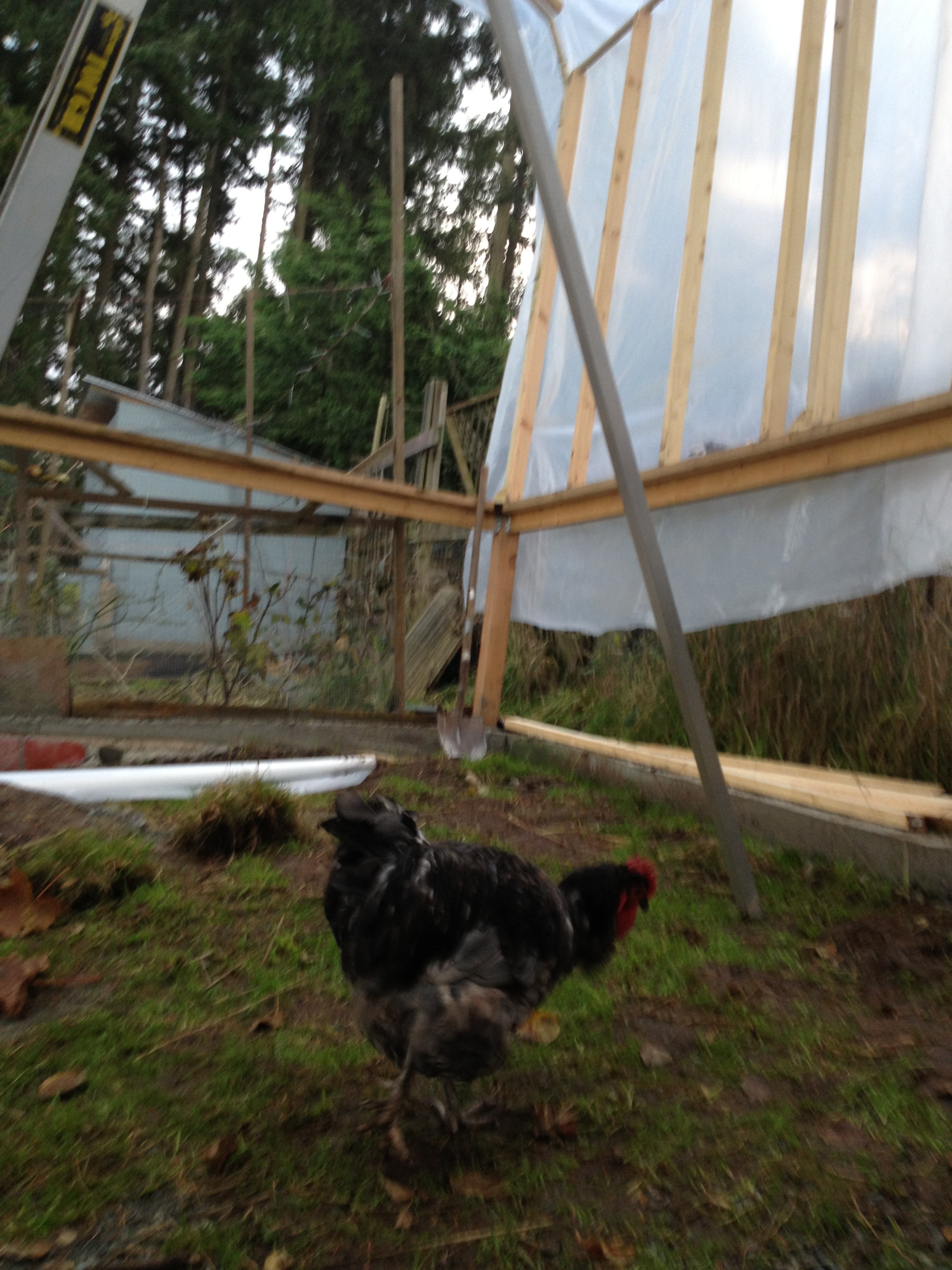
Wimpy struts in to check out our progress.

Wimpy struts in to check out our progress.

Here’s a video of Bob talking about one of his lemon trees.

Bob and Vera Duncan’s Fruit Trees and More – What a list!! For more info, visit their website at: http://www.fruittreesandmore.com

Over 300 varieties of fruit trees to choose from.

Specializing in dwarf apple trees – over 200 varieties of heritage and family favourites including unusual, connoisseur and hard to find varieties.

Other fruit trees – over 80 varieties – pears, plums, peaches, nectarines, apricots, cherries, figs, grapes, kiwi, quince and medlar;

Citrus – over 30 varieties – some of which are hardy enough to be grown outside;

Hardy subtropicals – over 15 varieties – pomegranates, persimmons, loquats, feijoa, jujubes, olives.

Interested in learning who else is participating in the 30 days agriculture blog-a-thon or the five things Holly Spangler will be talking about this month? Head over to Prairie Farmer to find out!

Day 8 – Baffling Dog Behaviour

20131107-222527.jpg

Sometimes the dogs are just plain odd. Tuulen has this thing about shoes. Maybe he feels a need to make up for my lack of interest in footwear, but whatever his strange motivation, his behaviour is pretty consistent and certainly strange. If I am working at the computer and not spending enough time looking at him lovingly, he will go out to the mudroom and carefully select the shoe I have most recently worn. Very gently he pulls it off the rack and brings it back into the bedroom and places it on the bed beside him. Sometimes, he then proceeds to poke his long, dexterous snout into the shoe so he can extricate the insole. There is no chewing involved in all this (thank goodness, or I’d be farming barefoot!), more like a thoughtful meditation on what humans wrap around their feet.

20131107-222536.jpg

After he has placed the shoe or boot or slipper just so in the bed, then he lies on it and sighs. And that’s it! End of game! There’s no licking or tossing or playing ‘look what I have! Can’t catch me!’ He just lies on the shoe until it gets uncomfortable or he gets bored or I still refuse to pay any attention to him and then he gets up and repeats the whole ritual. Sometimes by the end of a session at my desk there is quite a collection of footwear on the bed. Socks are occasionally added and, very rarely, other random objects. Yesterday, he found an old soup ladle I had placed by the back door ready to start a new life down in the feed room at the barn. This precious object he placed across my pillow before lying on it and sighing.

I can tell you I was less than thrilled to see that muddy boot on my bed! I had just come up from the barn where I’d slopped around the wet area by the hog water and those boots were disgusting! It’s not nearly so bad when he plays this game with my slippers.

So, I ask you – what the heck is that all about?

Interested in learning who else is participating in the 30 days agriculture blog-a-thon or the five things Holly Spangler will be talking about this month? Head over to Prairie Farmer to find out!