Tag Archives: climbing

Of Knees, Knuckles, Knots and Kalymnos

My knees have never looked worse. Even as a kid I never had so many bumps, bruises, abrasions and scabs as during this past year of climbing. Regular run-ins (bang-ons) with rock and ice will do that. Sometimes, knee damage occurs due to poor technique (leading with a knee and crawling over a ledge is not considered to be beautiful, stylish climbing…) and sometimes due to the rock being a tad closer than expected (bang!). Not that knees are always in the way. There are a couple of techniques that depend on clever knee placement. Knee drops are one of those – kneebars are another.

This video shows how the climber pivots her foot on the hold, drops her knee, gets her hip close to the wall and is then able to reach up and through to a hold above using a dropped knee.

Kneebars require the climber to wedge the top of the knee against or behind a bit of rock while the foot on the same leg is jammed against another bit of rock. Tension in the leg then creates a pretty stiff anchor strong enough to support much of one’s body weight. You can then either take a quick rest and shake out one (or both) arms or gain a bit of extra distance with an arm when you need to reach for a hold.

This video shows a bunch of different knee bars on various routes.

My knuckles have also taken a bit of a beating – not just from superficial scrapes (they often make me look like I’ve been fighting in back alleys), but also because they regularly get stuck in tight places.

IMG_1827.jpg

My knuckles are still stiff, sore, and swollen after this crack climbing practice session at the University of Calgary climbing wall… Jamming your knuckles into a finger crack can make you feel pretty secure in the moment, and rather miserable for days after. 

As for knots, it seems like they are the bane of my existence at the moment. Being dyslexic, it sometimes takes me an inordinate amount of time to master any technique that relies on things moving through space in a particular direction. Over, under, around and through, recently I’ve been attempting to add more knots to my ropey repertoire.

IMG_1429.jpg

Here we are back at home a couple of weeks ago at our simulated anchor at the playground,  practicing crevasse rescues. Prussiks, Munters, Gardas, clove hitches, figure eights, overhands, and who knows what else were all knots we used during the exercise… Wherever possible, each was tied while wearing gloves – being able to tie a knot without taking your gloves off could mean the difference between frostbite and no frostbite, remaining functional and, well, perishing. 

As for Kalymnos, I really, really, really wish I had photos I had taken at this climbing mecca in Greece. As it is, I’ve never been there. Kalymnos is right at the top of my climbing bucket list: hopefully we’ll get there during next year’s planned sailing trip in the Med. For now, here’s a link to the guidebook:
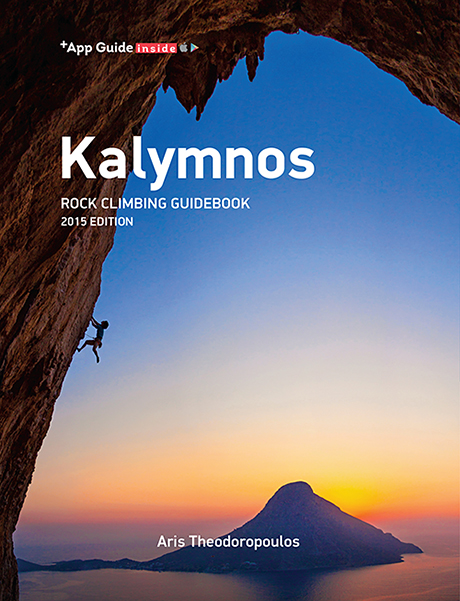
Cover-CK-Final-noconv-1

Kalymnos or Bust! (Meanwhile, my birthday is coming up soon and I don’t yet have a copy of the guidebook… hint hint.

Hey, with any luck we will be on a sailboat next April, just in time for the 2017 A to Z Blogging Challenge! If my knuckles haven’t completely seized up before then, maybe we’ll do a water-logged blog and on this date next year I WILL be posting my own Kalymnos photos…
J is for Jungle, and Jolly Good Jumping (on rocks)

I is for Ice and Infamy

PC063053.jpg

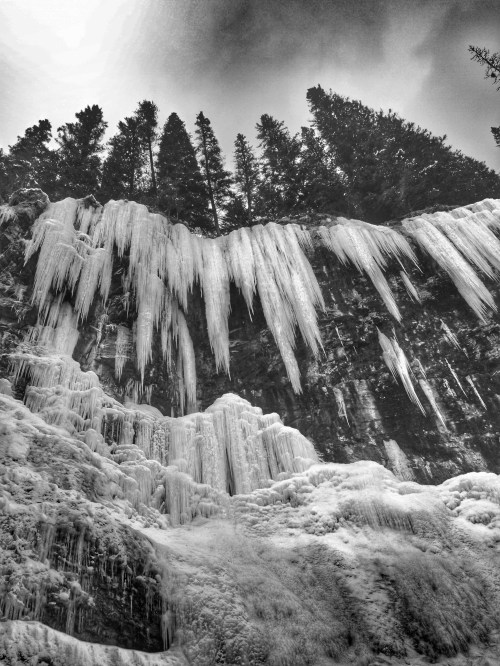
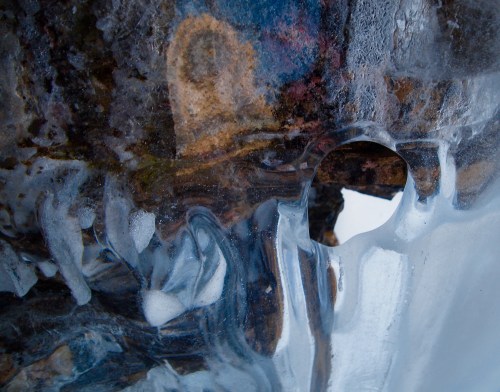
Ice and rock – strange and beautiful sculptural bedfellows – This photo taken in an icy cave near the top of This House of Sky in the Ghost Wilderness Area

Today’s post for the A to Z Blogging Challenge will be mostly photos – of ice. Which is definitely a bit strange given I am sitting beside a swimming pool in Hawaii as I write this… But ice has been a bit of a theme back at home this year. I knew there were people who climbed frozen waterfalls, but to be honest, I didn’t really think I’d ever be one of them. And then, I met Fabio, who is obsessed with ice climbing.

OLYMPUS DIGITAL CAMERA

Fabio (right) leading the last pitch of Cascade Falls (Banff National Park) – the wind creates the most amazing twirling fingers of ice

I can’t say that I’ve become obsessed with ice climbing in the same way climbing rock has seized me, but I have lost track of how many times I’ve had my breath taken away while in the presence of some icy feature.

OLYMPUS DIGITAL CAMERA

Johnson Canyon in the Rockies – a popular place for ice climbers and tourists alike

At various points during this winter’s explorations I’ve found myself hanging out in ice caves – either to get out of the wind, wait my turn to climb, belay safely without getting bonked on the head by falling ice or, once, when I decided I wasn’t up to the final, steep pitch and was happier waiting for the others to climb while I snapped a few photos.

OLYMPUS DIGITAL CAMERA

OLYMPUS DIGITAL CAMERA

This House of Sky

By turn brutal and delicate, intimidating and fragile, ice is nothing if not unpredictable. From one day to the next it can change and, depending on its mood, can make for a fabulous climbing partner or an obnoxious opponent determined to thwart one’s best efforts to ascend. Softer, wetter conditions make it much easier to sink your ice tools deep, but too warm and things can literally start falling apart beneath you.

IMG_1302

Fabio – Johnson Canyon

OLYMPUS DIGITAL CAMERA

Whack at a piece of hard, glassy, blue, extremely cold ice and your tool is just as likely to bounce back at you, barely leaving a scratch on the surface. Hit the rock hard surface at a slight angle and you might dislodge a knife-edged slab of ice capable of decapitating you or your belayer.

IMG_1169

Tuck in behind a curtain of ice like this one at Bear Spirit near Banff, Alberta and it can feel like you’ve been transported to a parallel universe… One where ice fairies might emerge from their glassy bedrooms to dust the wintery world outside with a sparkling of frost… 

OLYMPUS DIGITAL CAMERA

I’ve got my brave game face on here, but I was actually terrified. I was about to step out and around a very steep column of ice at Louise Falls  early in the ice climbing season and very early in my ice climbing career. Though I had serious doubts about my ability to get to the top of this one, once my palpitations subsided, in the end all went well. 

OLYMPUS DIGITAL CAMERA

Haffner Creek in BC is a place lots of climbers go to practice their ice climbing skills. Here I’ve been sent on a mission meant to improve my footwork. Note that my ice tools are parked down at the bottom and I’m climbing without them. Instead of relying on hooking the tools into the ice and hauling myself up, I can only use my gloved (and increasingly cold) hands for a bit of balance. All the upward movement came from my feet, which is as it should be.

IMG_1177

As I write this today I could not be farther away from that magical, icy world of the mountains in winter. Here in Hawaii we visited Pearl Harbour this morning and spent some time in quiet thought at the memorial of the sunken battleship, Arizona. In the museum I was intrigued to see the handwritten edits to one of the world’s most famous speeches delivered by F. D. Roosevelt the day after the Japanese attack on Pearl Harbor.

IMG_2318

The word “infamy” was not in the original Pearl Harbor speech. 

I’m busily editing three different manuscripts in progress at the moment and they all look a bit like that typed page, full of additions and deletions and new directions and re-thinkings. Not that any will be as significant as The Infamy Speech, but it is reassuring to see that even the most eloquent of writing likely started out looking quite different to its final, polished form.

H is for Hawaii, Sarah Hueniken, Hips and Hula

I’ve got it! The connection between climbing and hula is (obviously) hip action!

Version 2 (2).jpg

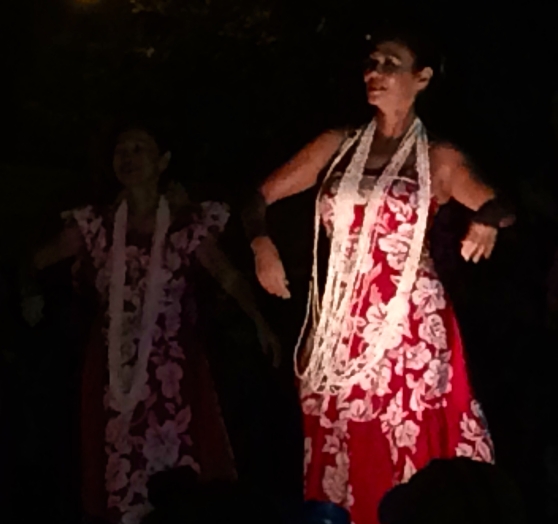
Watching the hula in Honolulu this evening made a lot of people (yes, including me) pretty happy.

It only makes sense that one generally wants to keep those hips in close to the wall – there’s no point in shifting your centre of gravity way away from the rock face – that kind of thing will pull you off faster than you can say ‘take!!'[For non-climbers, that’s what you yell at your belayer when you need the slack to be taken out of the rope, generally yelled during a moment of panic and/or exhaustion, often just as you are beginning to fall.]

At the same time, it’s impossible to see where you are putting your feet if you keep your hips glued to the wall and never look down. Which is where the hip action comes in. This is particularly pronounced when ice climbing when you need to stick your backside waaaaaaaay out before you move your feet.

PC062996.jpg

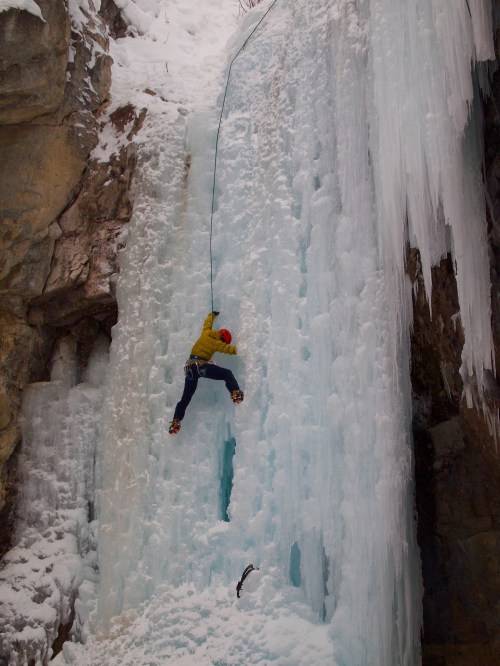
Hips in – that’s Joe climbing This House of Sky in the Ghost River Wilderness Area earlier this season…

PC062985 (1).jpg

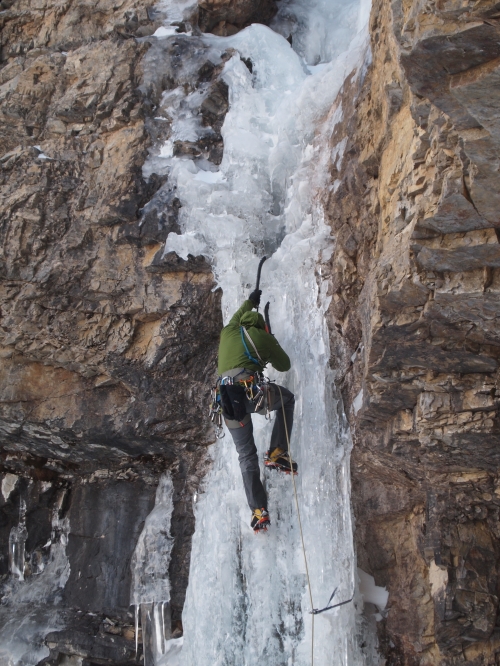
Hips out – Fabio on This House of Sky

Pushing your backside out accomplishes two things – your arms stay straight (less tiring than keeping them flexed by pulling into the wall) and allows you to yank the points of your crampons out of the ice, move your feet up, and kick them back into new positions higher up. Once your feet are comfortably set, you push your hips in toward the ice before you pluck your ice tool free and swing it home again above you.

If you want to watch a short (and very cool) video about ice climbing by my friend Craig Hall (handy his last name starts with the letter H) about  Sarah Hueniken, here’s the link.

That’s all I’ve got – I’ll let the sun set on this blog entry…

IMG_2238.jpg

Sunset – Waikiki – nothing in this photo has anything to do with the letter H. Sorry.


G is for Gaston

“Do a gaston!”

“Say, what?”

It’s always fun to get advice partway up a climb that makes no sense. A gaston? What the heck? Who, or what is a gaston?

Turns out it’s a climbing hold named after Gaston Rebuffat, French mountain guide and climber (and author of various books including On Ice and Snow and Rock in which he is seen doing a double gaston) who liked to use a reverse grip that requires turning the hands backwards and pressing outwards to create resistance. The image used to describe what a double-gaston looks like is to think of how you’d put your hands if you were trying to pry open an elevator door.

Maria Ly posted this image of a double gaston in action:

https://www.flickr.com/photos/mariachily/6024815858/in/photolist-aboKRu-waLU8i-aJ7itH-pFMNGe-fKXMpK-fKXPog-qq5vFi-nAZbfi-fLfpx5-6ovGXN-6Aqm8w-5cRBju-6QviGM-ac5aPK-qB45fV-8vM8gK-nZSSdS-itcQeG-7LUuAz-7qCygK-dcazTq-o3prYU-dB3QSJ-o3AWMW-qGwhUK-njuuf5-neLmLJ-mponkB-9sids1-jgoh5v-6Lh5gp-7R1T8E-6Lkyr9-qiPc4o-dppNdo-ncgC2d-p4eUUz-pDoofL-nrHE3u-7YKC5L-3fpp6r-eJmRpJ-fJb2xo-nL23Zd-gNcRM-4TJ3pS-oeWCi8-778wUb-atpHUq-jgrWNE

Photo by Maria Ly (Flickr, made available under a Creative Commons license)

Much like in this photo, there was a narrow crack right in front of me that would have been very useful, had I known what a gaston was before I found myself looking for somewhere useful to stick my fingers. Enough said. Now I know. The gaston has been added to my toolbox of climbing tricks.

(I was also going to write about ice climbing in the Ghost River Wilderness Area and the super fun multi-pitch called Geronimo at Red Rocks, but alas, hula dancing is calling my name, so those subjects will have to wait for another day… Not sure if/how I’ll be able to link hula dancing to climbing, so even though tomorrow will feature the letter H, you may never get to find out how my evening is about to go here in Hawaii…)