Tag Archives: Art

Lines (12/365)

The lines seemed to go a little better than the wobbly circles of yesterday… with the exception of trying to draw a square using a series of parallel diagonal lines. That was so not happening, especially when the lines angled down and to the right… clearly some neurological rewriting needs to happen before I get that right. My triangles are a bit asymmetrical and my straight, vertical lines all tend to have a bit of a leftward leaning tilt, but overall today’s exercise was not quite as painful as my efforts yesterday.

Mondrian Piet 1940 ish composition-no-10-1942

Composition No. 10, Piet Mondrian (1940-ish)

Piet Mondrian jumps to mind when I think of nice straight lines put to good use. What I didn’t expect was to see Van Gogh popping up in the Getty Museum’s handout intended for students learning about the elements of art. Line, of course, is one of those basic elements…


Van Gogh wheat-field-with-sheaves-and-arles-in-the-background-1888

Wheat Field with Sheaves and Arles in the Background, 1888 by Vincent van Gogh 


Check out all those lines!! There’s no real drawing going on here, per se… and yet… That’s a wheat field! And smoke from the factory chimneys! And stubble… and the impression of a real place made up of a bunch of short lines! Here’s a link to the handout, in case you want to have a go at filling in all the boxes with different types of lines.

I confess I was inspired and decided to give the line-making another go, this time based on the little boxes on the Getty handout…

More lines IMG_0189

It’s no wheat field, no Arles, but I can see how mastering some of these basic elements could prove useful someday.

Dad concurs. Right under the greeting ‘Happy Mother’s Day’ he texted, “Lines are really neat…” and then went on to illustrate with some quick examples. They were a little different to the Getty categories… Dad’s examples were:

  1. static straight lines
  2. straight lines showing slight movement
  3. more interesting/complex movement, still using only straight line
  4. quite a complex pattern, though not using many more lines (just varying length, angle, relative positions). Here’s my rendition of Dad’s example…

IMG_4504

No wonder I was having such trouble with circles! I was running before I could walk… I’m thinking maybe tomorrow I need to go back a step farther and maybe try a plain dot. I’d ask, ‘How hard could that be?’ but I am thinking even a dot could present mysterious challenges I can’t even imagine…

Take the Lowly Circle (11/365)

If you’ve been reading along for a while you will know I’ve long been hankering to up my game in the visual art department. Ok, more accurately, to have any sort of game at all. They say you need to start somewhere, so today I pulled out paper and pencil and tried to draw a circle.

My. God.

How hard could that possibly be? Hard!!

But if one masters the skill of the perfect freehand circle, one could go down in history. Like Giotto, the Italian painter who could, according to artistic legend, draw such a perfect circle it seemed he had used a compass.


This is a mural designed by Dad (shown here in progress) down in Ottawa, Illinois. One of Ottawa’s claims to fame is a glass factory where they made marbles (that’s a giant marble in the middle).


When I mentioned to Dad I was attempting to draw (in general, circles in particular) he immediately mentioned the ‘perfect O of Giotto.’ How could I not have known of this guy’s special talent before now?


APC Patrol Cyprus (1974) by E. Colin Williams (Note: circle turned ellipsis when viewed from an angle… I guess practicing my circles isn’t just a lame exercise…)


Giotto, turns out, didn’t just draw endless circles (though he must have drawn a few in his day to get so good). Though exactly who did what is hotly debated in art historian circles, this one is most likely Giotto’s work.


giotto st-paul.jpg

St. Paul (late 1200s) by Giotto di Bondone (Giotto)


One of my favourite factoids about the painter was discovered after an analysis of his front teeth upon his death. Apparently, they were worn away in a way that indicated he had spent a lot of time clenching a paintbrush between his front teeth!


Gerrit Dou 1630 35 the-extraction-of-tooth-1635.

Extraction of a Tooth by Gerrit Dou, 1630-ish


Note to self: if I ever dare to touch a paintbrush (after today’s painful experience with a pencil and a circle, I’m not sure I’ll ever get there), I will be sure to put it down when it’s not in use!! I need my teeth!!


Alberta Schoolhouse Doorknob by E. Colin Wiliams  (Here’s another painting by Dad, this one featuring several pretty good circles…)


Dad’s hot circle tip: Practice!! And… ellipses are more difficult. People think they are pointy at the ends…


Dad sent this helpful illustration of what not to do in the ellipsis department…


Keep on drawing!! See you tomorrow…

Elk! (Day 9/365)

Elk IMG_3081.jpg

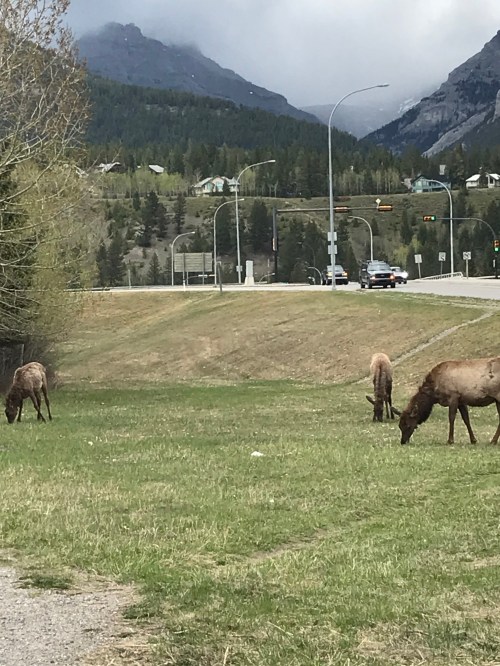
I was cycling home this afternoon, hurrying because the weather had changed for the worse in the hour or so that I’d been out, when I spotted these gals… The resident elk herd was enjoying the fresh grass right beside the main road leading into town.


american-elk-1845 John James Audobon

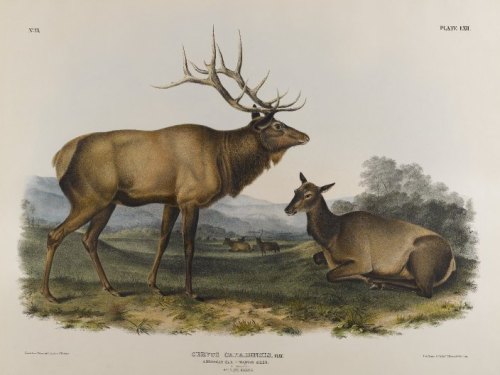
American Elk by John James Audubon, 1845

I only saw cows and youngsters, no bull with this group (I just learned that tidbit – the males are not bucks, as I would have thought…) who were eating and lounging and paying no attention to traffic or cyclists waving cameras in their direction.

For your edification, a few useless facts about elk:

  • There used to be 6 sub-species of elk in North America, but two are now extinct
  • Mature bulls can weigh more than 700 lbs (explaining why it’s such bad news when they are hit by cars on the highway)
  • To attract females, males urinate on themselves, soaking their hair and making sure they are nice and smelly (rather glad males of the human species don’t indulge in such delightful behaviour)
  • Utah has claimed the Rocky Mountain Elk as its state animal
  • An adult elk will eat about 20 lbs of vegetation in a day


Canmore Elk IMG_3080.jpg

I’m sure the local elk are enjoying those luscious, fresh green leaves as much as I am! Spring is springing!!

What’s your favourite local wildlife species?


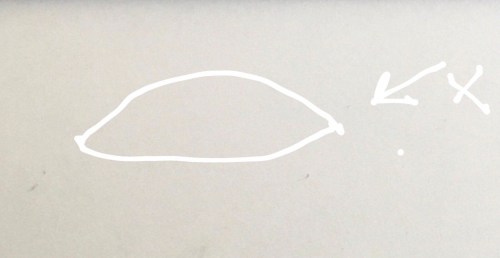
X is for Xavier, Xanadu, Xi, Xlotl, and Xul… and, yes, X-rays (AtoZChallenge2018)

Thanks, Dad! Xavier Cugat is not a name I’d ever come across, but Dad, who has been following along as I’ve worked my way through the alphabet for the AtoZ Blogging Challenge this month, sent me a note this morning saying I should include Xavier and his Waldorf-Astoria Orchestra as they play this 1943 song, Brazil. While you are playing that in the background, I’ll keep going with the letter X.

As it turns out, this month I’ve actually had three sets of X-rays – two on my jaw (sadly, the result of those eXplorations will be removing a root canal and installing a new one… that does not sound in any way like it’s going to be fun), and the other on my hips. The findings there were that yes, my left hip is basically shot – arthritic and rather exuberantly sprouting bone spurs, perhaps in a misguided effort to replace the cartilage which seems to have gone missing. Using an ultrasound (sort of a watery X-ray…), we managed to shoot the hip full of cortisone and some weird lubricating gel stuff and the pain is much relieved. Good news, as I should be able to keep hiking and climbing on it while I wait to get old and decrepit enough to qualify for a hip replacement.


500px-China_Inner_Mongolia_relief_location_map

Hm… this map doesn’t include the red dot showing exactly where Shangdu town (near where Xanadu used to be) is located… Curious? Click here…


I love to travel, but one of the places that’s been on my wish list for the longest is one I have yet to get to; Outer Mongolia. Turns out that Xanadu, in Inner Mongolia, was once the summer palace of Kubla Khan. One of these days I will get to Mongolia… no plan yet, but that seed was planted so long ago it has grown into a serious old oak and such a large tree is a bit uncomfortable to keep lugging around.

While vaguely in the neighbourhood (and speaking of trees), here’s a painting by Guo Xi from the Northern Song Dynasty (920-1126).


Guo Xi trees.jpg!Large

Trees by Guo Xi, a long time ago in China


Frida Kahlo the-love-embrace-of-the-universe-the-earth-mexico-myself-diego-and-señor-xólotl-1949.jpg!Large

The Love Embrace of the Universe, the Earth (Mexico), Myself, Diego and Señor Xólotl by Frida Kahlo (1949)  I have to say that’s one of the longest, most intriguing titles I’ve come across… But it does contain an X. Thanks, Seńor Xólotl!

For those who are biting their nails and wondering how the manuscript/deadline race is coming along, here’s the update. I’ve finished a rough and tumble draft, which is a bit long. I’ve got that printed out and am going through it searching for the 2500 or so extra words that seem to have snuck in there. If I keep going at the pace I’ve been working, all things being equal I should have made the cuts (on paper) and entered the edits into the digital draft in time to send it off to my editor by Sunday midnight. That’s a day ahead of schedule, technically, but I’ll be heading to the airport on Monday and I really don’t want to take it with me, so that’s the plan.

This is the first draft my editor will have seen, so I fully expect that not long after I get back I’ll have my draft and a set of notes back to work on. But, that’s getting ahead of myself. There are a couple of things I already know I want to change in the next draft, but that’s what the revision process is all about. Modifying and refining. As always, I’ll be pretty excited to see what the editor has to say as her wise insights always make the books better…

I’ll leave you with this final image by an Argentinian painter, Xul Solar. It was cooking hot here in the mountains today, so it feels appropriate to celebrate the sun!


Xul Solar 1922 pegaso-de-sol-1922

Pegaso de Sol by Xul Solar, 1922

Until tomorrow! Ciao!


W is for Weary, Work, and the Wonders of the Web


Martiros Sarian april-1947.jpg!Large

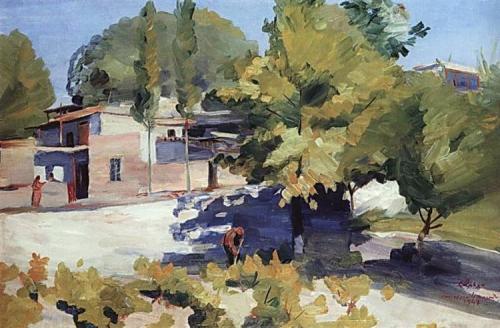
April by Martiros Sarian, 1947 Oh, April – what a speedy month you have been! In, out and yikes! May is just arond the corner!


Wow. What a month! It looks like I might just make it to the end having made my goal of a post a day, but sheesh – it’s been touch and go! I suppose I should have known better than to try to combine a big book deadline with much of anything else, never mind a daily blogging challenge and a trip or two!


Lesser Ury woman-at-writing-desk-1898.jpg!Large

Woman at Her Writing Desk, by Lesser Ury, 1898 Yep. That’s pretty much where I’ve spent the month of April. 


I can’t really complain. I’m so lucky to be able to do the work I love and even more lucky to be able to do it from pretty much anywhere in the world, as long as there’s an internet connection available. I don’t know where I’d be without being plugged into the web, I must say.

This book I’m working on now, for example. It’s about medically-assisted dying (euthanasia, assisted suicide, mercy killing, murder) and all the many medical, ethical, legal, moral, and personal considerations that lie behind the decision to live or die. The Internet has proven to be a rich source of raw material. From documentaries and news clips to lengthy articles in mainstream newspapers to scholarly dissertations in all manner of obscure academic journals, as well books and audiobooks, I’ve been kept busy plowing through more sources than one could hope for in terms of finding lots of background on the subject.


Albrecht Durer 1510 death-and-wife.jpg!Large

Death and Wife, by Albrecht Durer, 1510 In a strange way, Death has been my companion for the past many month and thousands of words… 


I’ve also been talking to people online – through texts and emails but also through online ‘phonecalls’. I’ve been able to use an online transcription service to record and then transcribe some of those conversations. Even ten years ago, such a wealth of information would have been much more difficult (impossible?) to access. I’ve been working on this book for 18 months or so, reading, researching, thinking, listening, watching and learning in Paris, Spain, the Rocky Mountains, the Caribbean, and on the west coast. I’ve downloaded books and articles onto my phone so I can read while I’m standing in the lineup at the grocery store or while trapped in waiting rooms or getting from here to there and back on planes, trains, and automobiles. I’ve dreamt about death. Thought about it pretty much every day since I took this project on.


Edward R Taylor birmingham-reference-library-the-reading-room-1881.jpg!Large

Birmingham Reference Library, the Reading Room by Edward R. Taylor, 1881 I bet this library had a card catalogue. I must be among the last humans on the planet to have been taught how to use a card catalog. Computers were creeping in everywhere when I was at university, but to find a book at the library, one still had to thumb through the soft-with-use cards.  


The problem isn’t really ‘can I find the information’? it’s, how on earth do I distill all this, organize it well, and then shoehorn it into what is actually quite a limited word count, considering the vast quantity of information I’m starting with?

Whenever I think, impossible! I need to expand the manuscript! I need more words! I think of something my mother once told me. She said that you don’t really understand a subject properly until you can explain it to your grandmother from another country. By which, I think, she meant that if you really know your stuff you should be able to explain anything, even the most complex of topics, clearly and succinctly to someone who has absolutely no background or understanding of the subject.


richard diebenkorn scissors-and-lemon.jpg!Large

Scissors and Lemon by Richard Diebenkorn Cut. Cut. Cut. That’s what I’m doing next. Which seems a bit odd since what I’ve been doing for months is add. Add. Add. Write. Write. Write. 


The other lesson I learned early (in my capacity as a copywriter at a radio station) is that you should be able to convey a complicated idea (in that case, usually about a business, product or event) in very few words. A thirty-second spot can’t last 35 seconds. Concise. Precise. Economical. Those were buzz words back then, and that early training has made me aware that cutting and paring are more fun if treated like a puzzle and a game. Just how many words can you take away and still tell your story?


death-of-the-countess(1).jpg!Large

Death of the Countess by Alexandre Benois, 1910. This might just as well be named, Death of the Writer as this is a pretty accurate likeness of me at the moment. 


With that in mind, I’m going to embrace my next couple of days of slicing, dicing, chopping, and cutting as I whittle away at what is currently a too-long draft. I have 72-hours before the deadline. I can do this. I can.