Tag Archives: 30 Day Farm Blog challenge

Day 20 – A Gleaning We Will Go

Apparently, gleaning (being the act of scrounging for leftovers after farmers are done harvesting their fields and orchards) was encouraged way back in the Bible. Back then the beneficiaries were meant to be tragic and unfortunate souls like widows and orphans, but I tell you, this contemporary farmer is very happy the practice has not died out entirely.

Michell’s Farm Market on the Saanich Peninsula – several generations of the family farm the land and run a successful farm market.

I am neither widowed nor an orphan, but I do have a lot of mouths and beaks to feed. As it turns out, the generous Michell clan down the road (of Michell’s Farm Market fame) has a lot of slightly squidgy squash, pumpkin, and gourds left over now that the big Halloween/Thanksgiving festivities are done. Add to that some ever-so-slightly yellowing broccoli and you have a FEAST for hogs, chickens, ducks, and turkeys. 

You can imagine my delight when I had a call asking if I wanted to come pick up some goodies for the critters. Oh, yes please! Thinking there might be a box or two or three I didn’t bother changing back into farm clothes as I was heading into town on another errand right after picking up the veggies. Mistake!

The box or two I was expecting turned out to be a veritable mountain of squash!

The box or two I was expecting turned out to be a veritable mountain of squash!

There were also a number of good-sized pumpkins and some broccoli heads that had just started to turn a little bit yellow.

There were also a number of good-sized pumpkins and some broccoli heads that had just started to turn a little bit yellow.

Of course, it was bucketing down with rain when I started to load and by the time I had transferred the bounty from the bins to my truck, I was soaked.
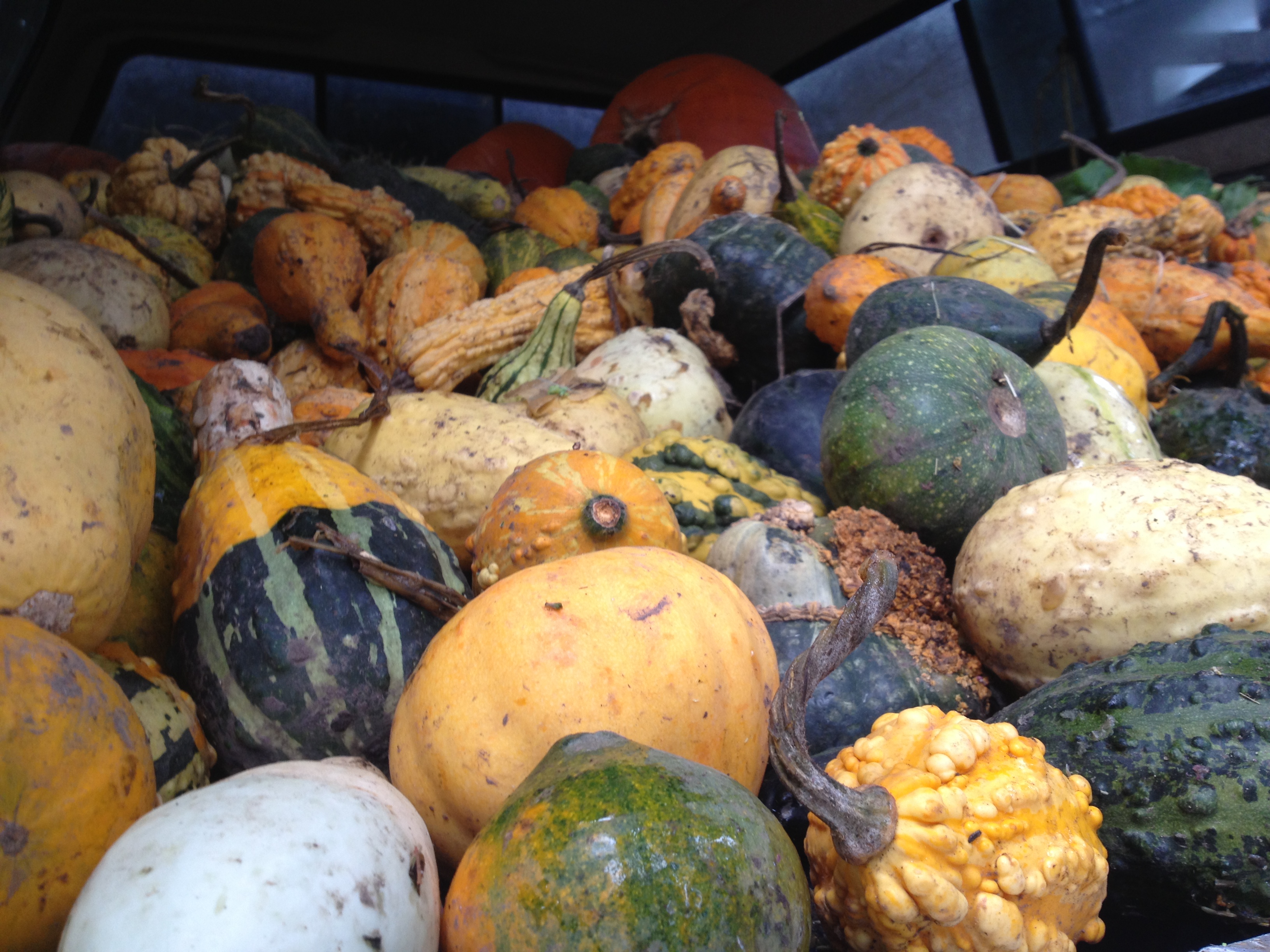
The pickup was FULL! There was an avalanche of gourds when I opened the tailgate and I had to dance out of the way to avoid being squashed by tumbling pumpkins.

The pickup was FULL! There was an avalanche of gourds when I opened the tailgate and I had to dance out of the way to avoid being squashed by tumbling pumpkins.

I stacked everything in a corner of the hay shelter and have been doling out the treats to everyone ever since. I have to hack open the harder-shelled gourds for the birds (they love the seeds and innards), but the hogs manage to crunch through whatever I toss in their direction.
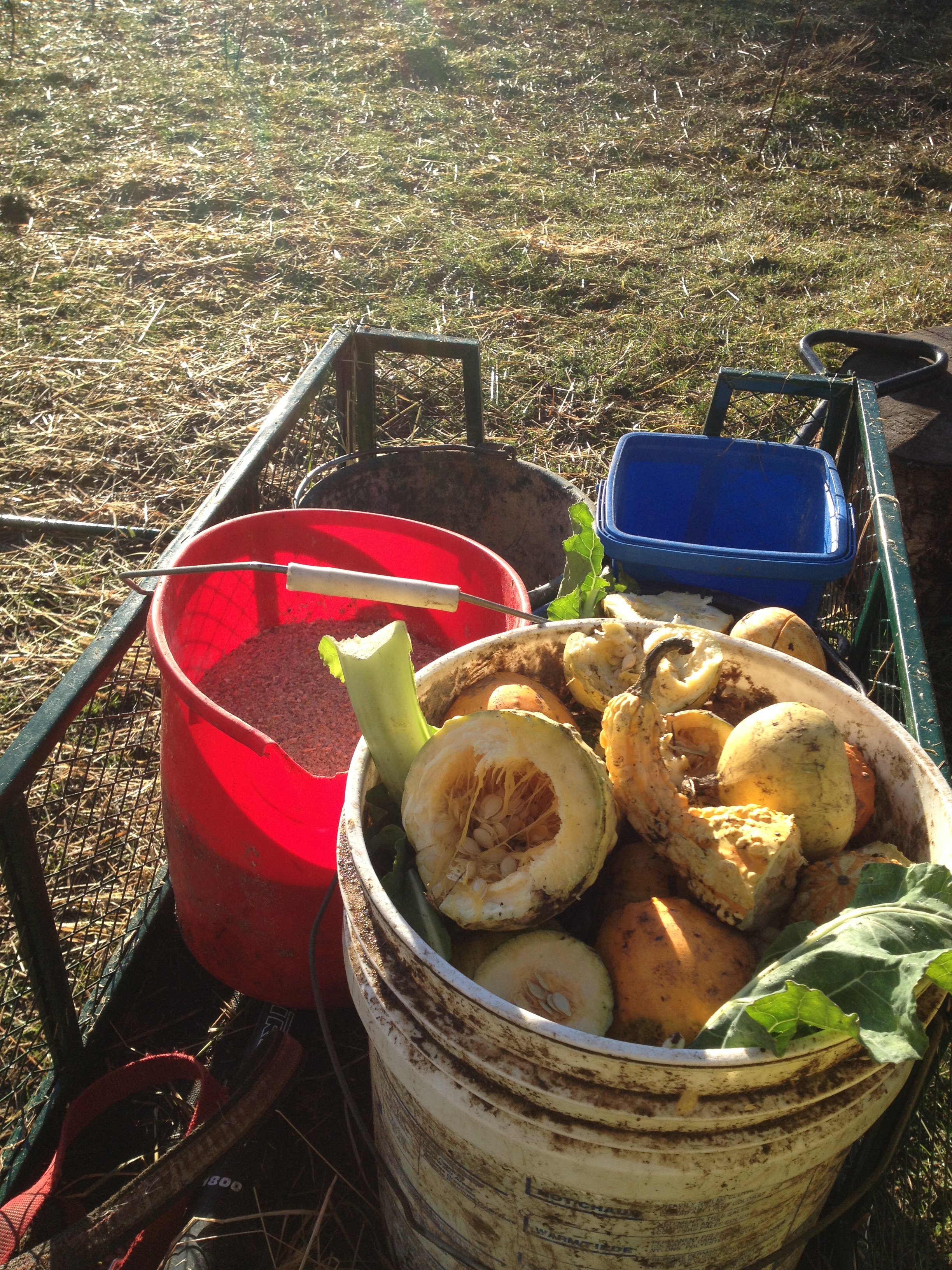
Buckets of treats heading for the turkey field.

Buckets of treats heading for the turkey field.

Thanks, Michell farmers for keeping a glorious tradition alive! And, in case you are wondering what happened to my in-town errands, I was running so late by the time I had loaded and hauled away the booty I didn’t have time to go up to the house to change and had to make an appearance in not one, but two different offices wearing soaking wet, filthy clothes. Ah well, my embarrassment was a small price to pay for the sake of hearing those happy snuffling grunty noises of deeply satisfied hogs.

 

Day 19 – An African Women’s Farm

Last night Dad and I attended a talk about a women’s collective farm in the north eastern part of South Africa. It’s hard to know where to start as the talk touched on so many vital issues facing agriculture today. The speaker, Dr. Elizabeth Vibert, was excellent – her talk both inspiring and horrifying.

Dr. Elizabeth Vibert, University of Victoria

Dr. Elizabeth Vibert, University of Victoria

In the aftermath of the apartheid and drought, a group of women in Joppie Village started a small farm so they could grow vegetables for their families and community. 20 years later the farm is a vibrant hub in the community serving many roles beyond simply growing vegetables. It was inspiring to hear how these women have managed to get the farm off the ground, how it sustains them today, and fuels their hopes for the future.

Issues like the fact they must use hybrid seed (and, therefore, are beholden to the seed companies each year), have very little capital to invest in infrastructure, endure long periods of heat and little rainfall followed by short periods of deluge, and the ongoing struggles they face to protect the equipment they do own (pumps to provide essential irrigation to keep crops alive during those dry periods) against theft make my farming challenges insignificant hiccups. Despite the obstacles, through their perseverance they have created an amazing hub that sustains many people in many ways.

I found myself wondering if we shouldn’t be looking more seriously at other land-ownership models here on the peninsula that would make it easier for young farmers to have access to farmland (the Women’s Farm is owned collectively by the community) and at the same time move us along the road toward securing our own local food supply. Not so very long ago, Vancouver Island produced 80+ percent of our food. Today, that figure has plummeted to somewhere between 3% and 8% (depending who you ask). If we do not provide markets, infrastructure, and access to land for our farmers, AND we proceed with making changes to the ALR as is being discussed by our dear government, then why would we expect to see any farmland left at all? As a farmer said at a recent Peninsula Agricultural Commission Meeting, if we were to make farming a viable profession, there would be no need to protect farmland because young farmers would be lining up to get into the profession and they would be financially able to do so because farming would be a job that would pay a living wage.

There are so many cans of worms in that last paragraph I would be blogging until Christmas if I started opening them all. My point is, really, whether we are in South Africa or south Asia, Australia or Hawaii, the Fraser Valley or right here on our island, we ALL need to pay attention. We need to worry about seed saving, about who owns the genetic rights to living things. We need to think about smart ways to use infill development, to preserve the farmland we have left and make it accessible to a new generation of farmers. And, we need to provide useful ongoing support to farmers willing to use that farm to grow food. We need to look at the logic of using chemicals on food crops and how smart it is to ship lettuce from California when we can grow lots of it right here in our back yards.

Supporting local farmers is an essential part of the equation when it comes to deciding how we are going to plan for our collective food growing future. The decisions you make - organic vs conventional, local vs hauled in from a gazillion miles away affect you, yes - but they also have an impact on the bigger picture. Voting with your food dollars does matter.

Supporting local farmers is an essential part of the equation when it comes to deciding how we are going to plan for our collective food growing future. The decisions you make – organic vs conventional, local vs hauled in from a gazillion miles away affect you, yes – but they also have an impact on the bigger picture. Voting with your food dollars does matter.

A vibrant community farm is far more than just a place to grow vegetables. The way we feed ourselves, our children, our neighbours, our elders, our friends, and our communities tells us a lot about how healthy [not just physically] our families and communities are likely to be for the long haul. 

Soapbox moment finished – for now. Stay tuned. And consider coming to the ALR Town Hall Meeting in Sidney (Mary Winspear Centre) 7pm on November 27th. Unless, of course, you don’t eat. In which case, farmland really is of no concern.

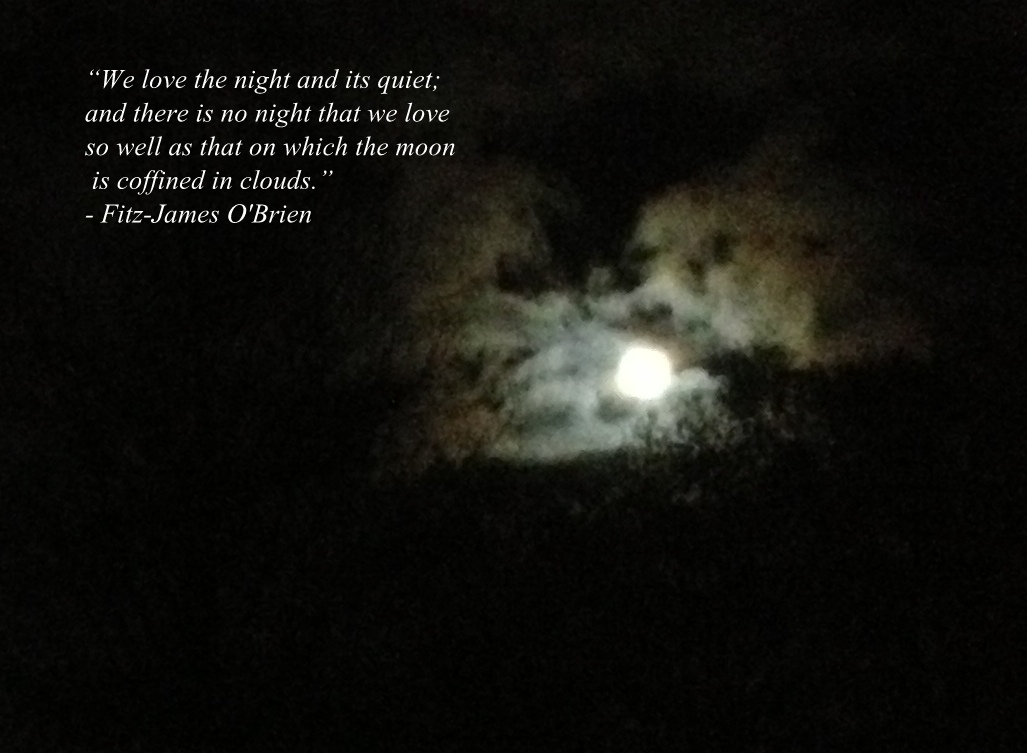
Day 18 – The Moon Coffined in Clouds

“We love the night and its quiet; and there is no night that we love so well as that on which the moon is coffined in clouds.”  ― Fitz-James O'Brien

“We love the night and its quiet; and there is no night that we love so well as that on which the moon is coffined in clouds.”
― Fitz-James O’Brien

When we first moved the horses here a dozen or so years ago it was a very strange sensation to make my way down to the barn in the pitch darkness. There were dips in the land I had never noticed in daylight and the short trip seemed to take three times as long after the lights were out. Strange crackles and sighs came from the trees and, particularlywhen the weather was awful, I thought of farmers in prairie blizzards who had to tie a rope from the house to the barn so they wouldn’t get blown off course and disappear forever.

Deer, who had not yet figured out that their regular highway was about to be interrupted by fences and horses and outbuildings and dogs and strange activities at all hours of the day and night would occasionally crash away through the brush, panicked by the sudden appearance of a human. I rushed, nervous at being out there in the dark all alone. I remembered childhood stories of wolves and bears and shapeless creatures who sucked souls and left young girls for dead and thought more than once of the statistic that Vancouver Island boasts the greatest number of cougar attacks in the world.

I always carried a flashlight, which morphed into a headlamp (much better to have one’s hands free while dealing with hay and gates and feeding the cat) and was happy to reach the barn where I could turn on the light.

These days, the tree spirits feel more like they are protecting me, rather than trying to eat me.

These days, the tree spirits feel more like they are protecting me, rather than trying to eat me.

Gradually, things changed. Over time the batteries in the headlamp faded and I forgot to replace them. I found myself in the dark, strolling down the hill as if I could see. Which, it turned out I could do perfectly well when the moon was high and the skies clear. I found I knew where we were in the moon phase without referring to a calendar. And somewhere along the way the nervousness completely disappeared.

Instead, the nightly walk down the hill became one of highlights of my daily routine. One night I reached up to stroke the cat on the gatepost only to discover it was a cat-sized barn owl. His heart-shaped face looked into mine as if to ask, “Were you seriously just about to touch me?” We stood like that for several long seconds before he lifted off and floated up to the roof of the goat barn, where he resumed his silent observation of my comings and goings.

I have sat in the orchard at midnight and sunk my teeth into a ripe pear sending a sticky sweet dribble of juice down my chin. With my back against a hay bale, I have listened to the patter of rain on the roof while the cat hopped into my lap for a snuggle. To my amazement, I discovered I could identify which of my three bay horses was which, even on a moonless night when I could barely make out my hand as it reached for the chain on the gate. I have paused to listen to the owls calling back and forth, the first frogs in spring, the goats munching their hay. The night is a different place for me now, one of calm and quiet where I don’t see all the many jobs that need to be done but instead savour a few moments of simple satisfaction as I find myself still here at the end of another day.

Interested in learning who else is participating in the 30 days agriculture blog-a-thon or the five things Holly Spangler will be talking about this month? Head over to Prairie Farmer to find out!

Day 16 – Search for Land Leads to Maypenny Farm

One of the problems with livestock (at least, livestock not raised intensively in big barns) is they need a fair amount of land for grazing. This is not a problem if you happen to live on a large farm, but my farm is micro mini – not even two acres, all on a hill, part of it covered with big trees. To get around this problem I lease several fields close by and make use of every square inch of space here on the homestead. None of the fields are huge and my flocks and herds are expanding, so as a result, I’ve been tossing and turning at night trying to figure out where I can lease more land that’s not too far away. And, this needs to happen sooner than later so I can move the piglets after I’ve weaned those I haven’t already sold.

I must say the Maypenny hens are a stylish bunch! They look a whole lot better prepared for the soggy weather than my girls...

I must say the Maypenny hens are a stylish bunch! They look a whole lot better prepared for the soggy weather than my girls…

Last year I had chatted with Maypenny Farm (well, not the farm – with Reay, a farmer) about possibly growing out pigs at their place, but there was a wedding planned and a need to keep the fields looking neat and tidy. I had pushed the Maypenny option out of my mind when Reay got in touch the other day and asked if I might still be interested. Faster than you can say ‘hen hats’ I raced over there to scope the place out to see if it might be suitable.

The field up for discussion is an old hayfield being encroached upon by brambles and scrub brush along one edge and bordered on the other side by trees. Not only would the piglets have a blast in there with plenty of forage and room to roam, the plan is to reclaim the field and extend the Maypenny market garden. Hogs are excellent for turning over the soil, enriching it as they go. Add a couple of goats to the equation and the Maypenny farmers can just sit back and watch the livestock prepare that field ready for whatever they may wish to do with it next.

The two big issues are: Water and fencing. The hogs are well trained to two-strand electric and are, therefore, relatively easy to contain. Goats are a different matter, but using the existing sheep fencing as a starting point, some repairs and new stock wire would provide a decent barrier while they are on clean-up duty. We have portable shelters that can be moved to the field without much trouble, which would keep everyone snug and dry in foul weather (unless Maypenny has hats that would fit the hogs…) When it came to discussing the water situation, the conversation proceeded in a very Canadian manner.

“What about water?”

“There’s a stream here – ” Reay said, pointing to one long side of the field. “And the beavers have moved next door so this field isn’t flooding any more.”

“Beavers?”

“They had a dam down there and the water backed up. You can see the half-chewed trees where they chopped them down.”

Beavers? Seriously? On southern Vancouver Island? I had heard rumours that beavers had returned to Beaver Lake, a local landmark I had assumed was so-named because some old fur trader was homesick for a place in the wilderness where actual beavers lived. Maybe the lake actually came by its name honestly. And, perhaps the rumours about the return of the beavers are true after all! Not that Maypenny’s neighbour is happy about the return of the furry, flat-tailed loggers. They are a menace when it comes to clogging up streams and ditches and their industrious plugging up of drainage systems can cause awful problems for farmers’ fields.

I’m not too worried – if the beavers decide to move back to Maypenny we’ll cope with the fallout. Mostly, standing there in the rain calculating how much fencing I’m going to need, I was delirious with joy that a good field is available, not too far away, with readily available water and lots of forage for both goats and hogs. I was so excited, in fact, I totally forgot to take any photos! By my next visit I’m sure I will be calmer and the full realization of how much work it will take to get things secure before we can move animals in will have hit me. Anybody feel like coming over for a fencing party? Maybe you’ll get to see a beaver!

Interested in learning who else is participating in the 30 days agriculture blog-a-thon or the five things Holly Spangler will be talking about this month? Head over to Prairie Farmer to find out!

Day 14 – Dawn ’til Dusk – Just Another Day on the Farm

What happens on a sunny morning after a night of rain.

What happens on a sunny morning after a night of rain.

Mid-November around here is generally pretty wet, so what a delight it was yesterday to head out to a dripping landscape being warmed beneath a brilliant winter sun! When I started on the morning rounds the whole world seemed to be either steaming or glistening.

20131113-203249.jpg

By the time I was making my way back up the hill when I was done, the special effects show was over.

At dusk I was treated to a show of a different type.

20131113-203323.jpg

The rising moon kept getting tangled in the tree branches! It was so bright and clear that the moon shadows were black and distinct, so heavy on the ground I wanted to step over them – an odd effect, though not really photographable…

In between the showy dawn and dusk, it was a pretty typical Wednesday with stops at the feed store, farm stand, and coffee shop. During the afternoon worked on the new book (about different types of housing around the world – another in the Orca Footprints series, co-authored with Dani) and then continued with the job of cleaning out the vegetable beds. Wimpy always materializes when I pick up a trowel and he worked alongside me, snatching up grubs and worms as I made my way along the bed where, earlier in the season, squash had filled one end and a gorgeous yellow/orange/gold calendula party had been going on all summer. The turkeys, chickens, ducks, and hogs eagerly consumed all the weeds and bits of leftover veggie plants Wimpy and I dug up, so the whole process felt extremely satisfying and made a whole lot of creatures (including me) quite happy.

After that, made a delicious tomato vegetable and venison soup. Roasted more beets, parsnips, and carrots for good measure because really, is it possible to eat too many roast veggies? Gobbled that up with hunks of tasty olive bread before heading back out one last time to feed the night hay and check on all the creatures.

Ordinary day. Extraordinary day. Sometimes, it’s hard to tell the difference.

Interested in learning who else is participating in the 30 days agriculture blog-a-thon or the five things Holly Spangler will be talking about this month? Head over to Prairie Farmer to find out!