Category Archives: Books

H is for Hula Hoop

There has been a lot of coming and going around here over the past few days and this has made me think about the odd things we take, leave behind, and bring back when we travel. Dad has just spent three weeks in Provence and England and the coolest thing he brought back was several jars of pigments. He plans to add these warm, earthy tones to linseed oil and paint a series of landscapes (he travelled from hill town to hill town, collecting a gazillion images and ideas…) using the actual colours of the place. I can’t wait to see what he comes up with. He has only been back a couple of days and is already at work in his studio. It shouldn’t be long before I can post something inspired by his recent travels.

Provence

Dad returned hugely inspired (and a bit out of breath from all the hiking he did).

Several of the Germans will be leaving by car tomorrow, heading for the USA. They will be leaving behind all manner of fruits and vegetables, which is rather bizarre when you consider most of the produce one buys around here these days originated south of the border. How is it logical that you can’t take an apple fifty miles south of here?? Because MC arrived during a snowstorm and is now heading for California, he is also leaving behind his winter coat and mucky farm clothes. Later this summer he will return to reclaim his [temporarily] abandoned clothing and help out again on the farm. Perhaps he will enjoy himself enough that he will stay through another change of season and will need his heavy coat once again… [H is also for hope… and I am hopeful this might come to pass…]
SO-Sitting-cr-980x370

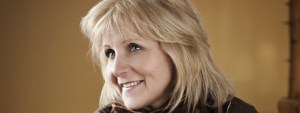
[Photo by Rob Campbell Photography]

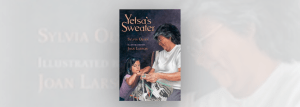
Yesterday I had a quick chat with my friend Sylvia Olsen, the author of quite a few books and an expert knitter (among her books are Working with Wool: A Coast Salish Legacy and the Cowichan Sweater and Yetsa’s Sweater). She is heading off to a writing retreat in Ireland and we were chatting about how she will divide her time writing, knitting, and hula hooping. Hula hooping? Yep. Sylvia has a collapsible hula hoop with which she travels. Which is way more interesting than the fact I always travel with my personal pillow (it’s thin and all the hotels insist on HUGE fluffy pillows that make my neck ache).

YetsasSweaterBAN

My daughter never leaves home without her Rescue Remedy (she travels a lot but hates to fly and swears by putting a few drops under her tongue to get her through takeoffs and landings). When I mentioned Sylvia’s hula hoop, Dani reminded me that she used to travel with her juggling sticks and this, in turn, made me think of several trips I took years ago with a pink ballet tutu stuffed in my backpack. This was long after I stopped dancing, but I had this idea that I would write a collection of travel essays called Travels with Tutu. I did wind up with a handful of odd photos of a pink tutu placed artfully in unusual places (atop a mountain in Japan, on a huge log on a beach somewhere along the West Coast Trail), but somehow the concept failed to hold my attention long enough to collect enough essays to make a book. Part of the problem, I think, was that the pink tutu on its own was not that photogenic (or, I was not a good enough photographer to make the images work well enough to warrant inclusion in a book). This was long before the selfie became a thing, so it never even occurred to me to wear the tutu myself.

The idea of Sylvia hula hooping on the edge of some windblown Irish cliff makes me smile. I really hope she has someone take a photo of her and her hoop in some cool Irish locale so I can vicariously enjoy her trip!

All this made me wonder, what is the essential item you cannot leave home without when you travel? Have you ever left something behind on a journey, intentionally or not? What’s the most unusual thing you’ve ever brought back with you after a trip?

D is for Dark Creek

“So, you have a creek at your farm?”

It’s not an unreasonable question, really, given the name of my farm is Dark Creek Farm. In fact, there is no creek (though seasonal springs burble up each winter as soon as the water table rises and the ground is sufficiently saturated). The place isn’t really that dark, either (though, there are some pretty big trees on the south side of the property, beneath which it’s lovely and shady in the summer).

The name is a strange fusion of fiction and wishful thinking, life imitating art imitating life…

The original 1997 cover for Rebel of Dark Creek. The book went on to be reprinted several times with various new cover designs. It was also published in Sweden and Denmark, where the covers looked completely different to those that came out in North America.

The original 1997 cover for Rebel of Dark Creek. The book went on to be reprinted several times with various new cover designs. It was also published in Sweden and Denmark, where the covers looked completely different to those that came out in North America.

When I wrote my first novel for kids (about some horse-obsessed kids living on Vancouver Island) I needed a name for the farm where the main character boarded her horse. To keep my fictional world anchored in its own reality I based the made up barn and small farm on the place where my daughter and I were riding at the time. That farm didn’t have a creek running through it either, but was an otherwise perfect setting for my fake world. I shifted a nearby creek over a few hundred yards and gave it a new name, “Dark Creek.” I can’t even remember now why I chose that name, but it stuck and became part of the title in several of the books in the StableMates series. Rebel of Dark Creek was the first book to come out back in 1997 and six more books followed over the next several years.


Rebel of Dark Creek - the Swedish edition

Rebel of Dark Creek – the Swedish edition

It wasn’t until 2003, though, that I wound up moving two horses here to our place after the original farm on which Dark Creek Farm in the books was sold. At that point, I didn’t really think of our place having a farm name, per se, but not long after the horses arrived and fences and outbuildings were being built that other animals started materializing… a couple of goats, an ancient pony, some ducks, a few chickens, some bantams, then hogs, turkeys, and more chickens… and sheep. The garden expanded – and then expanded again – and again. More fruit trees were planted, we opened the farm stand, and started a CSA. We produce a whole lot of food now from a very small piece of land (and some fields I lease around the neighbourhood) and at some point in that snowballing process we needed a farm name.

Dark Creek Farm seemed appropriate. It had always been a dream of mine to farm – and since the original Dark Creek Farm didn’t exist except in my imagination, I thought it entirely appropriate I steal the name back and use it for my new farm reality. I’m not sure if I’ll write any more Dark Creek Farm books in the original StableMates series – probably not. That world was before cell phones. Before google. Before email and the internet and ipads and all that stuff that is impossible to ignore when writing contemporary fiction set in the here and now. There were more stories planned, but I got a bit distracted with other books and series and projects and, of course, the growing farm and I suspect that Jessa and Rebel and all the other kids and ponies in those books are stuck without a season finale. Though, if I wait long enough, I could add another couple of installments and those books would come out as quaint historical fiction from back in the day before all that Internet stuff took over the world.

Boxes of Books from the Barn

The Illustrator's Notebook by Mohieddin Ellabbad

The Illustrator’s Notebook by Mohieddin Ellabbad

After the Big Steel Box was moved over, we were able to bring the last of the stuff from the neighbour’s barn where it has been patiently waiting to be retrieved. One of the items in the barn was a large counter with drawers and shelving (part of the kitchen in the old house) and this heavy item was destined for the front end of the shipping container where it will be used in the temporary workshop.

Imagine my surprise/horror/delight when I discovered more boxes of books hidden away behind the counter! I have been culling, culling, culling (I know that’s a ‘C’ word, but there is no ‘B’ equivalent) my library for nearly two years and still have not got to the end of what has been an absolute monster project.

Here are a few of the titles from the most recent boxes and why I’ll be keeping them…

IMG_9014[1]

The Illustrator’s Notebook by Mohieddin Ellabbad is on the keeper list because it provides a peek into another culture and another way of seeing the world. The author/illustrator is from Egypt and has won numerous prizes for his work. I love the integration of text and illustration, his gentle musings on the creative process, and the use of ephemera (as a collector of bits and pieces myself, I appreciate the way he honours the things we hang onto as a way of preserving our past…)

Bloody Moments: Highlights from the Astonishing History of Medicine by Gael Jennings with illustrations by Roland Harvey

Bloody Moments: Highlights from the Astonishing History of Medicine, by Gael Jennings with illustrations by Roland Harvey

This book is deliciously gross and quite informative. I sort of collect medical books, so this one sort of fits into that category… Mostly, though, I’m keeping it because it makes me smile every time I open it up. I particularly like the page describing the world’s sickest man, Thomas Smith (1352 A.D.).

IMG_9018[1]

A while back I read a farm memoir called Hit By a Farm, by Catherine Friend (also a keeper – it’s in my books-that-in-some-way-relate-to-farms collection). Turns out Ms Friend also writes books for children and since her book, The Perfect Nest is a picture book (I have quite a few of those), about farming (see previous sentence) AND features poultry, well, no brainer. That one has to stay, too. Bonus points: cute story, nice sense of humour. Humor (she’s American).

The Perfect Nest by Catherine Friend with illustrations by John Manders

The Perfect Nest by Catherine Friend with illustrations by John Manders

One of the larger sub-categories in my library is books about horses (including some 20 editions of Black Beauty, the first real book I ever read and which, I suppose, was responsible for all kinds of things…). No surprise, then, that this book had to stay:

IMG_9019[1] Right on the front cover it says it’s the BEST-EVER book about horses and, really, who wouldn’t want a horse book that includes a fantastic fold-out stable? Obviously, the most excellent cover suckered me in as this one has settled in nicely right between Wind Rider by Susan Williams and Cross-Country Masterclass with Leslie Law, by Debby Sly.

Curious about that fold-out stable? Here it is:

IMG_9020[1]


What’s the Farmer Reading? Wise Acres

20131228-085321.jpg

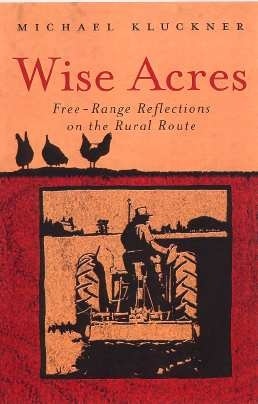
Wise Acres, by Michael Kluckner

You would think that given a few minutes for purely recreational reading I might pick up a satisfying work of historical fiction or a glorious coffee table book full of photos of horses in exotic locales, or something… But no, I reached straight for Wise Acres, by Michael Kluckner, a memoir about a middle aged couple who sell their place in the city and buy a tiny farm not that far from Vancouver.

Like any good memoirist, Kluckner (who is also an artist) can write about the most mundane of subjects and make them interesting and, even better, often funny. The creatures on his farm (sheep, geese, hens, ducks, cats, etc.) are wonderful characters, each with a personality, a history, and a particular relationship with the author. These are not numbers and quotas and pounds of meat on the hoof but sources of companionship and entertainment as much as sustenance.

Of course, this means Kluckner is constantly struggling to find a way to balance his sentimental side with the practical and it is perhaps this aspect of the book and Kluckner’s story that I found most compelling. Certainly, I struggle with having too soft a heart for someone who raises animals for meat and at various points as I read I found myself nodding and sighing, thinking how much easier my life would be if I lived in the city and was a vegetarian.

Kluckner spends the most time talking about his sheep operation, which was simultaneously instructive, reassuring, and a tad horrifying to someone like me who is quite new to shepherding.

Woodblock prints by Kluckner illustrate each chapter (for those interested in Kluckner’s art, visit his website for more images). A thoroughly enjoyable read, Wise Acres will appeal to city folk thinking of moving out to the country and country folk wondering whether it might be time to cash in the sheep and return (or move on) to a more urban existence.

NABLOPOMO – Incoming distraction alert!

I was just settling in to write my daily post when an email arrived from C. at Spyder Ranch. Perhaps foolishly, I allowed myself to be distracted and opened the email. It contained this link to a marvelous documentary about Dr. Temple Grandin.


I first came across Dr. Grandin’s work many years ago when my mother said I had to read Thinking in Pictures. I confess I didn’t do every thing my mother told me to do and never did get around to reading the book, but Dr. Grandin’s work has been on my radar ever since. More recently, I was at a meeting of fellow livestock breeders and someone had brought along a copy of Humane Livestock Handling, a fascinating book that gets into the nitty gritty of how to better move livestock from point A to point B. Aimed more at larger operations, it reminded me about her work and how fascinating it was that someone with autism could have had such a huge impact on commercial agriculture.

Then, at the Sypder Ranch Christmas do, C. mentioned she was reading Animals Make Us Human and I knew I needed to get my finger out and get caught up on my way over due reading!

And then, the link to the documentary arrived in my in-box and guess what I’ve been doing during my designated blogging time? Yep. It’s great. I suggest you settle in with a cup of tea (if you haven’t already seen it) and use your designated blog-reading time to watch. The documentary is not only of interest to anyone who works with livestock, it provides a fascinating glimpse into the world of Asperger’s and autism, and the many challenges faced by individuals who must find ways to cope with the mainstream world.

Enjoy!

(I love watching documentaries, btw – and am tempted to request your suggestions… except then I know you’d send me your favourites and I might never write another blog post again!! And, a belated thank you to those who suggested some amazing-sounding cookie recipes! Hoping to get back into baking mode soon and will report on my findings…)