Tag Archives: gardening

Rain, Aggie AgVentures Cow, and Hugelkultur

It’s astonishing how much water can land on this small farm during a wet winter storm. The hog pen? A river runs through it… The seasonal springs? All full to overflowing. The goats are miserable and won’t come out of the goat barn. The hogs have been complaining no end. The barn cat spots me and starts whining and looking skyward as if there is some way for me to turn off the taps.

DCF Aggie in mud

For the past couple of days I’ve been slopping around in the wet, building dams and dredging channels to try to divert the water away from the animal shelters so everyone has somewhere to get under cover and stand with dry feet. The dogs sulk in the cab of the truck while I get steadily soggier.

Only the ducks are truly happy. They dive into all the newly formed puddles and ponds and lakes and rivers, flapping and splashing, preening and chuckling. The drakes strut back and forth as the ladies bathe, occasionally knocking one another around a bit just to show who is the most handsome and virile. All this water can only mean that spring is just around the corner, and you know what that means when you are a male whatever living on a farm.

DCF Aggie and Iago

The other things that are working amazingly well are the hugelkultur beds we put in a couple of years ago. Built on top of mounds of brush, branches, and logs, the beds soak up a phenomenal amount of water with nothing much seeping out below where they have been built (more or less following the contour lines of our sloping property). Where there are no beds (just grass, the driveway, or even the area under the trees where the hogs have been merrily rooting around through the fall) there is running water everywhere. Any place that has a dip or hollow is full of water. Except those hugel beds.

I was amazed how well they performed during the hot, dry weeks of the last two summers. As advertised, all the water they had soaked up during the winter was slowly released back to the plants and I barely had to irrigate at all, even when properties around me were watering like mad. I had my doubts as to how well big branches were going to break down, but already when I dig into the beds, there’s lots of lovely soft organic matter and not so many sticks and twigs. The biggest branches are still findable, but even they are well on their way to Rotsville.

I am impressed enough with how they have worked that I’m going to retro-build my existing raised beds in the same way. No more burn piles! I’ve always thought it was wasteful and unnecessarily polluting to burn branches and sticks. How cool to have found such a simple and useful thing to do with all that garden debris!

For more information about hugelkultur, check out the richsoil website.

Day 9 – Progress on the Orangerie

We raised the basic framework about four feet off the ground.

We raised the basic framework about four feet off the ground.

Around here Bob and Vera Duncan are famous – at least in certain circles. On their small farm near Sidney they grow a spectacular array of fruit trees. [I’ve taken the liberty of cutting and pasting the list of goodies they offer – if you are curious about what they are growing, scroll down].

Like many local farmers and gardeners, we were totally intrigued when we heard it was possible to grow oranges, lemons, figs, grapefruit, olives, and more right here on the Saanich Peninsula. I had always assumed such a project would require a heated greenhouse, but in fact, climate change has nudged our already balmy (for Canada) climate up a notch making it possible to grow quite a few citrus varieties with minimal protection during our infrequent chilly spells.

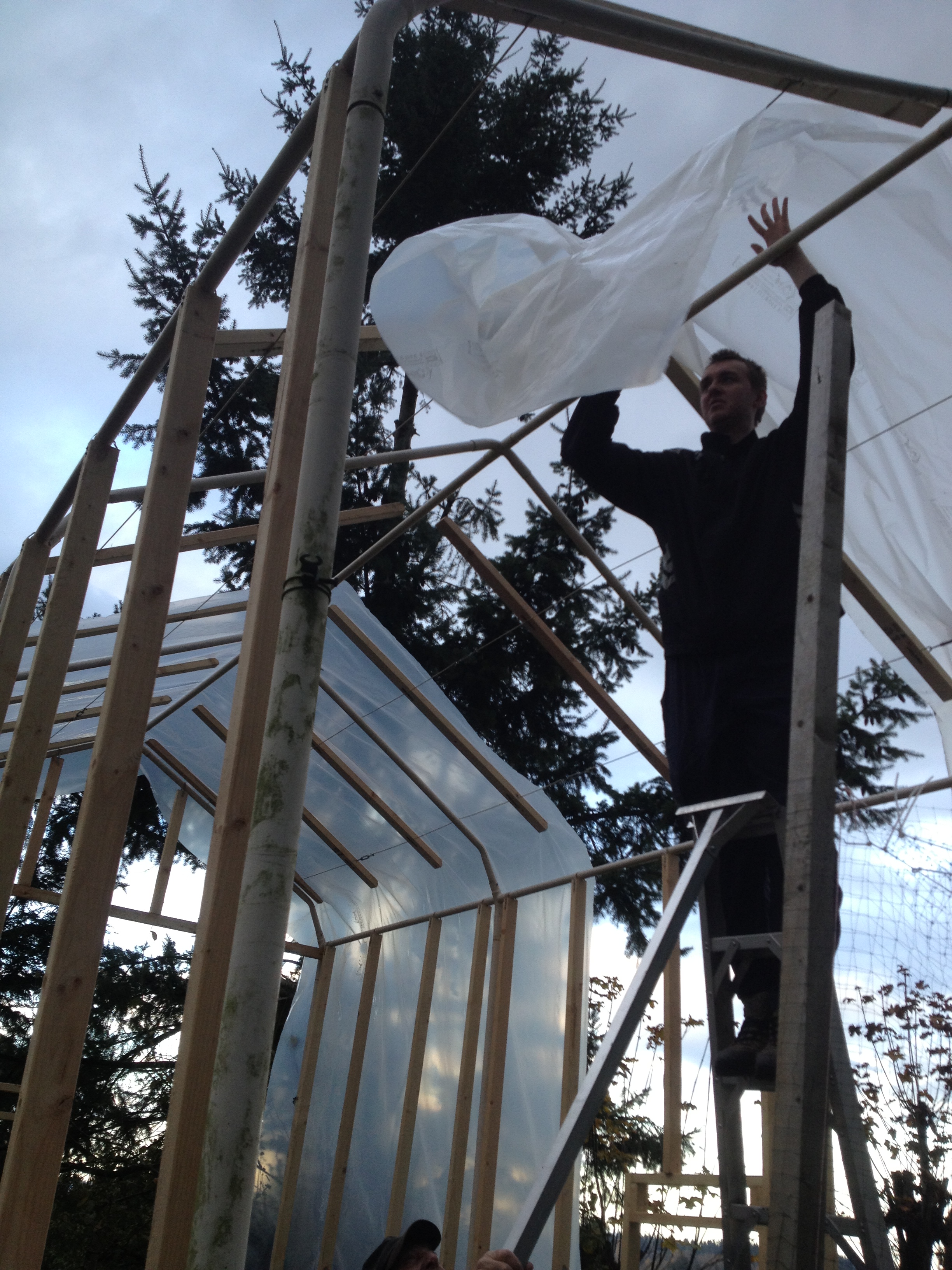
Poly being pulled into place over the frame.

Poly being pulled into place over the frame.

Encouraged (and, loving fresh oranges and lemons and feeling very guilty about how many miles our citrus must travel to get here), we decided to build an orangerie. Unheated and extra-high, this very simple structure was made using the framework from one of those shelters under which people store their fancy cars.

Tall guy, T. on an orchard ladder still finding it a stretch to get the poly over the top.

Tall guy, T. on an orchard ladder still finding it a stretch to get the poly over the top.

To gain a bit of extra height Dad and T. built a low wall about four feet high on the downhill side on top of which they anchored the car shelter framework. Then T. in-filled with some 2 X 3 wood framing. The whole structure is remarkably stable and, with the extra framing, there was something solid to which to fasten the plastic cover.

Today we pulled the strong poly sheeting over the top and fastened that to the framing using those cool roofing screws with built-in washers.

Those trees can grow nice and tall inside their new home!

Those trees can grow nice and tall inside their new home!

As per Bob’s instructions, we’ll wrap our trees in remay for the winter and deck them out in Christmas lights to help keep the chill off the fruit when the temperature threatens to dip below freezing. Which brings me to a problem – a few years ago we pitched all our old-fashioned outdoor Christmas lights – you know, the kind with the bulbs that got hot, which made them instantly uncool because of the energy they wasted? That energy is exactly what we need now! The new LED lights just don’t cut it for this purpose. If you happen to be in the area and if you are upgrading your outdoor lights, please consider sending your old strings our way instead of to the landfill. We will happily trade for orange futures…

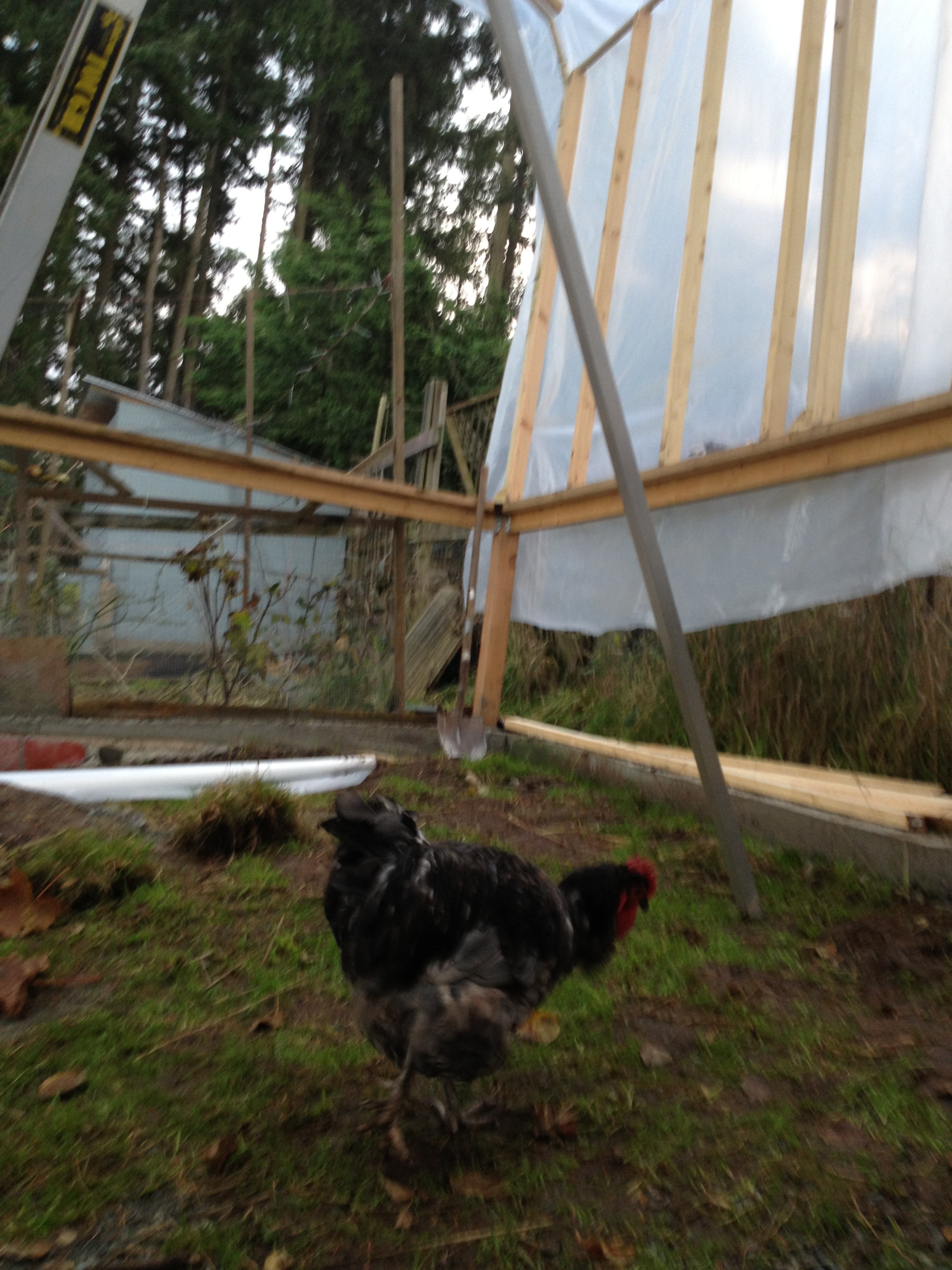
Wimpy struts in to check out our progress.

Wimpy struts in to check out our progress.

Here’s a video of Bob talking about one of his lemon trees.

Bob and Vera Duncan’s Fruit Trees and More – What a list!! For more info, visit their website at: http://www.fruittreesandmore.com

Over 300 varieties of fruit trees to choose from.

Specializing in dwarf apple trees – over 200 varieties of heritage and family favourites including unusual, connoisseur and hard to find varieties.

Other fruit trees – over 80 varieties – pears, plums, peaches, nectarines, apricots, cherries, figs, grapes, kiwi, quince and medlar;

Citrus – over 30 varieties – some of which are hardy enough to be grown outside;

Hardy subtropicals – over 15 varieties – pomegranates, persimmons, loquats, feijoa, jujubes, olives.

Interested in learning who else is participating in the 30 days agriculture blog-a-thon or the five things Holly Spangler will be talking about this month? Head over to Prairie Farmer to find out!