Street Scene (Photo 101)

I live on a rather small, quiet street – utterly unremarkable and (at least today) not one I felt inspired to photograph. I was casting my mind about for photos depicting street scenes and the one that came to mind was this one taken during our recent sailing adventures in the Caribbean.

Tourists are a funny breed...

Tourists are a funny breed…

Maho Beach on Saint Martin (and the road that runs along its length) are certainly more entertaining than our semi-rural neighbourhood here on Vancouver Island! People from around the world make a pilgrimage to this plane-spotting haven to watch jets drop in low over the beach and onto the extremely short runway at Princess Juliana International Airport.

A whole industry has sprung up to provide sun-baked, sand-blasted tourists with frosty beverages just outside the jet blast zone...

A whole industry has sprung up to provide sun-baked, sand-blasted tourists with frosty beverages just outside the jet blast zone… If I had known then what I know now, I would have parked my backside under an umbrella and shot my footage from a safe distance! 

I thought it was pretty cool to stand on the beach and watch the planes land, but the fun (not!!) really began when we decided to see what it was like to stand behind a jet plane when it was taking off.

What could be more fun than elbowing other tourists out of the way to get your best shot of an incoming plane? I know, standing in the dreaded jet blast zone as one takes off!

What could be more fun than elbowing other tourists out of the way to get your best shot of an incoming plane? How about… standing in the dreaded jet blast zone as one takes off!

Yeah. I know. Who would be so stupid as to stand in a zone plastered with warning signs like this:
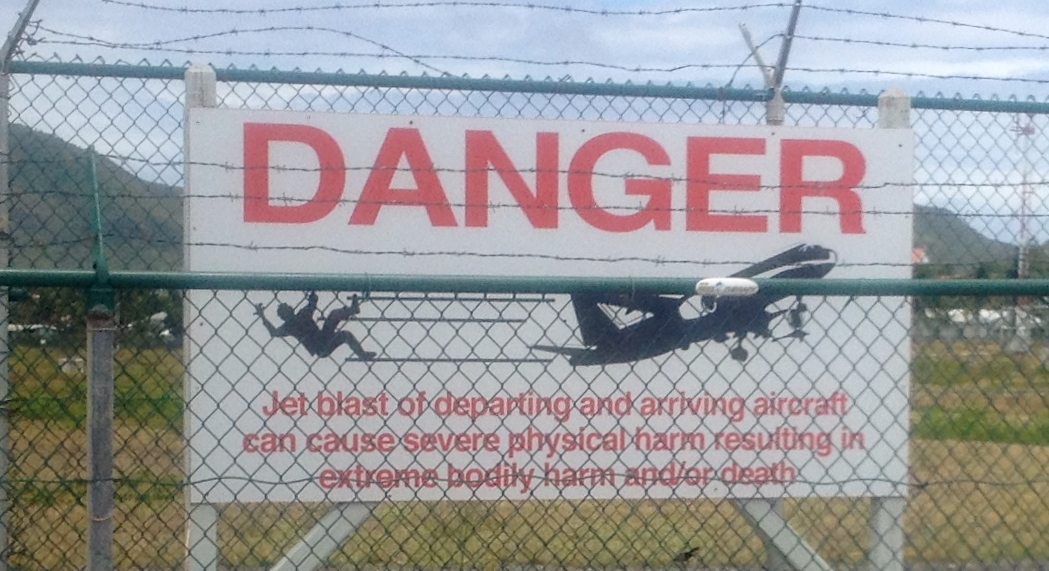
Danger! Danger! Danger!

Danger! Danger! Danger!

In my defense, all I can say is that I figured if it was really, really dangerous, surely they would have closed the road. And the beach. And the pilot wouldn’t have waved at us in such a cheerful manner before, yes, he pointed his 707 down the runway and gunned his engines.

Positioned as we were directly behind the plane and across the road on the beach so we would have an awesome view and great camera angles, the roar of wind and that horrible ear-splitting wail of jet engines were the first things we noticed. Followed immediately by the stench of jet fumes and a wave of heat that carried with it a gazillion particles of sand and other debris travelling at velocities fast enough to embed themselves in our skin so deeply we were still picking stray grains of grit out days later!

Bodies flew past us and in the panic of people fleeing and being blown off their feet we lost track of my nephew who, it turns out, was knocked over, rolled down the steep sand bank and into the ocean. The worst part of that was he had his phone in his pocket and said phone did not survive the dunking.

The rest of us managed to stop our retreat before being plunged into the sea, but we all felt somewhat foolish and slunk away along with the other sand-encrusted tourists who had met similar fates.

Tourist Tip of the Day:IMG_3430

Talcum powder is a pretty good antidote when it comes to removing sand, say when you want to put your shoes back on after a stroll on a beach. It does little, however, to help when sand particles have lodged in your scalp beneath your long hair. Swimming off the back of the boat does not help. Neither does showering at the nearest marina. Nor does picking at your head with tweezers. Don’t even waste your time with a hairbrush or head shaking. Scraping bits of sand out with fingernails is a task worthy of Sisyphus. Best to just stay far, far away from the back end of departing airliners.

IMG_3431

Home is Where the Travel Books Live (Photo 101)

Way back when I was a regular blogger I took up various ‘one a day’ challenges and found the discipline of coming up with a daily post both fun and useful. This month I am busy with a ton of writing assignments, so I thought it might be cool to participate in the WordPress Photography 101 course as, in theory, it might be faster to let those photos speak a thousand words on my behalf. The challenge today is to capture the idea of “Home” in an image.

Books - the cheapest travel tickets around...

Books – the cheapest travel tickets around…

Of course, the minute I started thinking about this theme I realized the answer wasn’t going to be quite as simple as photographing my front door. I currently call Vancouver Island my home, but for many, many years as I was growing up my family was constantly on the move. At some point when I was in  my early 20s Dad and I sat down to try to count up all the addresses where I had lived and we came up with 53. Our homes ranged from a tiny cabin in Banff where a grizzly sow and her cubs went through our garbage every morning to an apartment above a Chinese restaurant in Ontario (by then I had left home and was working as a dog catcher). From England to Australia, Fort McMurray to Vancouver, Fort Lauderdale to Guelph my homes ranged from simple to fancy, in great neighbourhoods and not so great neighbourhoods, on islands, in cities, or in the countryside.

Though the view outside our front door changed on a regular basis (as an artist and a photographer, Dad and Mom were pretty free to live wherever they fancied), some things remained constant. One was our family (we were a remarkably stable lot, considering our wandering ways) and another was our dedication to schlepping boxes of books all over the world.

Whenever we moved into a new place I would feel somewhat ungrounded until I started to unpack my books. I still have one of the very first books I was ever given, the Daily Mail’s Pictorial Animal Book. 

This one still has pride of place on the shelf, though it shares real estate with several thousand other titles...

This one still has pride of place on the shelf, though it shares real estate with several thousand other titles…

IMG_4375[1]

The idea of home and what it is and what it isn’t has long fascinated me and sooner or later, themes like this eventually find their way into my writing. Not long ago my daughter and I wrote a book called Take Shelter about the many different kinds of dwellings people live in all over the world. In the introduction I talk about my books and the way that unpacking them always made me feel at home.

Take Shelter

Ironically, some of my favourite books are those with travel themes because even though a good chunk of my life was somewhat unsettled, I have always loved to be on the move. A well-packed suitcase is a kind of home away from home, the essentials of life neatly organized in a way my life in my actual home rarely is.

These days my suitcase is usually a little lighter than in the past. I no longer have to pack half a dozen books just to be sure I have something on hand to suit my reading mood – the miracle of the modern e-reader means I can travel with a veritable library. But I always pack a paperback of some sort anyway – batteries die, devices get dropped overboard, electronic devices get stolen. Books, in all their clunky, heavy, awkward, prone-to-sogginess-when-read-in-the-bathiness are solid between the fingers. Maybe that’s why I’m so fond of them.

If this post seems a little, um… illogical – that’s perhaps because these two sides of my life and personality are fundamentally incompatible. On the one hand I love, love, love my books – putting them on shelves, reorganizing them, adding to the collection, culling the collection – stacking, dipping, flipping, browsing, reading, delving, devouring those books which are also some of my longtime companions… On the other hand, there are few things I like more than turning my back on my bookshelves, and checking that my passport, my plane ticket, and my comfortable shoes are packed in my bag. And that paperback, of course. Can’t leave home without that…

Scrawny Arms? Me? Really?

IMG_4238[2]

Exactly two weeks after the accident I was at physio having my arm manipulated by the most wonderful Mark. He was twisting and turning, pulling and pushing, lifting and separating… Which sounds grim, but actually doesn’t hurt – much. I have regained a lot of twistiness in the forearm, which is good – no numbness or tingling in the fingertips – also good. He warned me that I might experience stabbing pains or other weird and unpleasant things if the bone chip (or possibly chips) floating around in the elbow joint drift somewhere they don’t belong and get stuck…

Then Mark started flexing and extending the arm, seeing how much range of motion has returned. This, apparently, is an area where we can do some work… I have been stretching the arm, but Mark pushed it much harder than I had dared and I commented that obviously I could do better between now and next week’s appointment. “I can push way harder than I have been.” We had just been talking about my one-armed climbing exploits and he looked me in the eye and said, “With an attitude like yours you’re either going to have an exceptional recovery or do yourself permanent damage.”

I couldn’t argue with that. Yep, it is our strongest character traits which are both our greatest assets or biggest liabilities, depending on circumstances. 

Mark took some measurements and we continued the stretching, finishing with a session of electrical pulses delivered to either side of the joint while the arm was held down under a towel-wrapped heated weight – all to encourage more stretching. While I was pinned to the bed by my trapped arm Mark informed me the the Extra-Small size of special brace we were trying to order was still going to be too big for my tiny arm! Say what? When people look at my arms they don’t generally lead with a comment like, “Oh you poor little thing – look at those tiny arms… ” What could this mean? Women don’t injure their elbows? Or they injure their elbows but don’t bother with the high-powered braces? What about teenagers? Children? And what about muscly short people like me? Weird. Just plain weird.

Rather than settle for the less good softer brace (remember, I have a date with the Rocky Mountains later this month…) we have ordered the high-tech brace and will see if there’s a way to fiddle with it, add padding underneath, etc. so I get the most possible protection while I get on with my life. Though, why I would bother with these scrawny arms I don’t know… I mean, how can anyone with toothpick limbs consider tackling mountains? Hmph.

IMG_4236

Onward and upward!!

A Climbing We Shall Go

So it turns out that the double dislocation of my elbow was the lesser of two injuries.

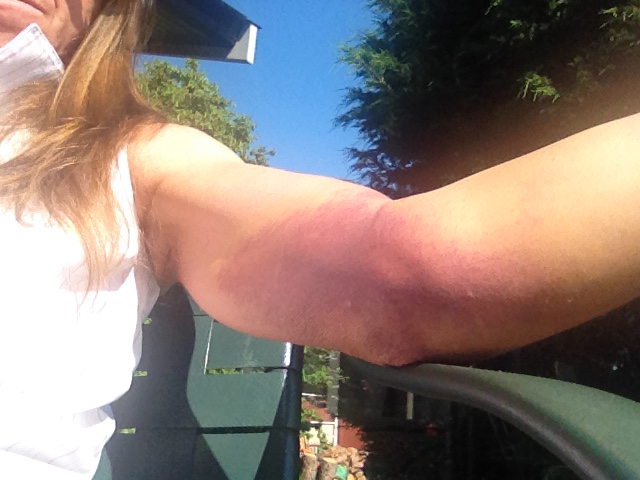
Swelling and bruising on about Day 5

Swelling and bruising on about Day 5

Because it was a double dislocation (both bones shot out of place) apparently the risk of re-dislocating is slim. This is good news. The damaged joint capsule should heal nicely in about 12 weeks, which I had thought was terrible news until I visited my physiotherapist who informed me that I had done some major tearing damage to (possibly complete destruction of) the ligament that essentially attaches the top part of my arm to the bottom part.

“You should know by Christmas if it looks like that’s going to heal on its own,” he said blithely. I nearly fell off the examining table!

“Christmas?”

“It takes at least eight months to heal an injury like that.”

“Eight months?”

If it heals. If the ligament is so far gone it can’t knit itself back together, then reconstructive surgery is an option – a procedure called Tommy John Surgery. The procedure seems to be fairly common in pitchers who regularly rip apart their elbows and, oh joy, within a year of the surgery the prognosis is pretty good. I could barely keep reading when I learned that this surgery requires removal of tendon from somewhere else in the body in order to create a new connective bit in the elbow – where on earth would they find a spare bit of tendon to use?????

“What about climbing?”

To his credit, he didn’t laugh at me or say (like the orthopedic surgeon) that climbing was out of the question. We discussed options. There are some pretty good braces out there – terribly expensive but which limit the lateral movement of the elbow joint and prevent hyper-extension during the extended healing time needed for the soft tissues to repair themselves. I suspect there wouldn’t be a lot of pulling power in the left arm, but having a second arm is kind of essential when climbing, if only to pinch and grip and balance while moving the other, fully functional arm into a secure position. Or, is it? It occurred to me that other people had likely dealt with arm injuries, that there are para-climbers out there who climb with fewer than a full complement of limbs… I asked about immobilizing the injured arm and climbing with the other one and we decided that there was no harm in trying as long as I was securely top-roped and didn’t do anything foolish like bouldering.

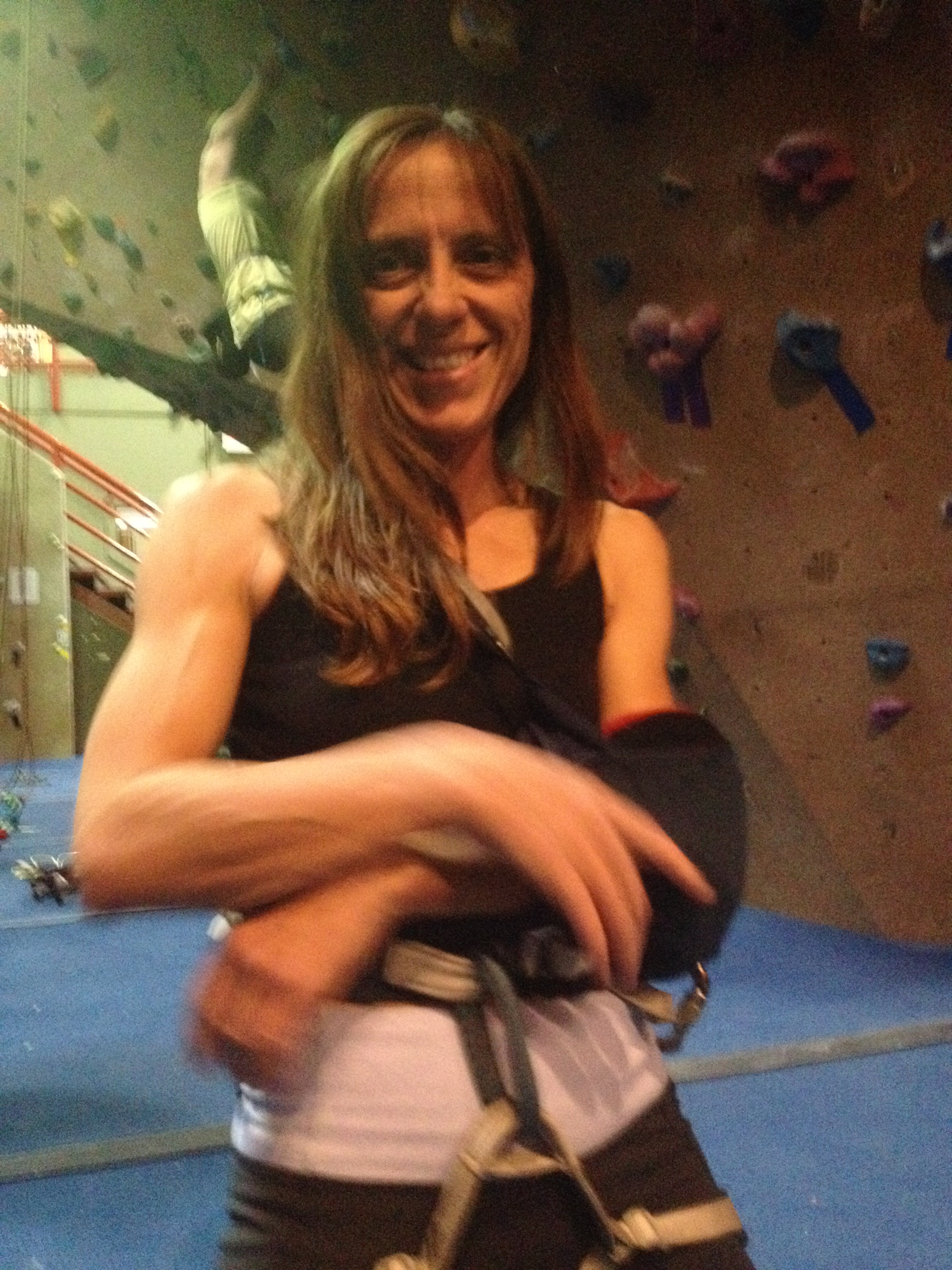
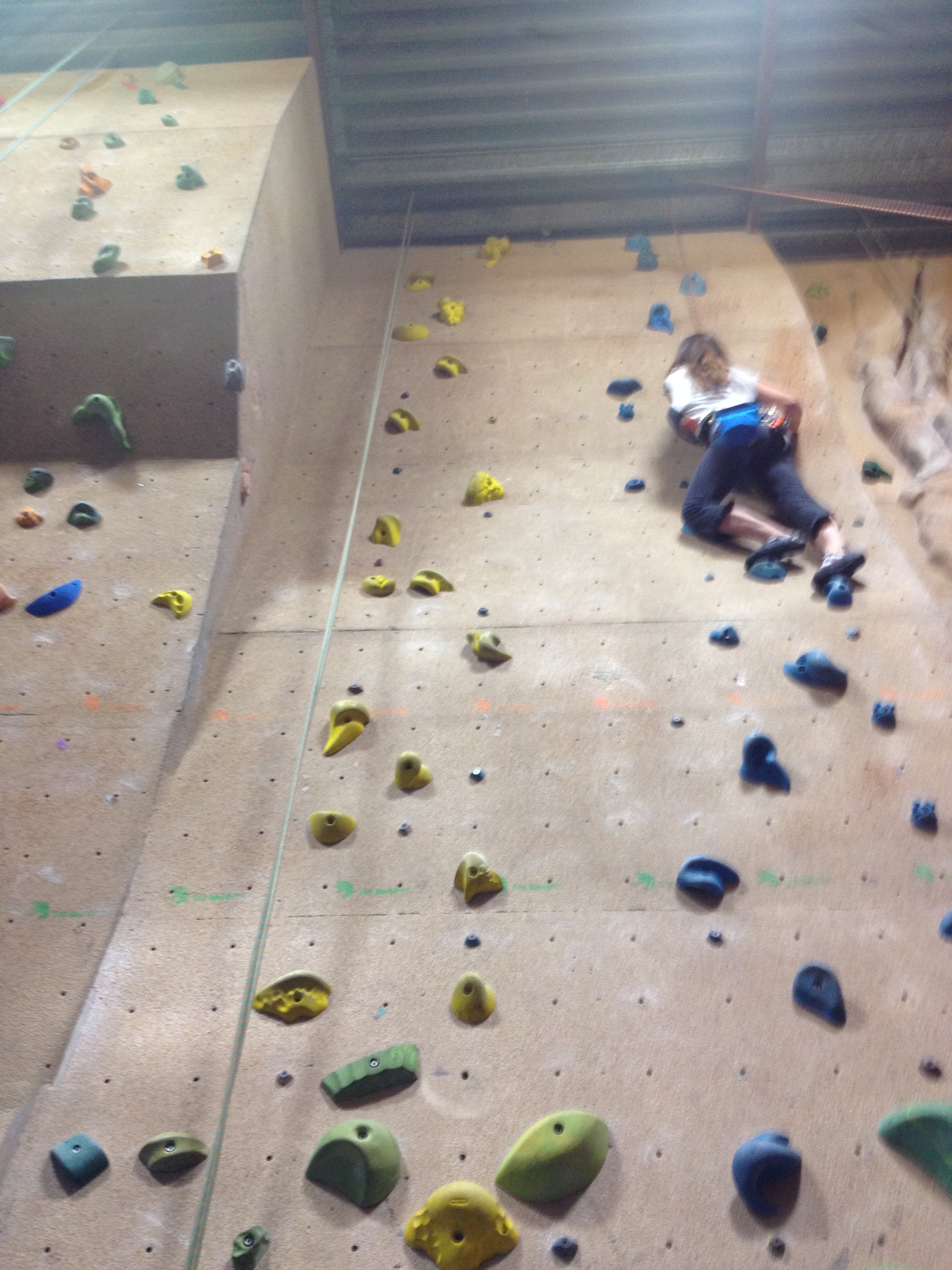
IMG_4091Which is how I wound up stuffing an oven mitt into the pocket of an ice-holding wrap designed for icing an injured knee, wrapping that around my elbow for padding, stuffing all of that into the sling they gave me at the emergency room on the first night and then securely fastening the sling and padded arm snugly across my torso. I was a bit worried about falling off the wall and catching the sling on a hold, getting hung up and dislocating my shoulder or hanging myself or something equally ridiculous, so my wonderful climbing partners helped me squeeze into a very tight t-shirt so all loose bits were covered and I was unable to move the sling, my arm or get caught up in anything in case of a tumble.

IMG_4093

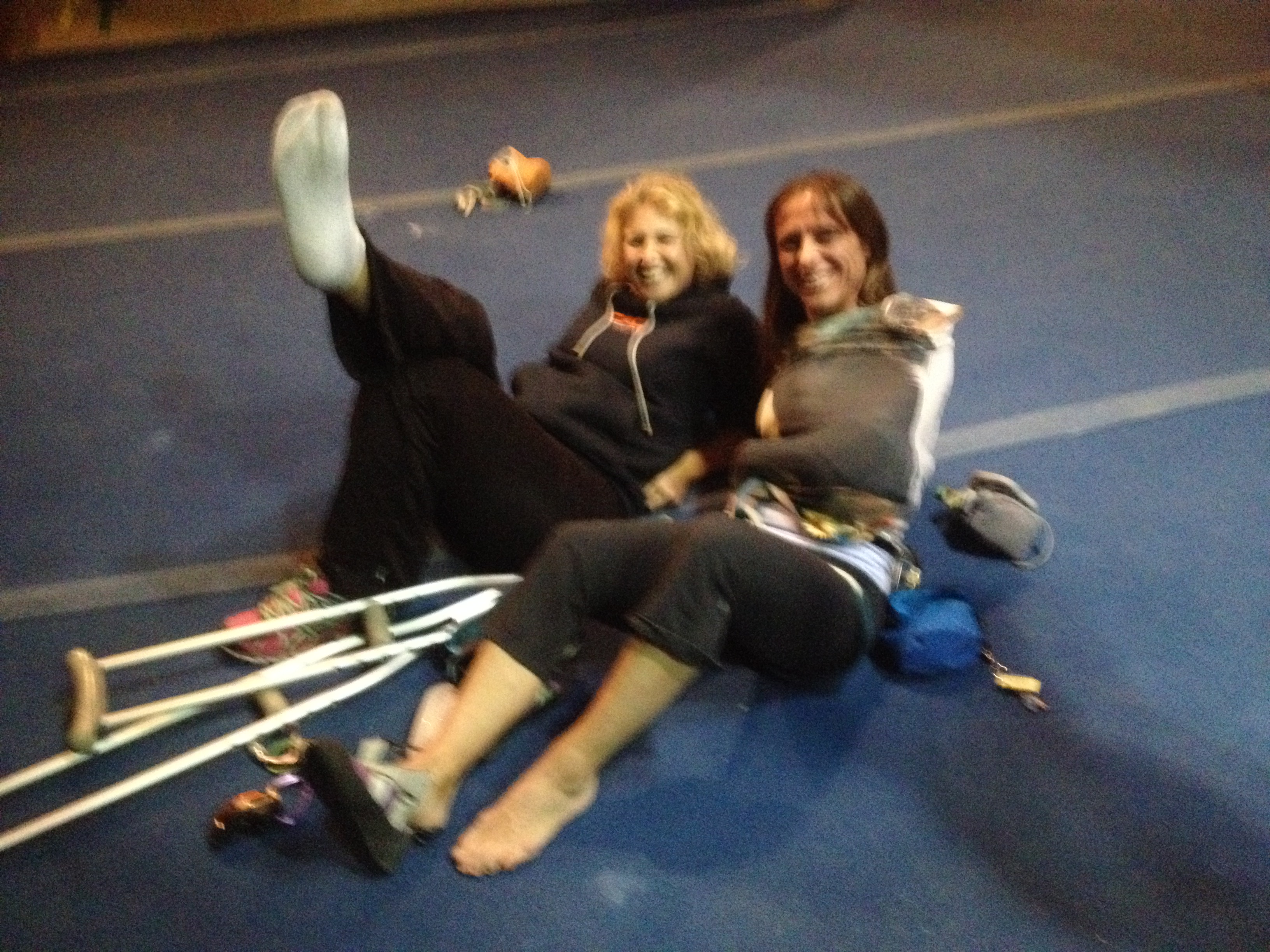
Add the two of us together (Charlotte has a broken foot) and you might wind up with one decent climber!

Add the two of us together (Charlotte has a broken foot) and you might wind up with one decent climber!

In the end I was so trussed up it felt like I was wearing  a straight jacket and couldn’t even manage to tie in by myself.

IMG_4100

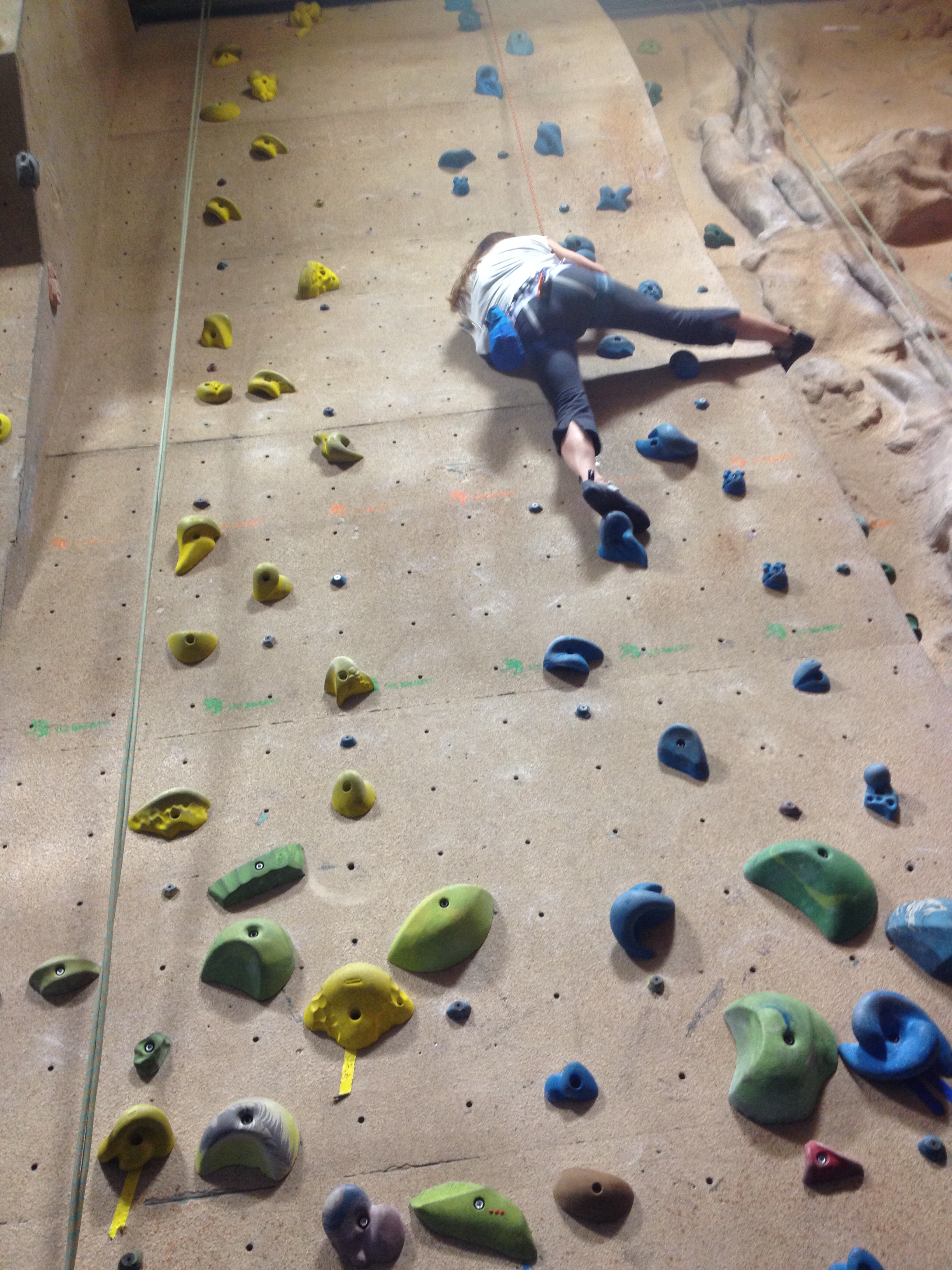
Once securely fastened to the top rope, it was do or die time. I faced the wall and started up.

What a disaster that first wall was!! My whole body went into panic mode because I could not get my head wrapped around the idea that in order to go up I was going to have to balance on my feet and let go to reach up for the next hold with my good hand. Surges of adrenaline soon had my legs quivering and the effort of hanging on for dear life with my poor right arm soon turned it into jelly as well!

IMG_4107

IMG_4127 IMG_4132

I was horrified at how hard it was, how my body was completely betraying me by panicking, how I couldn’t at all translate my usual ‘power up the wall’ climbing style into something that would work with one arm. By the time I got to the bottom I was faced with the realization that either something fundamental had to change in the way I was tackling the wall or I was going to have to find another hobby to occupy myself during the long road to recovery.

IMG_4142

I confess that once I got to the bottom I felt so awful and my legs were so quivery I was ready to quit and take up tiddly winks.

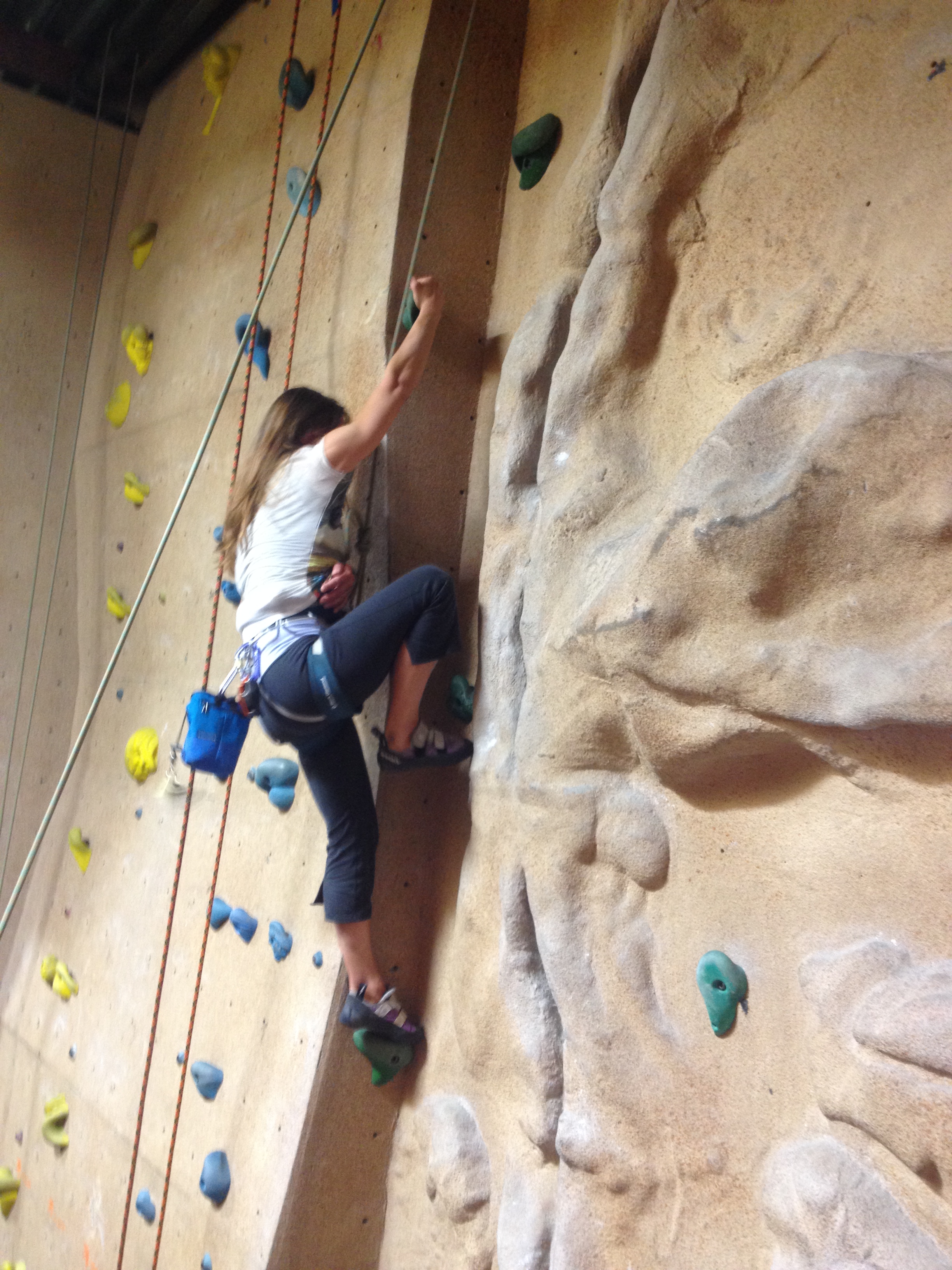
I sat down, had a drink, took some deep breaths and considered my options. Quit? Take a very long (two year?) break? Or, try again. I’m no spring chicken. I might not be around in two years. I decided to try again, this time on the feature wall with the cool landscaping.

IMG_4153IMG_4160

IMG_4161 IMG_4162

IMG_4166

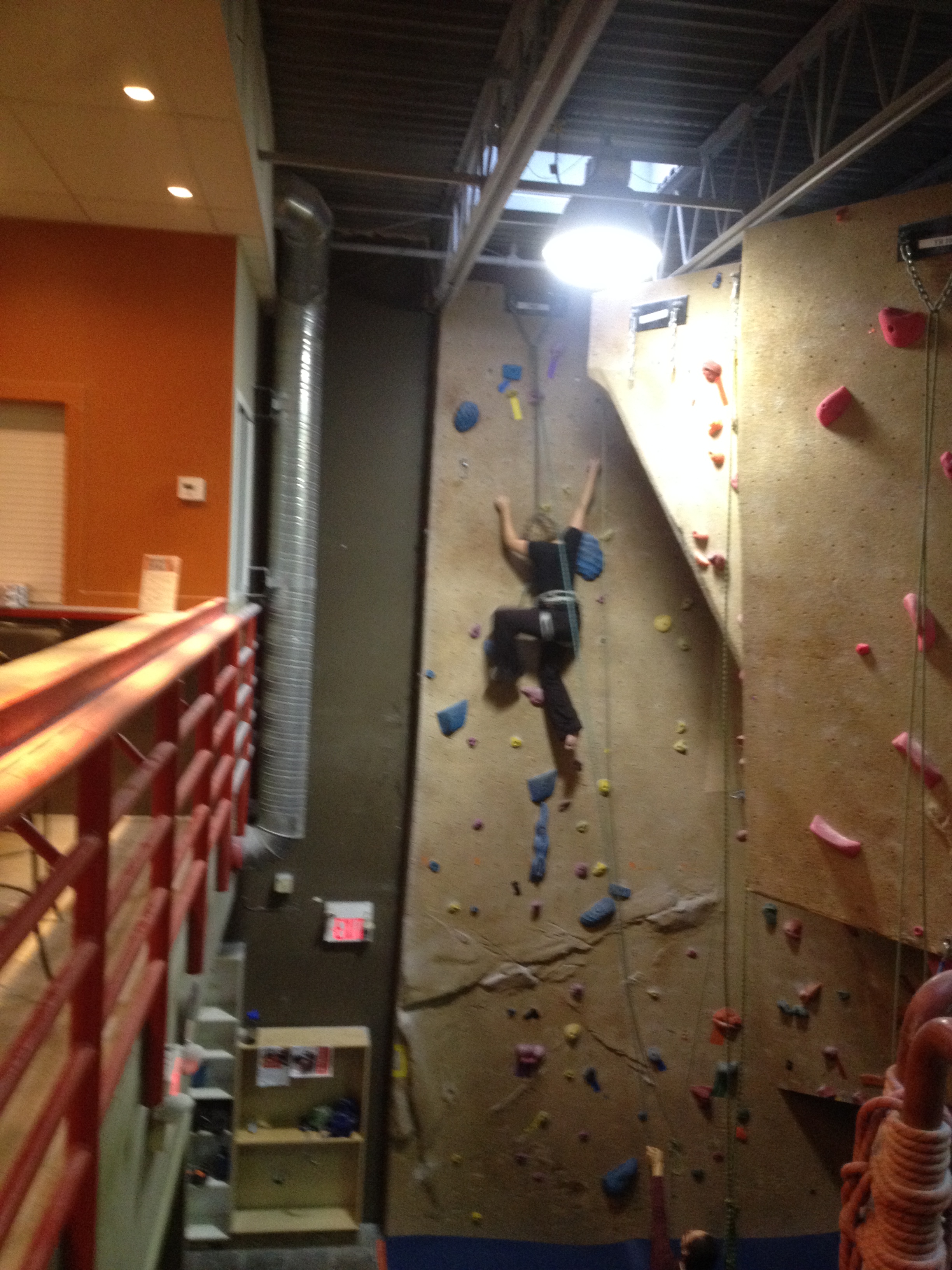
Things definitely improved after this. I stopped trying to leap and lunge and relied more on solid footholds, balance, and more strategic stretching. On the next wall (no photos), I was able to relax enough that I could just stand, balanced on two decent footholds and let go of the right arm, let it hang beside me to shake out and recover a moment before continuing right to the very top. By the end of the evening I was feeling like maybe there will be a way to safely climb while the arm heals and THAT was a fabulous feeling, indeed!

Of course, I couldn’t have done any of this without the support and encouragement of our fantastic group of climbing ninjas – Justine, Meagan, and Charlotte. Charlotte, who has been recovering from a broken foot for what seems like forever, also tackled a wall tonight and scampered up using her two good arms (stronger than ever as a result of all that crutching and wheel-chairing she’s been doing), her good leg, and her knee!

IMG_4225

Go Charlotte!! We proved tonight that three functional limbs are more than adequate to get up to the top!

Poor Justine, being the only fully functional one of the evening was really made to work hard by Coach Meagan, who pushed her hard as we invalids ‘took time to recover’ between climbs.

Justine showing off her ballerina-esque style as she floated up to the top of a route as part of her series of 100 uninterrupted moves up and down and up and down the wall...

Justine showing off her ballerina-esque style as she floated up to the top of a route as part of her series of 100 uninterrupted moves up and down and up and down the wall…

Though it’s really, really tempting to rush back to climb more tomorrow, good sense tells me a rest day or two would be a good idea before trying again. The first hurdle (giving it a try) has been conquered. Continuing to rest and give the injured arm time to heal and the over-worked right arm a chance to recover will help with the overall ‘onward and upward’ strategy that will, with any luck, see me back out on some real rock before too long!

IMG_4090

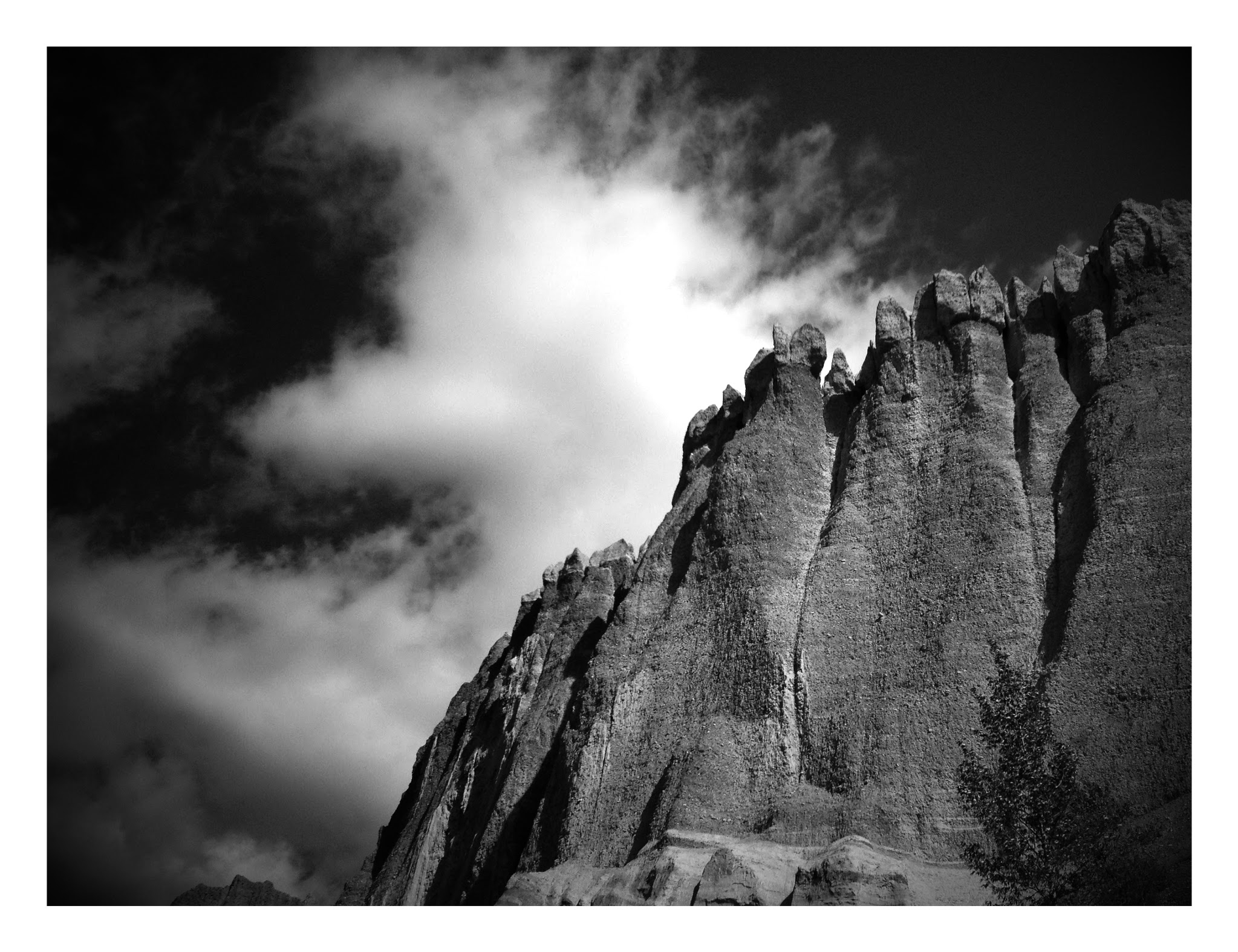
Hoodoos on one of the recent trips to the Kootenays – such gorgeous places out there to explore!

Death By Falling Rock – and Art a Century Later

According to the Haig Pit Mining and Colliery Museum, In 1913 70000 horses were working underground in the UK.

According to the Haig Pit Mining and Colliery Museum, in 1913 70,000 horses were working underground in the UK.

When I was little I used to listen with a mix of horror and fascination when Dad told me stories of the pit ponies used to haul rail carts laden with coal from the mine in Ryhope (near Sunderland). His father was a harness maker and was responsible for making and repairing harnesses used by the ponies (along with other leather items) and as a boy Dad remembers visiting the stables where the ponies were kept. I remember being horrified at the thought of the ponies working underground in the dark for years and years, and heard the stories about how they went blind once returned to life above ground. It turns out that perhaps this wasn’t entirely true, that ponies were not blinded as a result of having their retinas burnt out but rather were injured by falling lumps of coal or rock. Nevertheless, this image of ponies emerging into the light, blinking once or twice in the blazing sun and then going blind haunted me for years, as did the thought of being trapped underground or, even worse, being crushed in an imploding coal seam.

William Stratton's grave in Merton

William Stratton’s grave in Murton, Durham

Perhaps there is some genetic memory at work or perhaps my father was just really good at telling horrifying stories, but it turns out that my great grandfather (William Stratton – whose sister married into a branch of the Wordsworth family…) was hewing coal in a shallow seam at the mine in Murton when a boulder-sized chunk of stone and coal broke free and crushed him, killing him instantly. Dad found the mine accident report of the death which states,

When he was hewing in Low Main Seam a stone fell from between slips, killing him instantly. 

stratton grave 03

William Stratton was 34 and left behind a wife and six children including my infant grandmother, Mildred. Though Granny never knew her father, his story passed through her to my father and then on to me. William was hewing coal, lying on his side wielding a pickaxe in a seam that may have been as shallow as 15″. Granny recounted, “[At the funeral] he looked as if he had just come out of a band box. He was a handsome man with auburn hair.”

Coming out of a band box was, apparently, a description of someone whose face was untouched, as if taken out of a hat box, in pristine condition. At 34 he would have been in his prime.

Hewers had a nasty job, hacking away at the face of the coal seam, scraping the coal behind them where it was picked up by a marra (workmate) who then loaded the coal into a tub, a cart that ran along tracks and was pulled out of the low, narrow tunnels toward the surface – often by the pit ponies. Miners were paid by the tub and the loads were counted twice – once by a representative from the mine and once by a check weighman, an ex-miner (often injured) who also counted tubs and checked the weights of coal to make sure the tallies were correct. According to Dad, another of our relatives was a check weighman after he lost several fingers in a mining accident.

Dad remembers there being 500 pit ponies at work in the mine in Ryhope and when he would accompany his father home from work at the pit the two of them would stop to feed the ponies hay, stroke and brush them. “I loved the ponies,” Dad says, fondly recalling his visits to the stable.

These mining memories have come up recently for a couple of reasons. First, I get really creeped out when underground and though I really want to do some spelunking, the thought of being down there somewhere when an earthquake hits or some narrow crawlspace proves to be too narrow to get back out again fills me with dread. Even when I was having the time of my life playing on Virgin Gorda I had moments when my stomach clenched and I had to force myself to breathe normally and not think too hard about those massive boulders shifting, cracking and toppling, pinning me down there somewhere never to be found again.

Bouldering on Virgin

Bouldering on Virgin Gorda was one of the highlights of our trip to the BVI but part of me couldn’t help wonder what would happen if one of those rocks decided to shift and topple at an inopportune moment.

The other reason we’ve been talking about mining accidents is that Dad is at work on a series of coal mining paintings, an homage to his fallen ancestors. Our Olympic rowing team neighbour graciously posed (on the ground, with a pickaxe) for Dad. Sketches and watercolours are underway, all preparatory for work in oil… I’ll post as progress is made.